
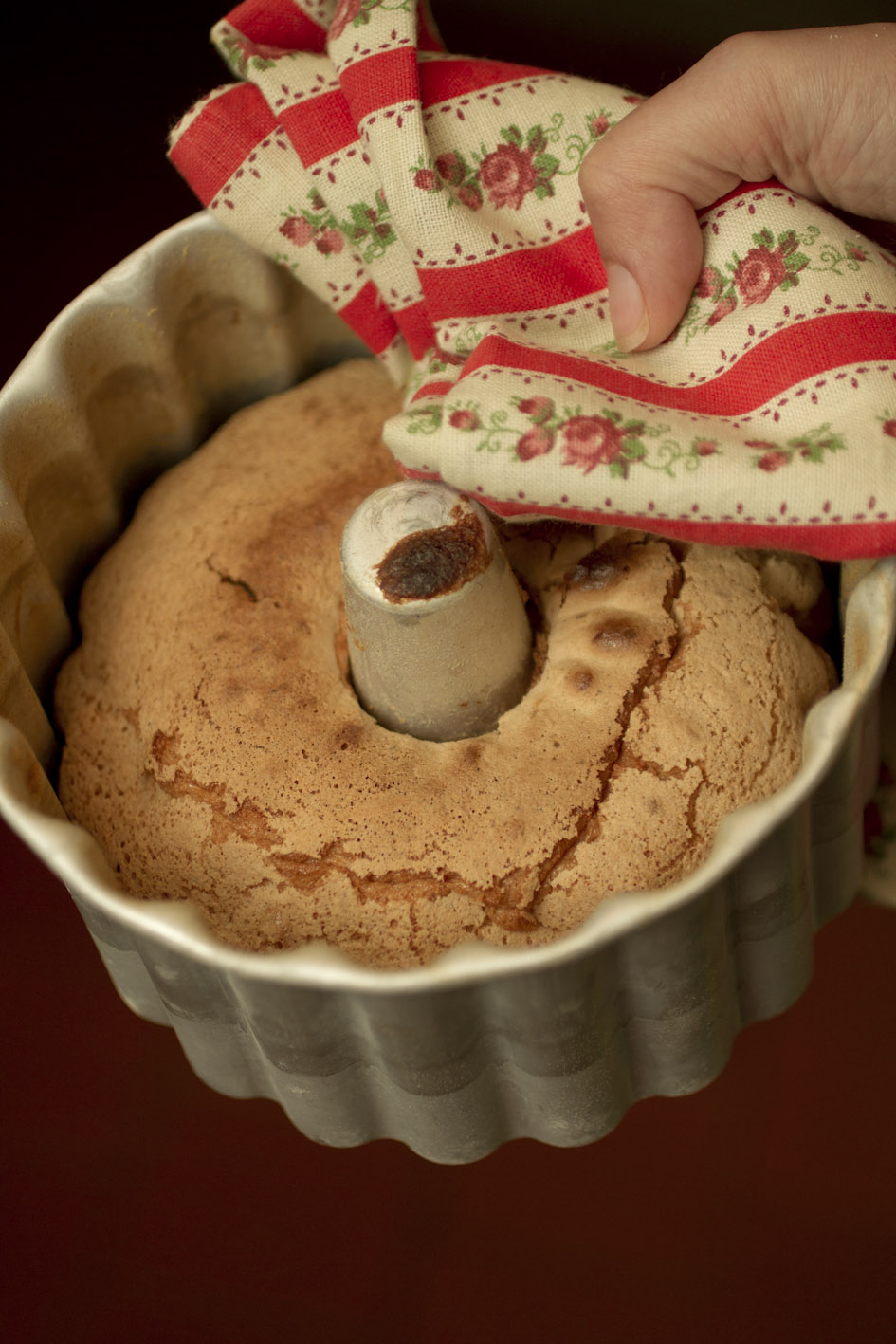
Há aqueles dias em que, confrontada com mais uma imagem de um bolo às camadas, com cobertura e decoração de bandeirinhas, só me apetece fazer/comer um singelo pão-de-ló. Se me quiserem acompanhar, eis a receita que a minha mãe me deu:
Decidir o número de ovos em função do número de pessoas a quem o bolo se destina. Como este bolo era só para nós os dois, fi-lo com três ovos.
Pré-aquecer o forno a 180ºC e untar e enfarinhar uma forma (escolher um tamanho de forma apropriado ao bolo que se vai fazer). Pesar os ovos (ainda com casca). Usar o mesmo peso dos ovos em açúcar (eu usei açúcar baunilhado, mas tradicionalmente usa-se açúcar normal). Usar metade do peso dos ovos em farinha. Acrescentar à farinha uma pitada de fermento para bolos.
Separar os ovos. Bater muito bem as gemas com o açúcar, até que a mistura fique branca e fofa. Acrescentar uma pitada de sal fino às claras e batê-las em castelo. Envolver metade das claras no primeiro preparado, depois envolver metade da farinha, depois o resto das claras e finalmente o resto da farinha.
Deitar na forma e pô-la no forno e, quando começar a cheirar a bolo, ir vigiando até o bolo estar bem cozido (eu espeto uma faca no bolo e, quando vier limpa, significa que o bolo está cozido). O tempo de forno depende do tamanho do bolo e do tipo de forno utilizado — este meu bolo demorou 20 minutos num forno eléctrico com ventoinha.
Tirar o pão-de-ló do forno, esperar 10 minutos e desenformar. É excelente acompanhado de leite com chocolate!
I sometimes find sophistication a bit tiresome. Of course I admire originality and wit and of course I’m inspired by blogs and Pinterest and magazines and books. Sophistication can be very appropriate in particular moments but I confess I tend to choose simplicity in my daily life. Simplicity doesn’t have to be wonky or untidy — on the contrary, the simplest things can actually be full of charm and refinement.
There are those days when, confronted with yet another image of a layered cake, fully iced and decorated with mini-bunting, I just want to bake/eat a simple pão-de-ló (Portuguese sponge cake). If you sometimes feel the same way, please feel free to try out my mother’s recipe:
First you’ve got to decide the number of eggs you want to use (this depends on the number of people the cake is aimed at). For Tiago and myself I used 3 eggs.
Pre-heat the oven at 180ºC. Butter and flour a cake tin (choose an appropriate size for the cake you’re going to make). Weigh the eggs (still in their shells). Use that same weight in sugar (I used vanilla sugar but traditionally one would use caster sugar). Use half of that weight in flour. Add a pinch of baking powder to the flour and sift it.
Separate the eggs. Beat the yolks with the sugar until the batter becomes white and thick (this takes some time). Add a pinch of salt to the egg whites and whisk them until soft peaks form (they shouldn’t move when you turn the bowl upside down). Gently incorporate half the egg whites into the cake batter, then half the flour, then the remaining egg whites and finally whatever is left of the flour.
Pour the batter into the tin and put it in the oven. When it starts smelling like cake, keep an eye on it and remove from the oven when it’s done (I insert a knife on the cake and when it comes out clean, I know that the cake is done). The amount of time the cake takes in the oven will depend on the size of the cake and on the type of oven. My cake took 20 minutes on a fan oven.
Wait 10 minutes and then take the cake out of the tin. It’s delicious with a glass of chocolate milk!
(photo: Tiago Cabral)











 Constanca Cabral