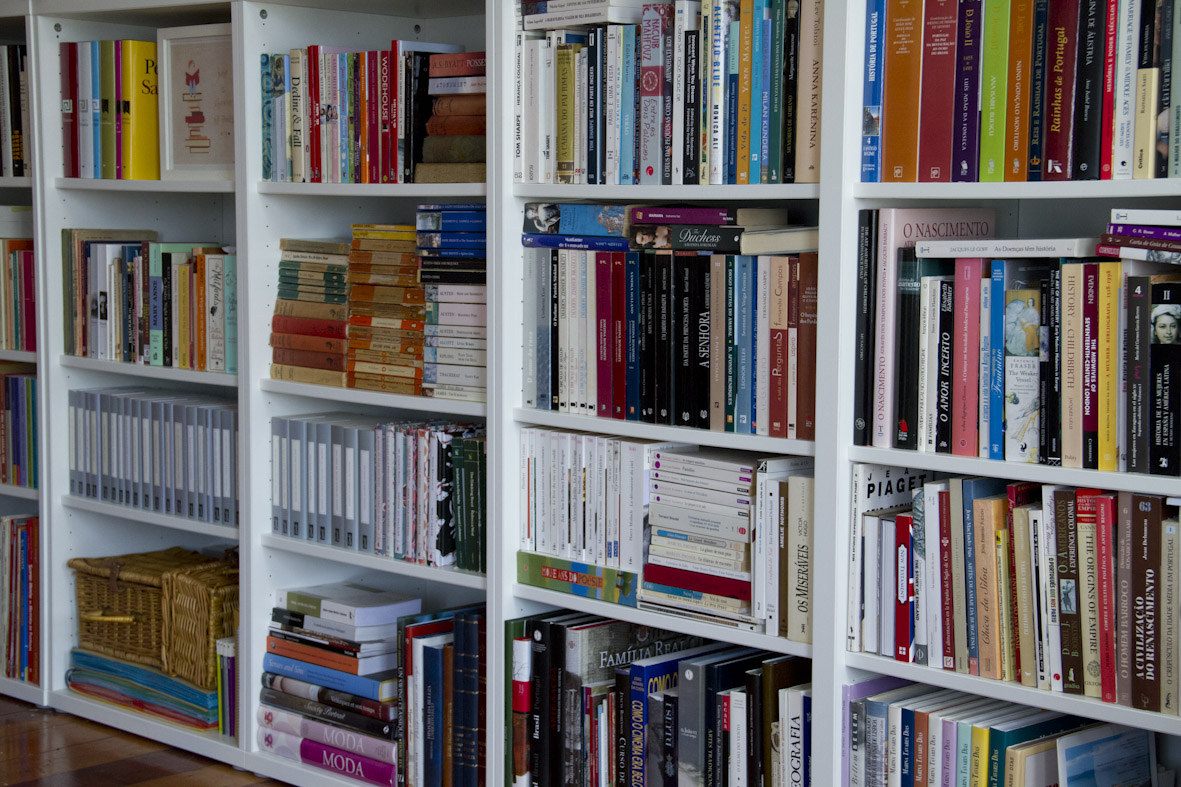
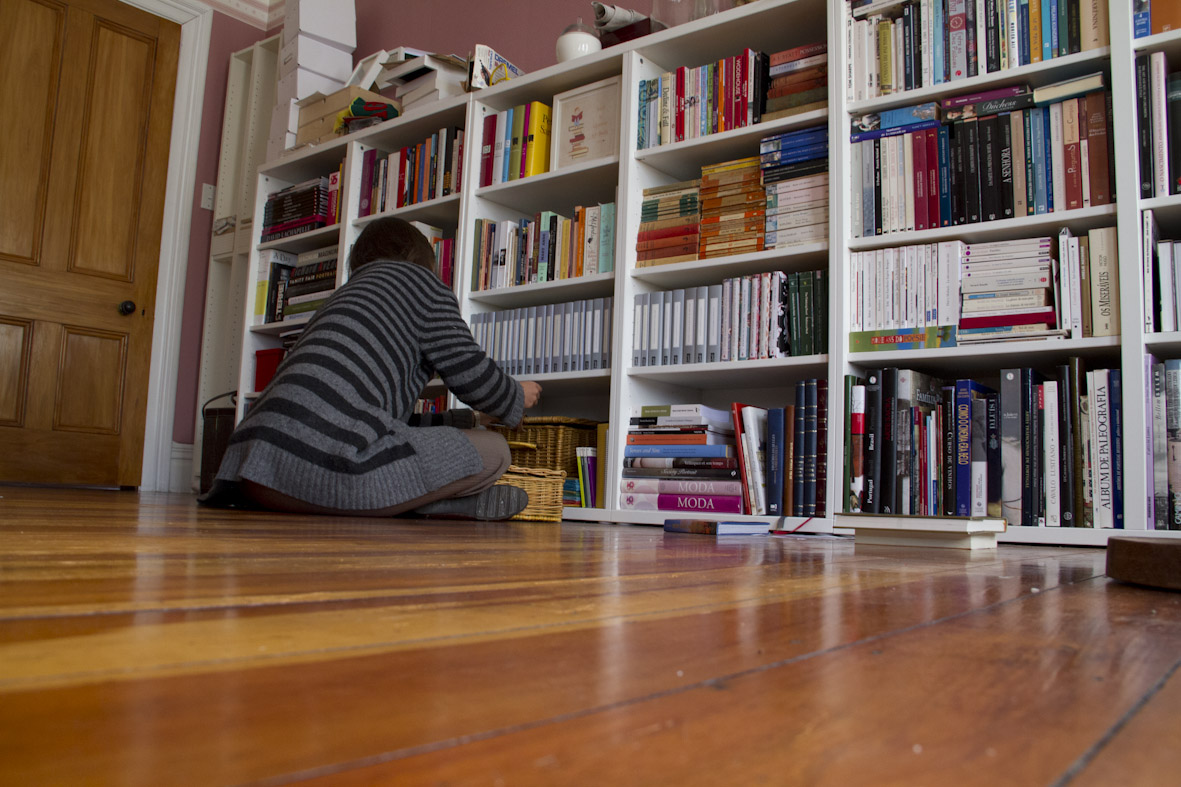
Arrumar os meus livros na estante da sala tem tido um efeito curioso: o enredo do livro mistura-se com as minhas recordações de quando o li. Há livros que me transportam imediatamente para um sítio e uma época: a tetralogia da Luísa Beltrão (que pertence ao meu pai, por isso não está nesta estante) leva-me imediatamente para os tempos do liceu, quando vivíamos numa casa comprida e escura nas Avenidas Novas, e nas tardes de fim-de-semana eu ocupava o canto mais soalheiro da casa a ler. Essa salinha mais tarde foi transformada em sala de pequenos-almoços, mas no início tinha um cadeirão antigo forrado a chintz cor-de-vinho perfeito para ler e falar ao telefone. Devorei os quatro livros nesse cadeirão, ao som de um CD de músicas dos anos 60 (sempre em repeat).
Os livros da editora
Persephone… comecei a lê-los em Lisboa, recém-casada, e mostravam-me uma Inglaterra provinciana onde mais tarde vim a morar. No
The Diary of a Provincial Lady (tenho uma edição comemorativa da Virago) ouvi pela primeira vez falar em forçar bolbos (e uns anos mais tarde vim a fazê-lo). Outros livros lembram-me a casa da minha avó com a sua saleta forrada a livros de História, que me ajudaram a ganhar uma viagem de duas semanas ao Brasil quando tinha 18 anos. Ao mexer nos livros sobre História das Mulheres, penso no mestrado que ficou a meio e pergunto-me se algum dia lhes voltarei a pegar. Os livros do Jorge Amado ganharam cor quando visitei Ilhéus na tal viagem ao Brasil. Os clássicos portugueses lembram-me as minhas primeiras incursões nos livros de gente grande (Eça de Queiroz em casa dos meus pais, Júlio Dinis nas noites em que ficava a dormir em casa da minha avó) e quase gritam para que eu volte a pegar neles, numa urgência de combater este português duvidoso que estou a adquirir (ontem estava a falar com a minha mãe sobre a marmelada e disse vulcano em vez de vulcão… pânico!). E nem vou falar nos livros de infância, que esses ficaram todos em Portugal.
E a vocês, acontece-vos o mesmo? Também têm recordações difusas de histórias de livros misturadas com as vossas vidas?
Filling up my bookshelves has brought back so many memories. It’s curious how the plot of a particular book becomes entwined with my own circumstances when I read it… some books take me right back to a specific time and place. Luísa Beltrão’s tetralogy (a family saga set in Portugal in the 19th and 20th centuries) transports me to my mid-teens when we lived in a long, rather dark, ancient flat in Lisbon — on weekends my books and I would take possession of the sunniest corner of the sitting room. That tiny space was later turned into a breakfast room but during those early times it had an old armchair covered in burgundy chintz that was perfect for reading and chatting on the phone. I devoured those four books seating on that armchair and listening to a CD of 60s pop music.
Persephone books… I started reading them when I was just married and they showed me a provincial England where I went to live a couple of years later. In The Diary of a Provincial Lady (I own a very pretty Virago edition) I had my first encounter with bulb forcing (and some time later I tried doing it myself). Other books make me think about my granny’s home, with its study filled with bookshelves from top to bottom — some of those books actually helped me win a two-week trip to Brazil when I was 18. When I pick up my books on Women’s History I think about my master’s essay that was left unfinished and wonder if I’ll ever return to it. Jorge Amado’s novels gained new colours when I visited Ilhéus on that same trip to Brazil. The Portuguese classics remind me of my first foray into proper, grown-up literature (Eça de Queiroz at my parents’ home, Júlio Dinis at my granny’s) and scream for me to read them again as my Portuguese is getting some horrible foreign traces… And I won’t even mention childhood books — those were all left in Portugal.
What about you, do you also have blurry memories of books and life?
(photos: Tiago Cabral)












 Constanca Cabral