Progressos do Boneco Waldorf :: Waldorf Doll Progress

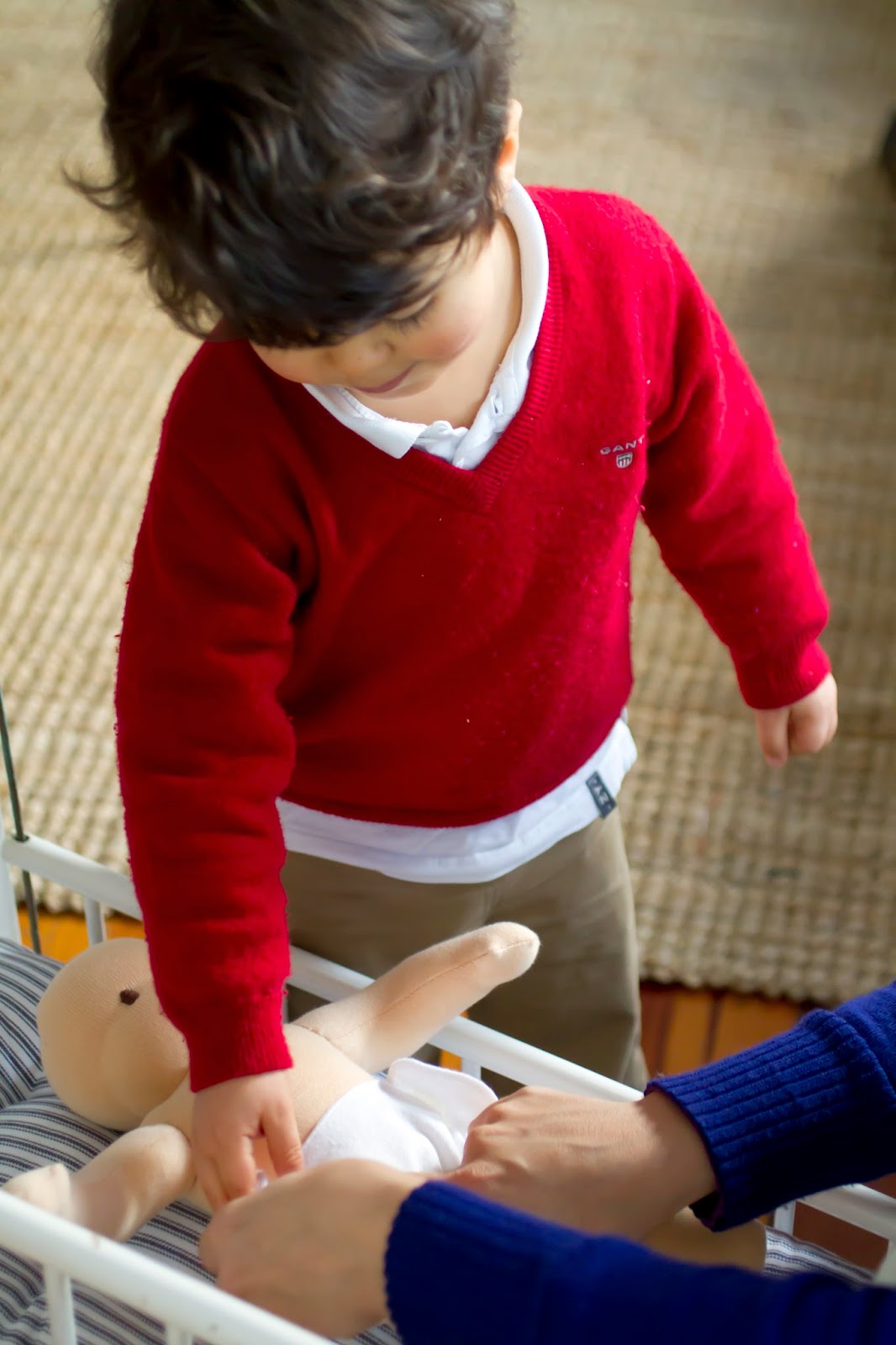
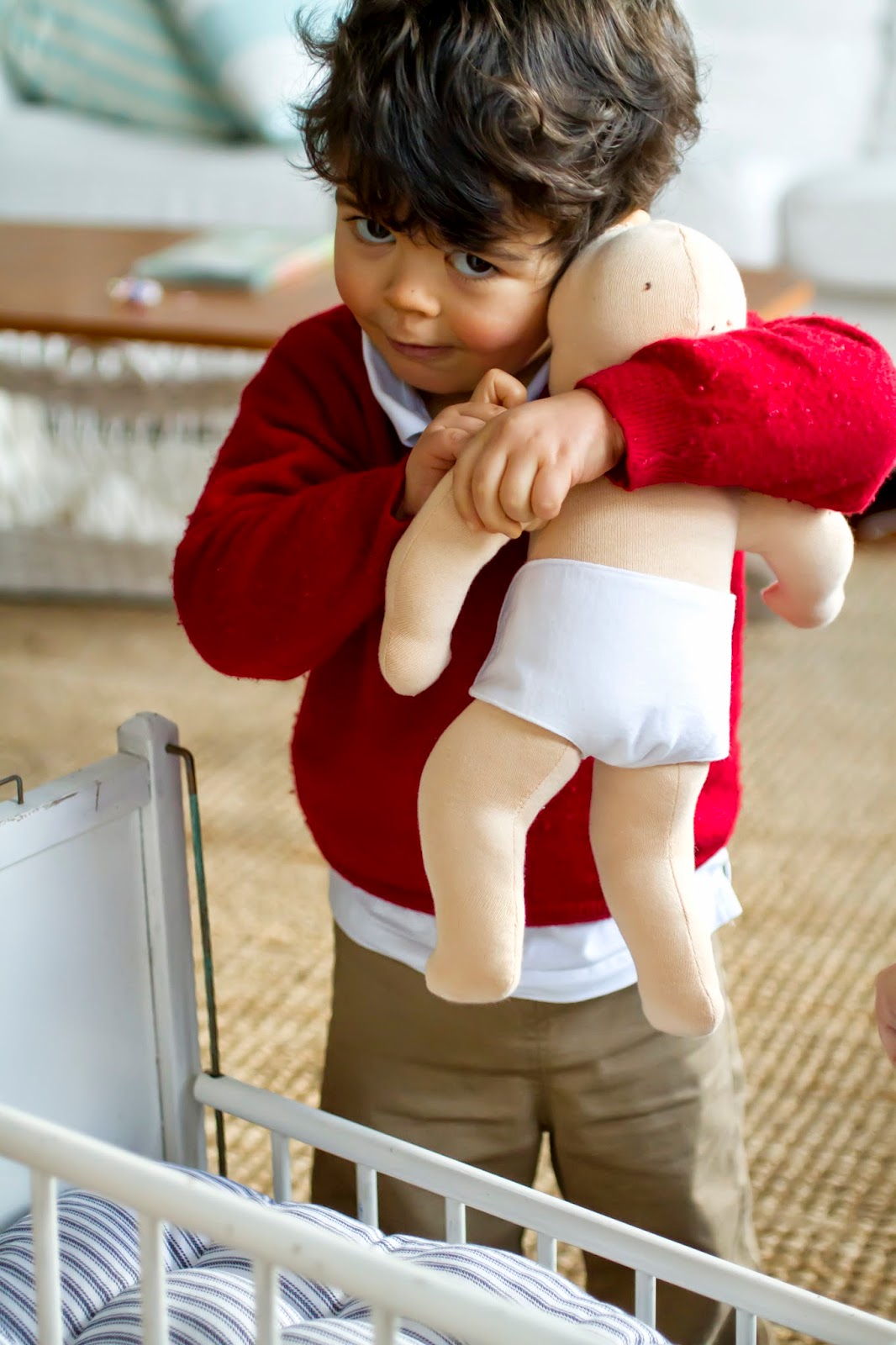
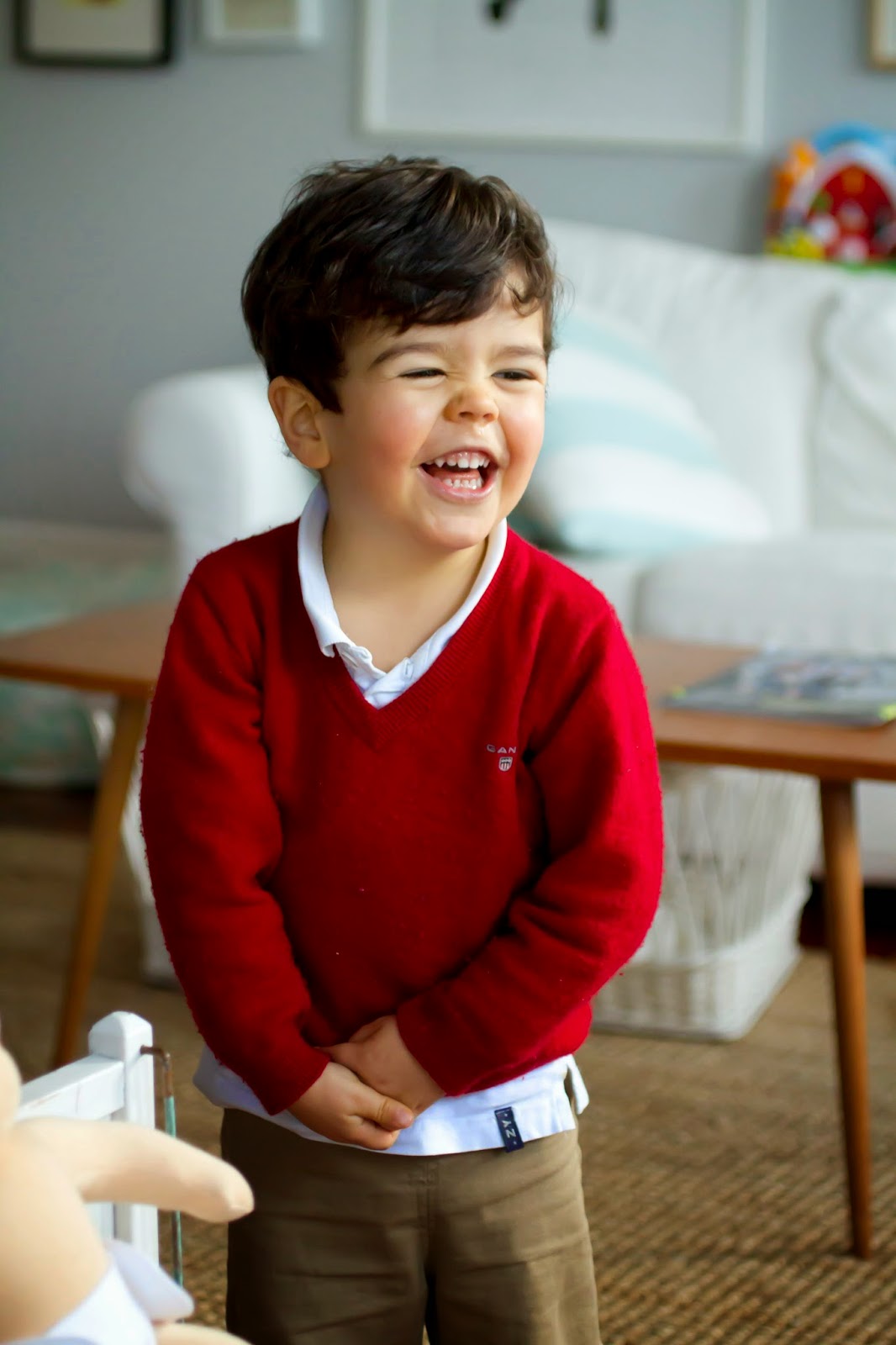
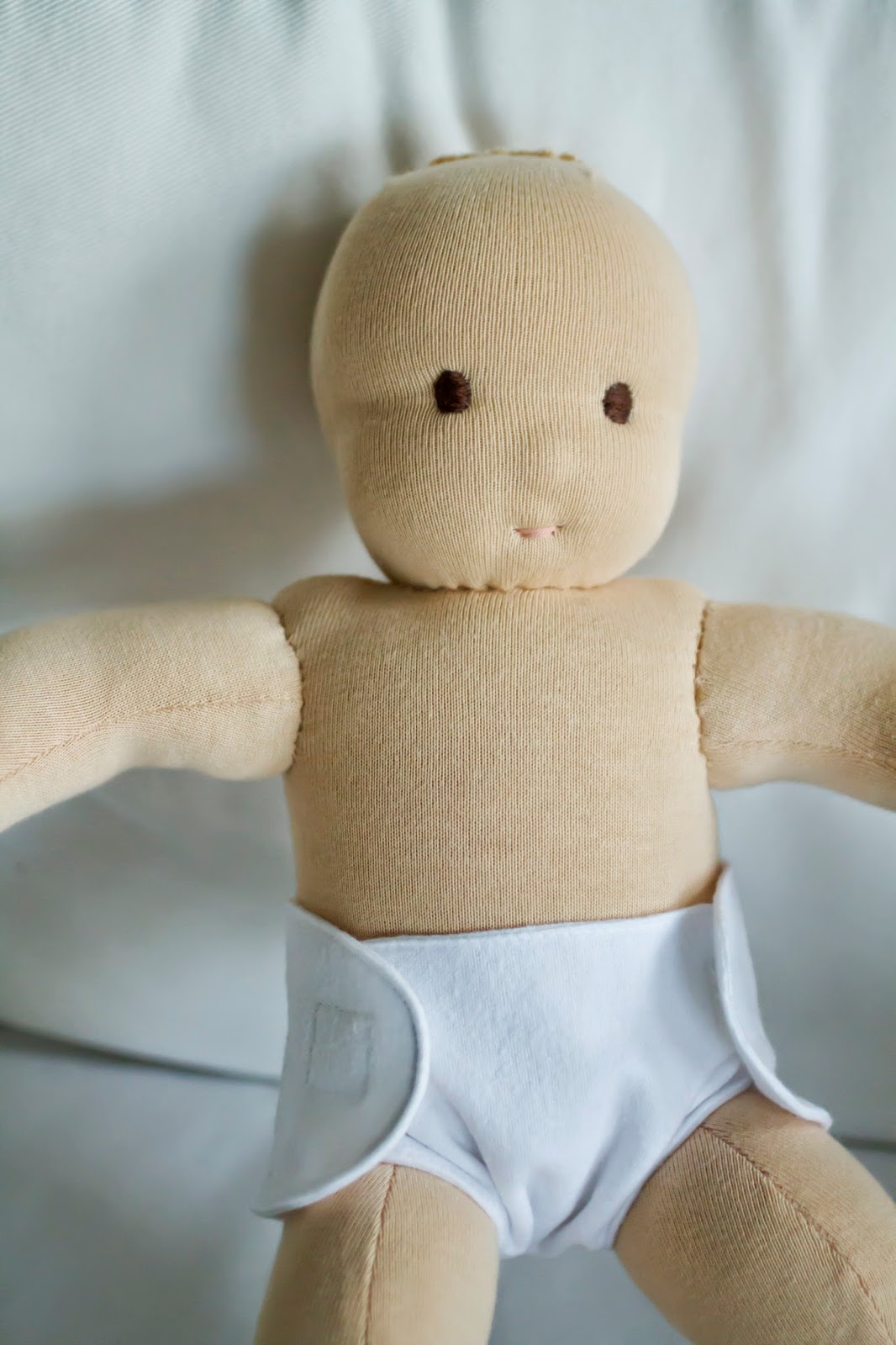
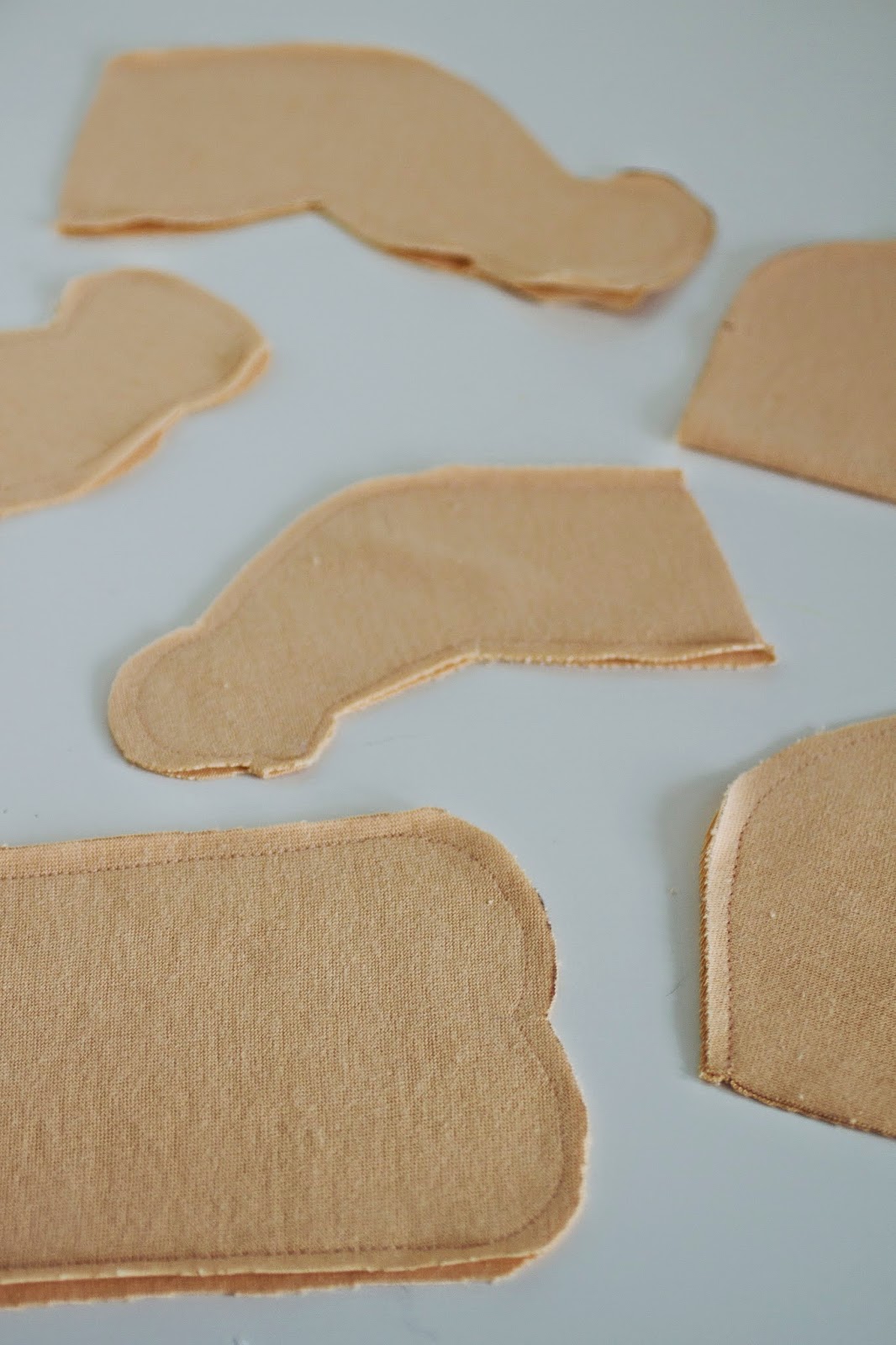
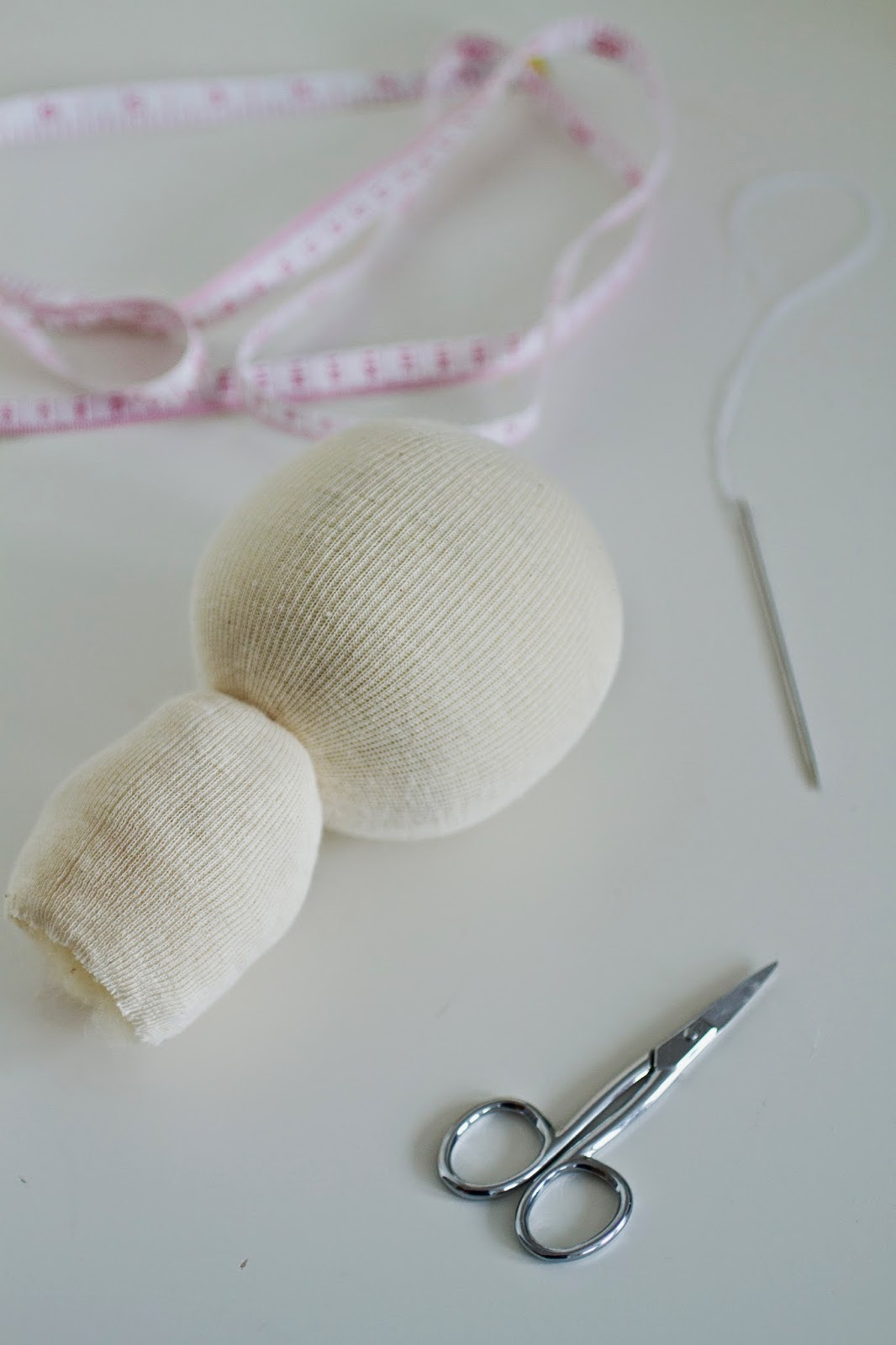
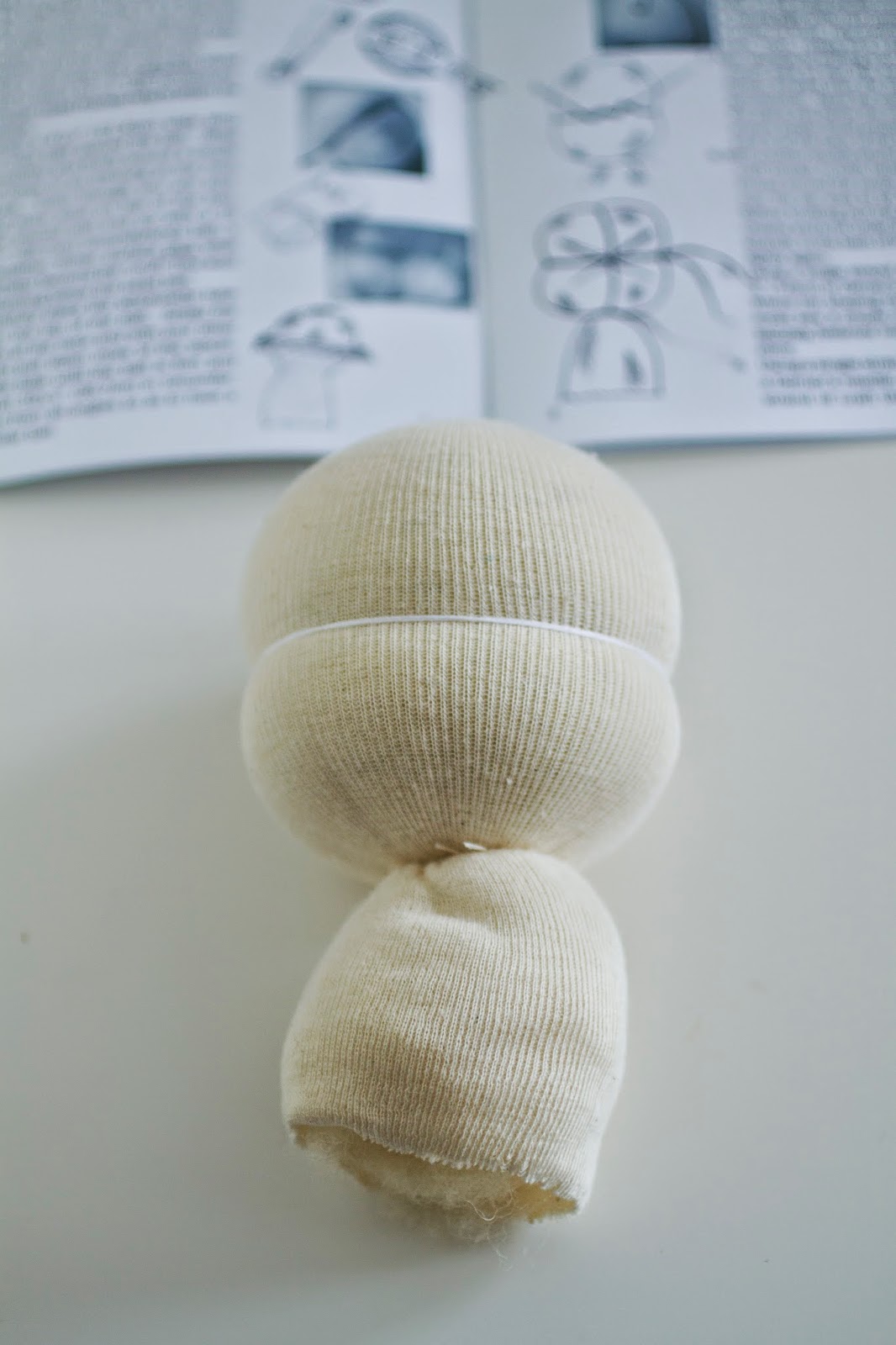
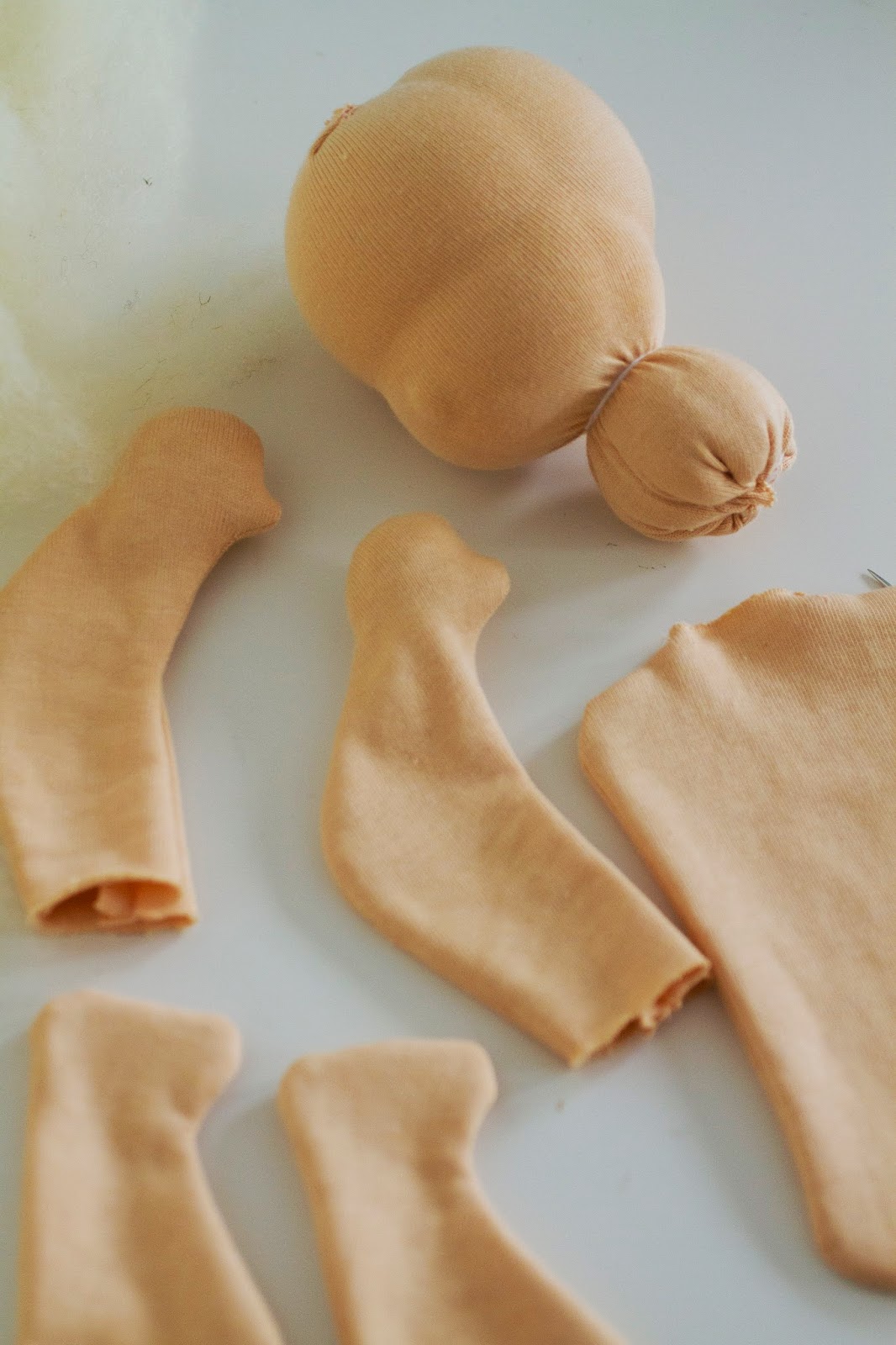
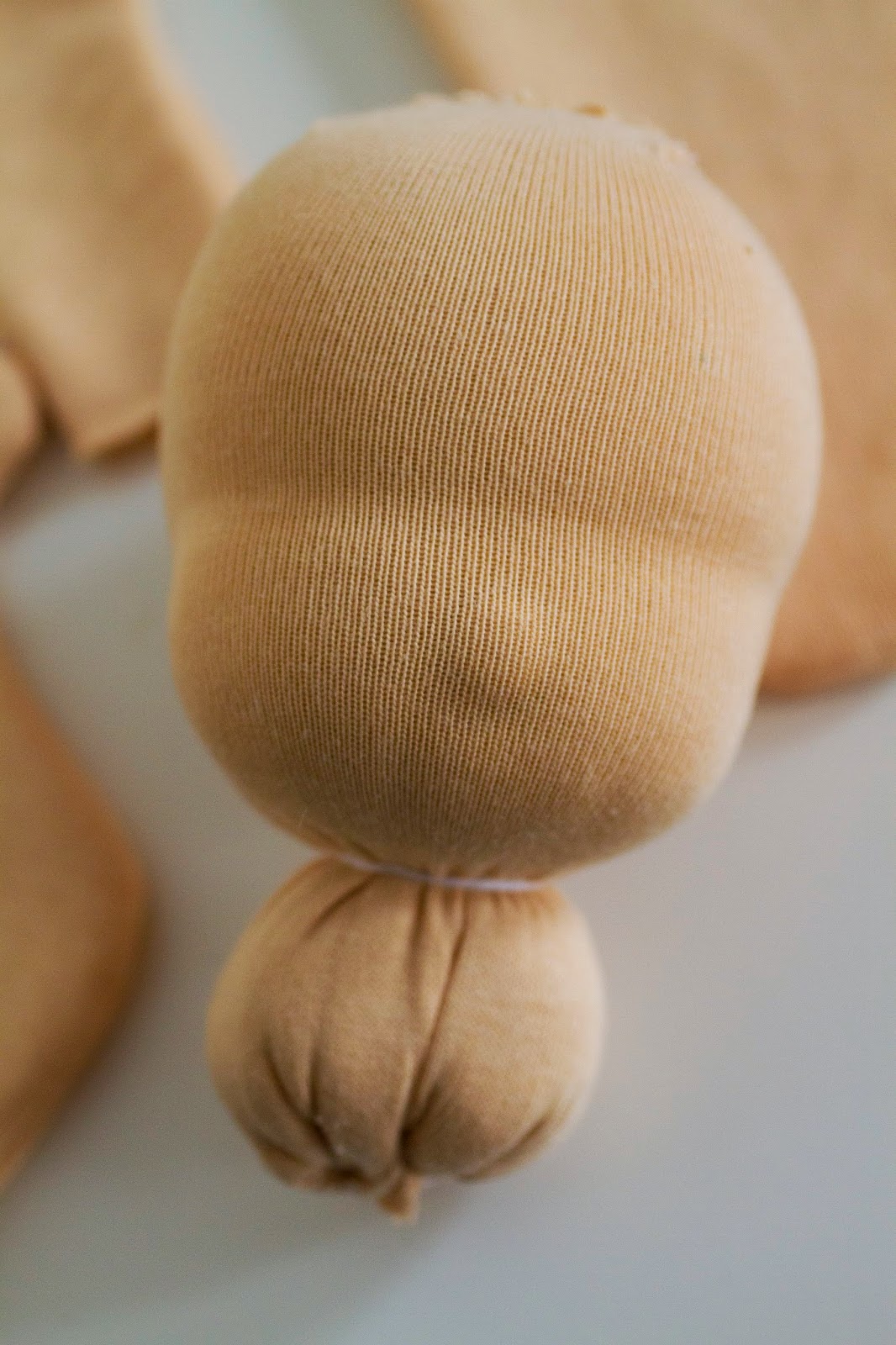
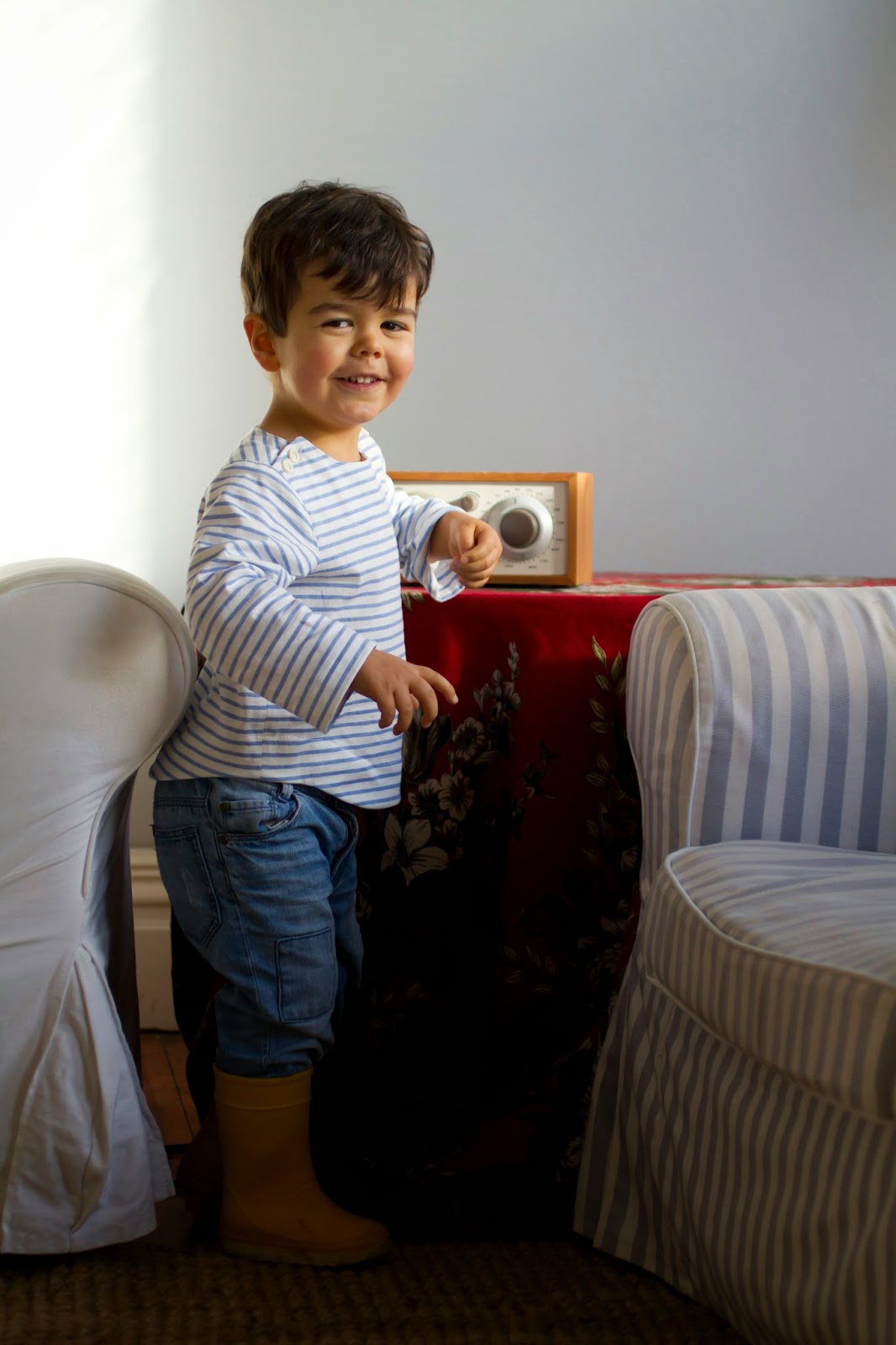
O boneco está quase pronto e o Rodrigo adoptou-o ainda antes de eu lhe ter cosido as pernas. Tem tanta graça ver como ele o trata como se fosse um bebé: põe-no a dormir, tapa-o com uma manta, pega-lhe ao colo e dá-lhe palmadinhas no rabo… mas também o atira ao chão, vira a cama ao contrário e tenta meter-se lá dentro. Isto promete!
No próximo post sobre o boneco mostro-vos o cabelo, o colchão, a colcha em patchwork e a roupa (bem, a parte da roupa ainda não se materializou… vamos lá ver se terei tempo!).
The doll is almost ready and Rodrigo adopted it even before I had managed to sew on the legs. It’s so funny to watch him treat it like a real baby: cuddling it, putting it to sleep and covering it with a quilt… but he also throws it around and tries to climb into the doll cot. I wonder what he’s going to do to his little brother!

In my next post about the doll I’ll tell you all about the wig, the mattress, the patchwork quilt and the clothes (well, I haven’t actually sewn any clothes yet… let’s just assume I’ll find the time to make them!).
(photos© Constança Cabral)
Fazer um Boneco Waldorf :: Making a Waldorf Doll

Para preparar a chegada de um bebé cá a casa, lembrei-me de fazer um boneco para o Rodrigo. Um boneco bebé, com fraldas, uma cama, uma colcha… um bebé só dele. Não sei se será uma boa abordagem — já me disseram que sim, mas a verdade é que só o saberei ao certo daqui a uns meses.
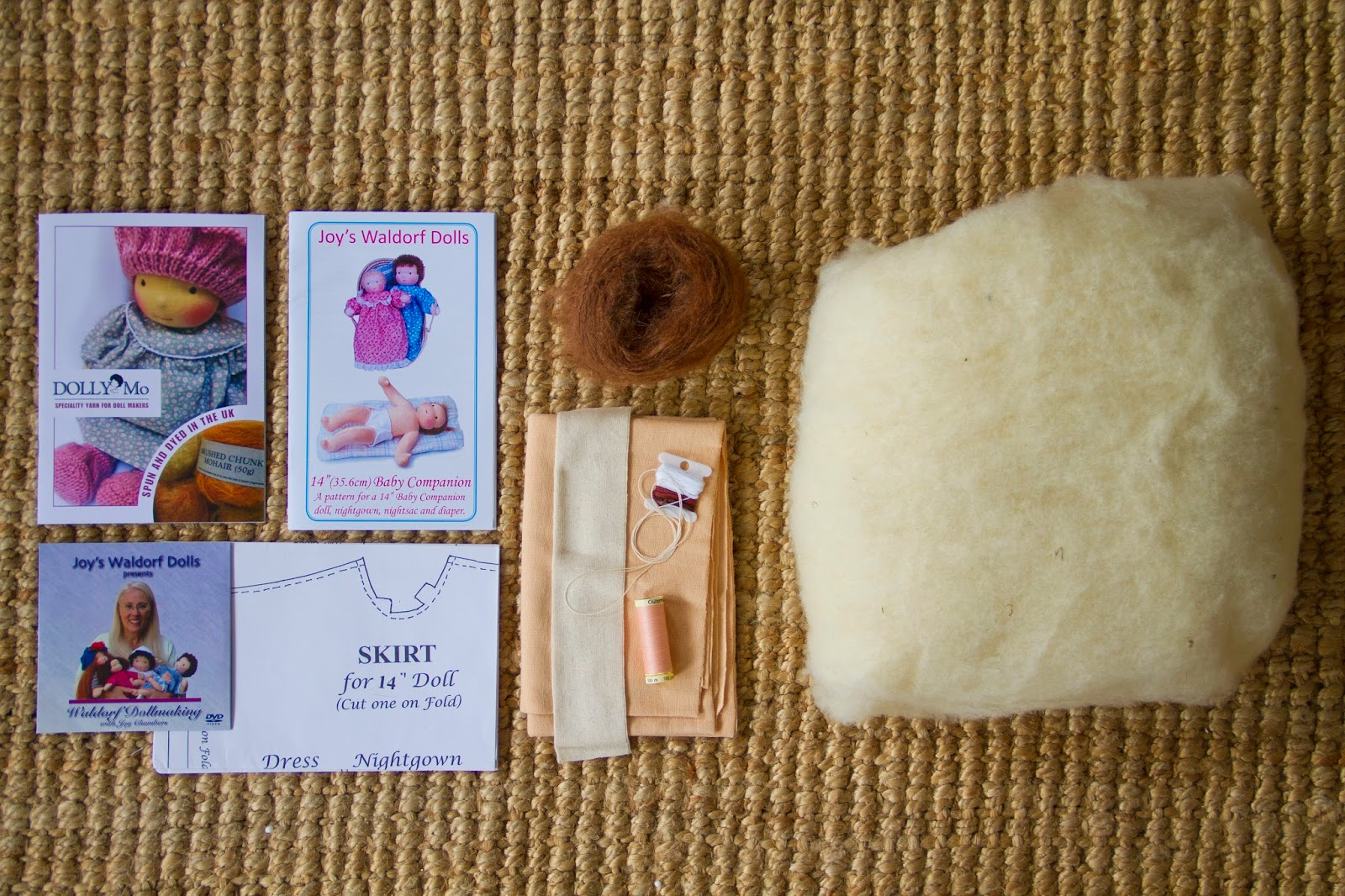
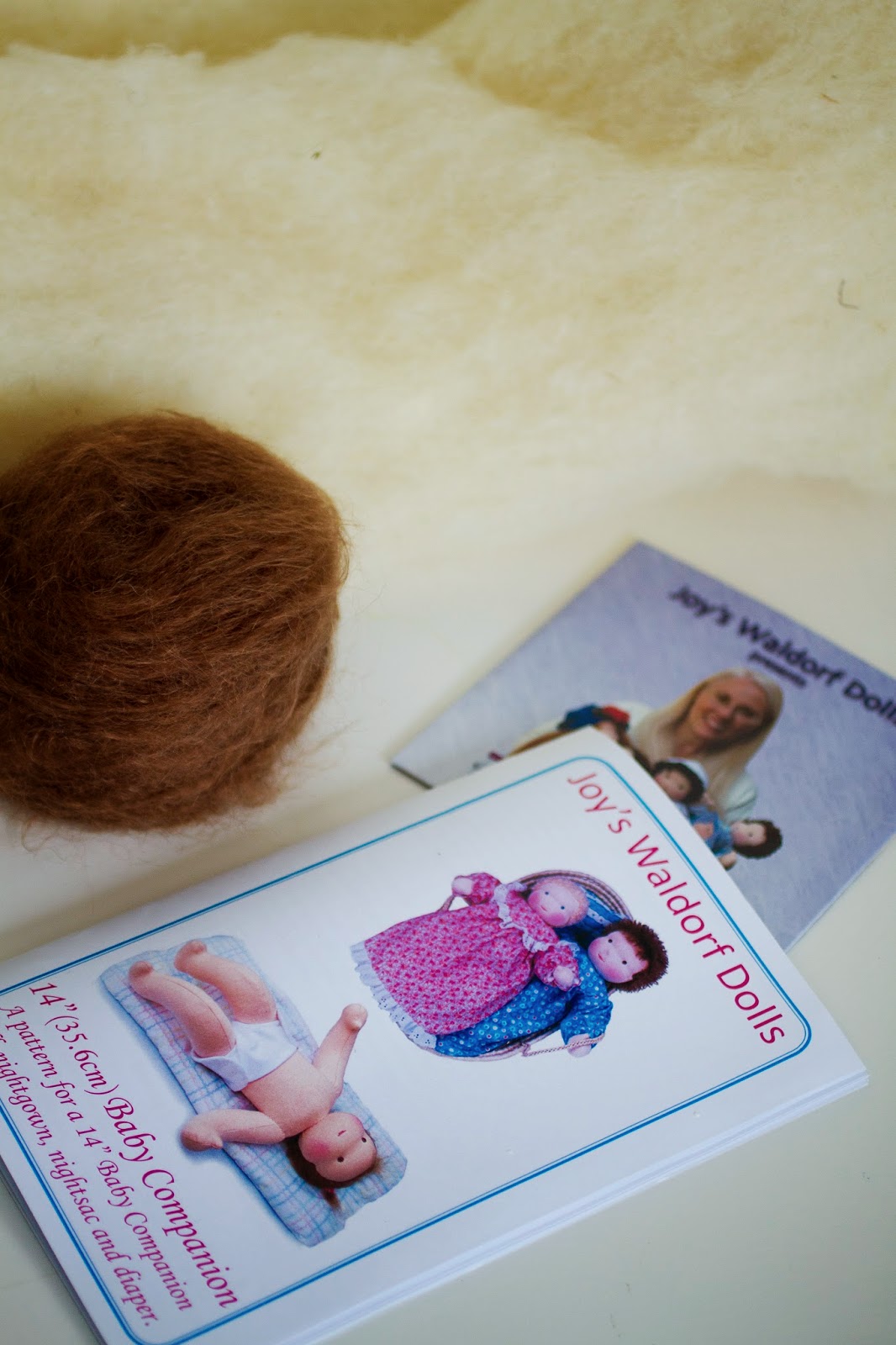
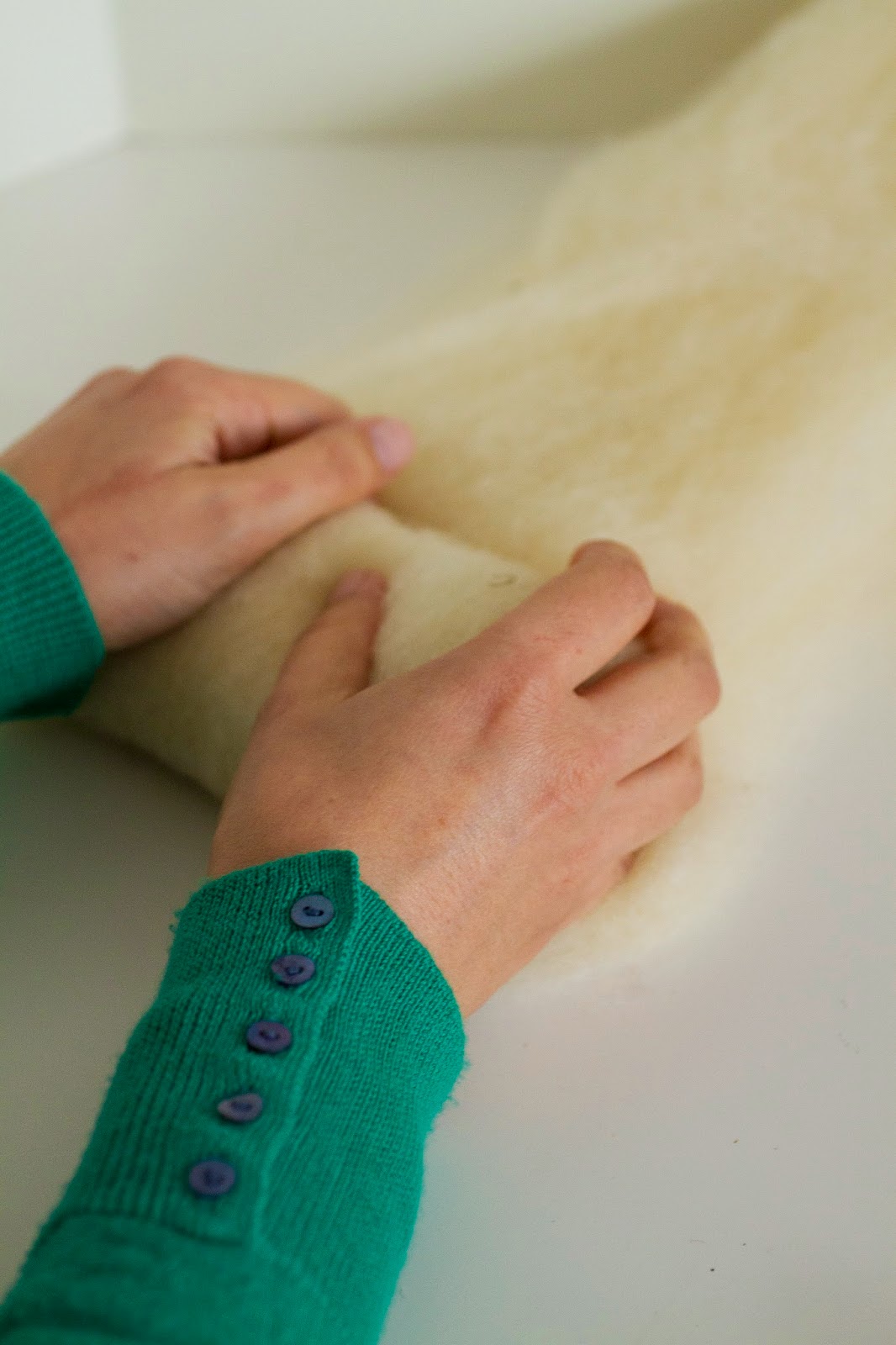
Decidi fazer um boneco Waldorf e comprei este kit (também optei por comprar o DVD). Todos os dias tenho trabalhado um bocado no boneco e estou a gostar imenso de o fazer, se bem que esteja a ser um desafio! Por um lado quero que fique perfeito logo à primeira (até porque estou numa corrida contra o tempo) e ponho-me a planear mentalmente todos os bonecos que vou fazer para os filhos das minhas amigas… por outro lado, não está a ser propriamente fácil. Tanto as técnicas como os materiais são novos para mim: entre tecido de malha, enchimento de lã, agulhas com 25 cm, pontos especiais e uma peruca em crochet (estou a contar com a ajuda da minha mãe nesse campo!), sempre que pego no boneco sinto uma mistura de entusiasmo e de nervoso miudinho.
Agora uma pergunta às mães mais experientes: qual será a melhor altura para oferecer o boneco ao Rodrigo? Antes de o irmão nascer? Depois? No dia em que trouxermos o bebé para casa? Obrigada pelas vossas sugestões!
As part of the preparations to welcome a new baby into our home I’m making a doll for Rodrigo. A baby doll with nappies, a bed, a quilt… his very own baby. I’m not sure whether that’s a good idea or not — I’ve been told it can be helpful but I guess I’ll only know the answer to that in a few months’ time.

I decided to go for a Waldorf-style doll and bought this kit (I’ve also bought the DVD). I’ve been working on it everyday and I’m really enjoying the process, even though it’s proving to be quite the challenge! On the one hand I want this first attempt of mine to turn out perfect (and to be honest I’m in a race against time) and have wild dreams of all the dolls I’m going to make for my friends’ children… on the other hand, it’s not the easiest thing I’ve ever tried my hand at. Both the techniques and the materials are new to me: knit fabric, wool stuffing, 5 inch needles, fancy stitches and a crocheted wig (I’m counting on my mother to help me with that!) — no wonder I feel a mixture of excitement and trepidation whenever I pick it up.

Now a question for you experienced mothers: when is the best time to present the doll to Rodrigo? Before his brother is born? After? The day we bring the baby home? Thanks for your input!

(photos© Constança Cabral)
Crescer :: Growing Up


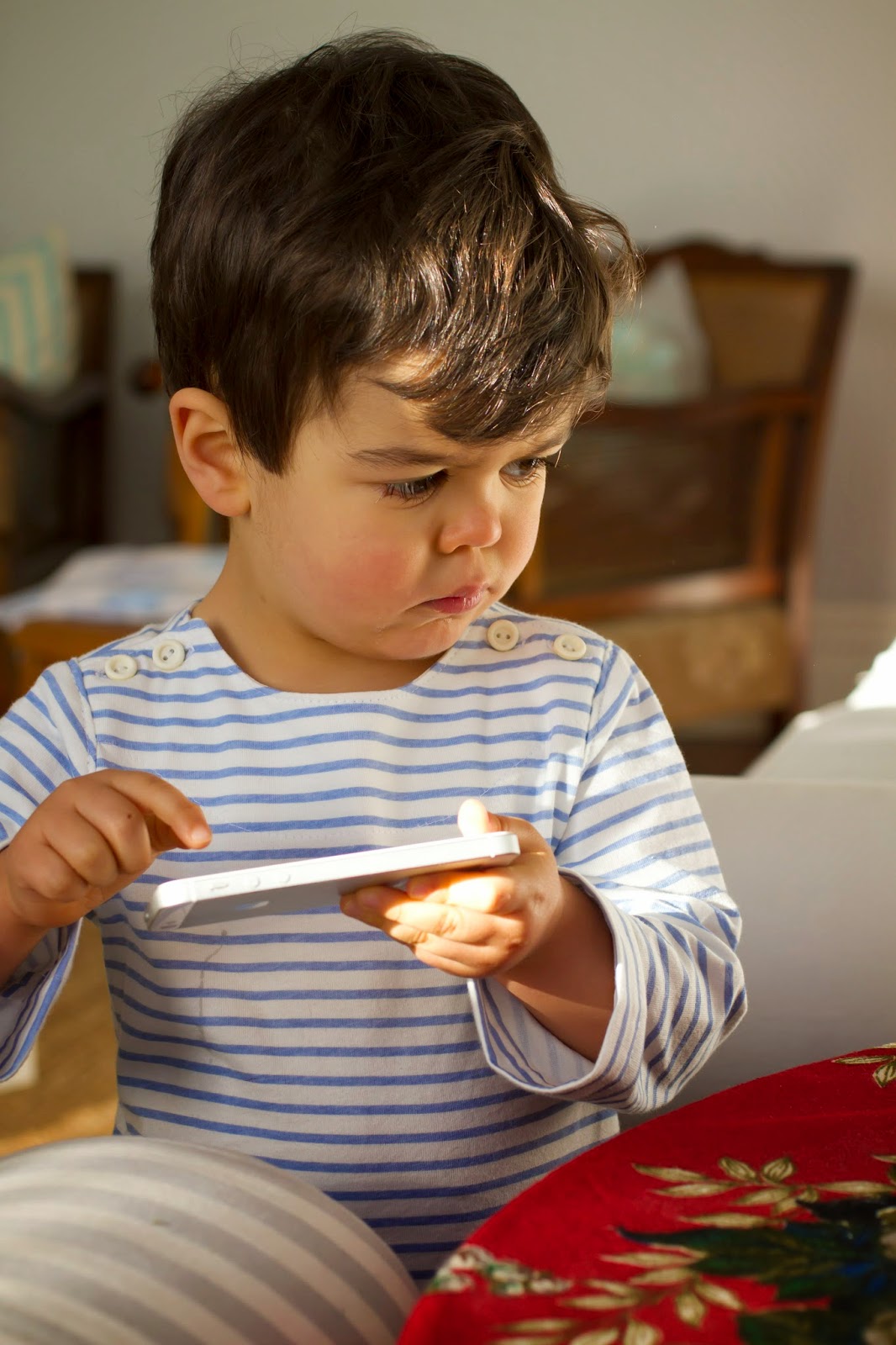
Dizem que a vida volta ao normal quando o filho mais novo faz 3 anos. Será verdade? A minha vida tem-se modificado tanto ao longo dos últimos tempos que já nem sei bem o que será “normal”, mas o que é facto é que, à medida que o Rodrigo cresce, o dia-a-dia vai-se tornando mais fácil. Ele está cada vez mais independente, paciente e conversador, e quer participar em todo o tipo de tarefas cá em casa.
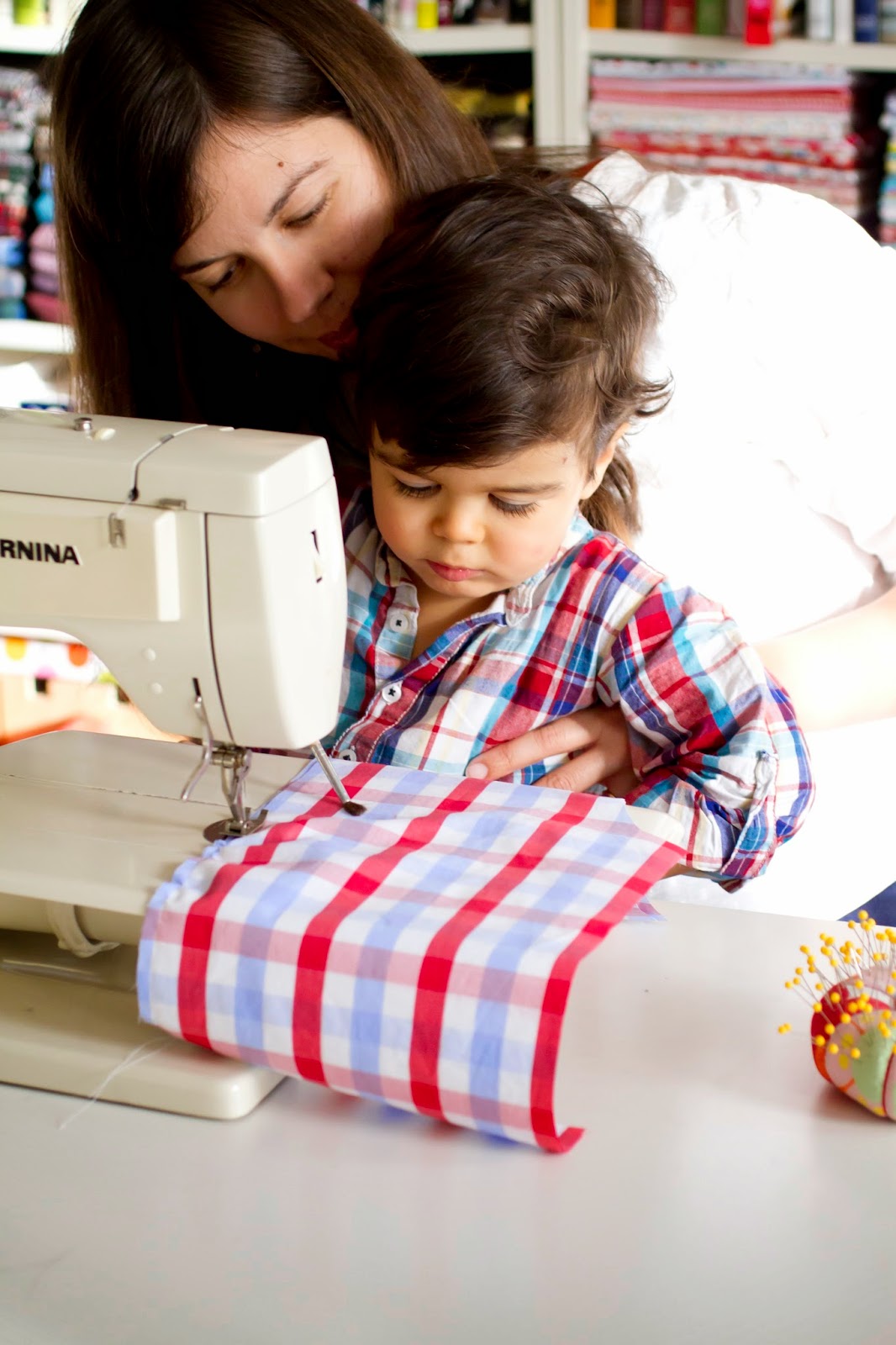
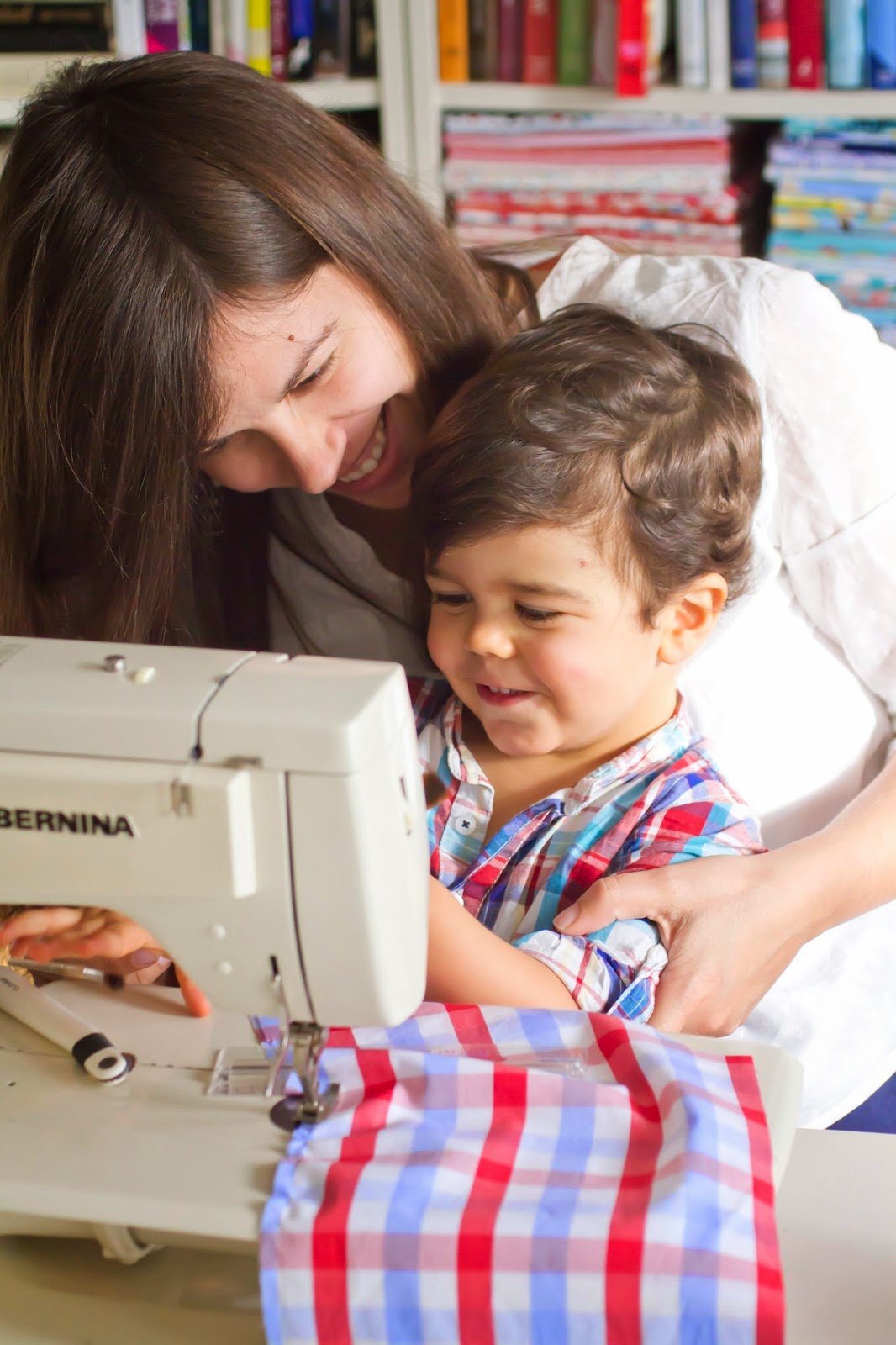
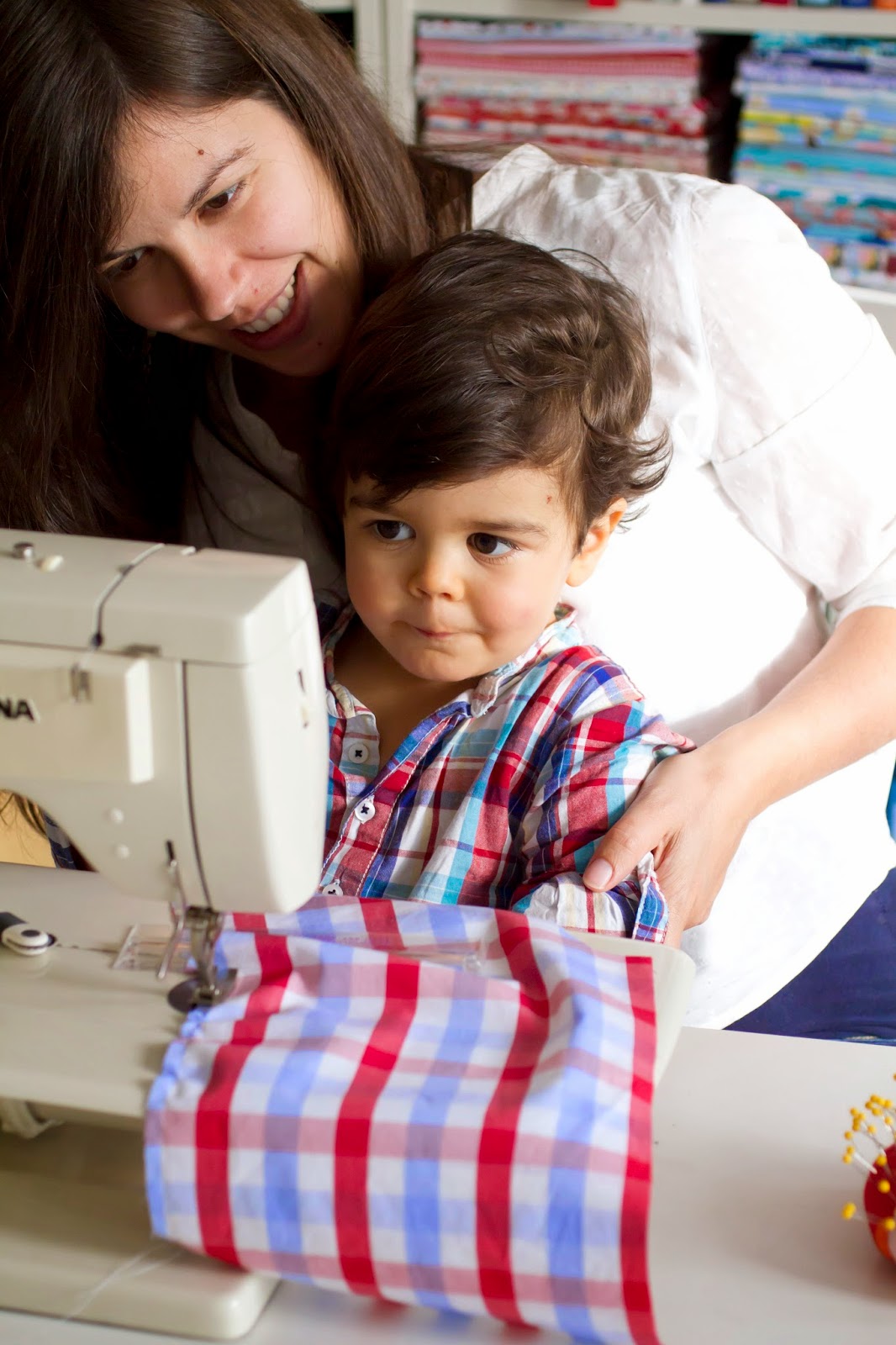
Tal como a maior parte das crianças, tem um verdadeiro fascínio pela máquina de costura! Gosta do barulho, de acender e apagar a luz, de guiar (puxar) o tecido e de mexer nos alfinetes. Já me ajudou a encher um boneco e adora brincar com retalhos de tecidos (desde que tenham animais), passá-los a ferro (frio) e arrumá-los dentro do armário. Acima de tudo, gosta de imitar tudo aquilo que eu faço.
Daqui a um mês recomeça tudo outra vez!…

They say that life returns to normal once your youngest child turns 3. I wonder if that’s true? My life has changed so much over the last years that I no longer no what “normal” really means, but I can’t deny the fact that as Rodrigo grows up our daily life becomes a little easier. He’s getting more independent, patient and talkative and wants to be a part of everything we do around the house.

Like most children, he finds the sewing machine utterly fascinating. He likes the sound it makes and he enjoys the light on and off, guiding (pulling) the fabric and playing with pins. He’s already helped me stuff a toy and he loves fabric scraps (especially novelty ones): he presses them with a cool iron and carefully puts them away in the fabric cupboard. Above all, he mimics everything I do.

In a month’s time we’ll start all over again!…

(photos© Constança Cabral)
Oliver + S Sailboat Top

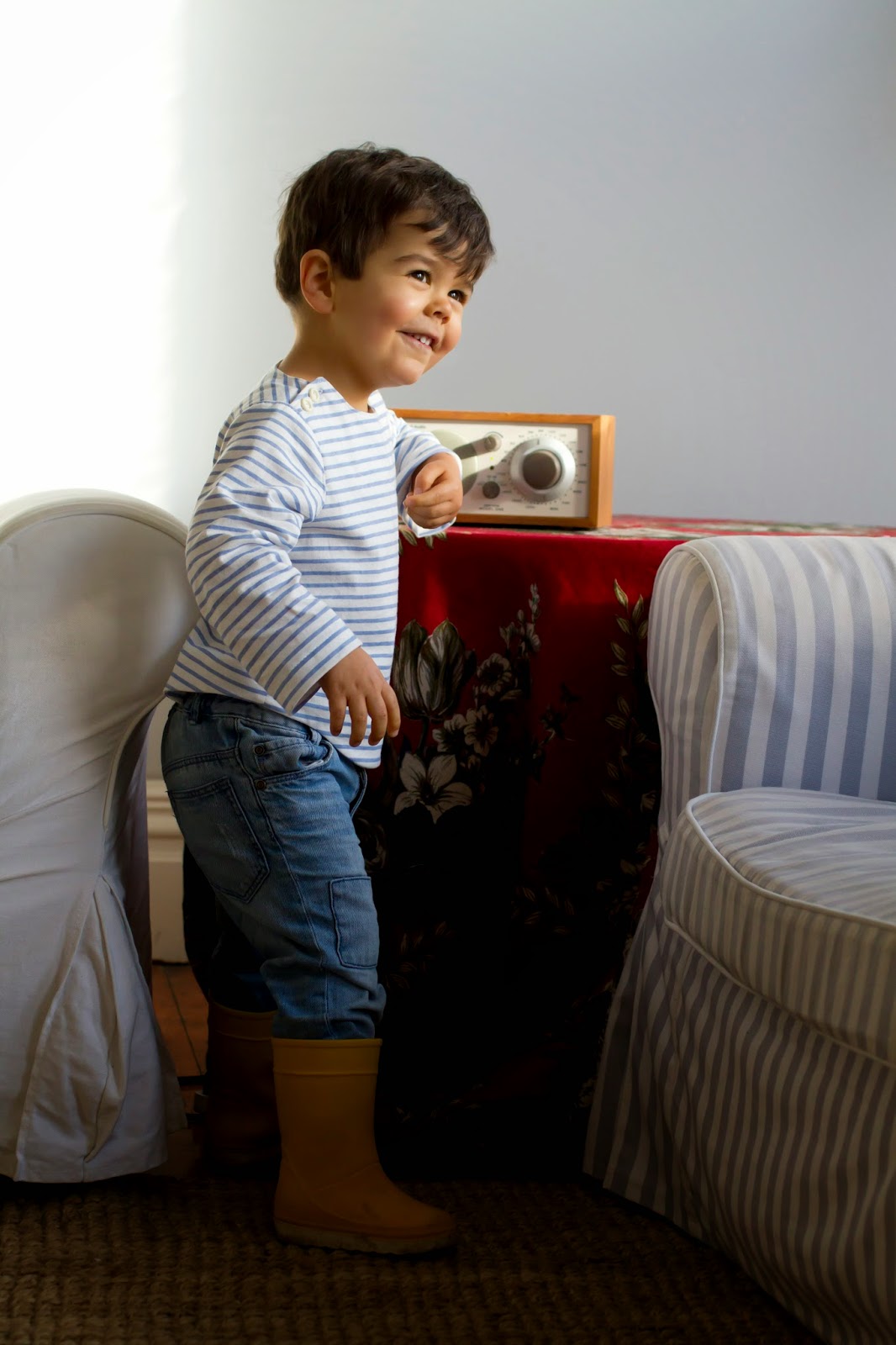
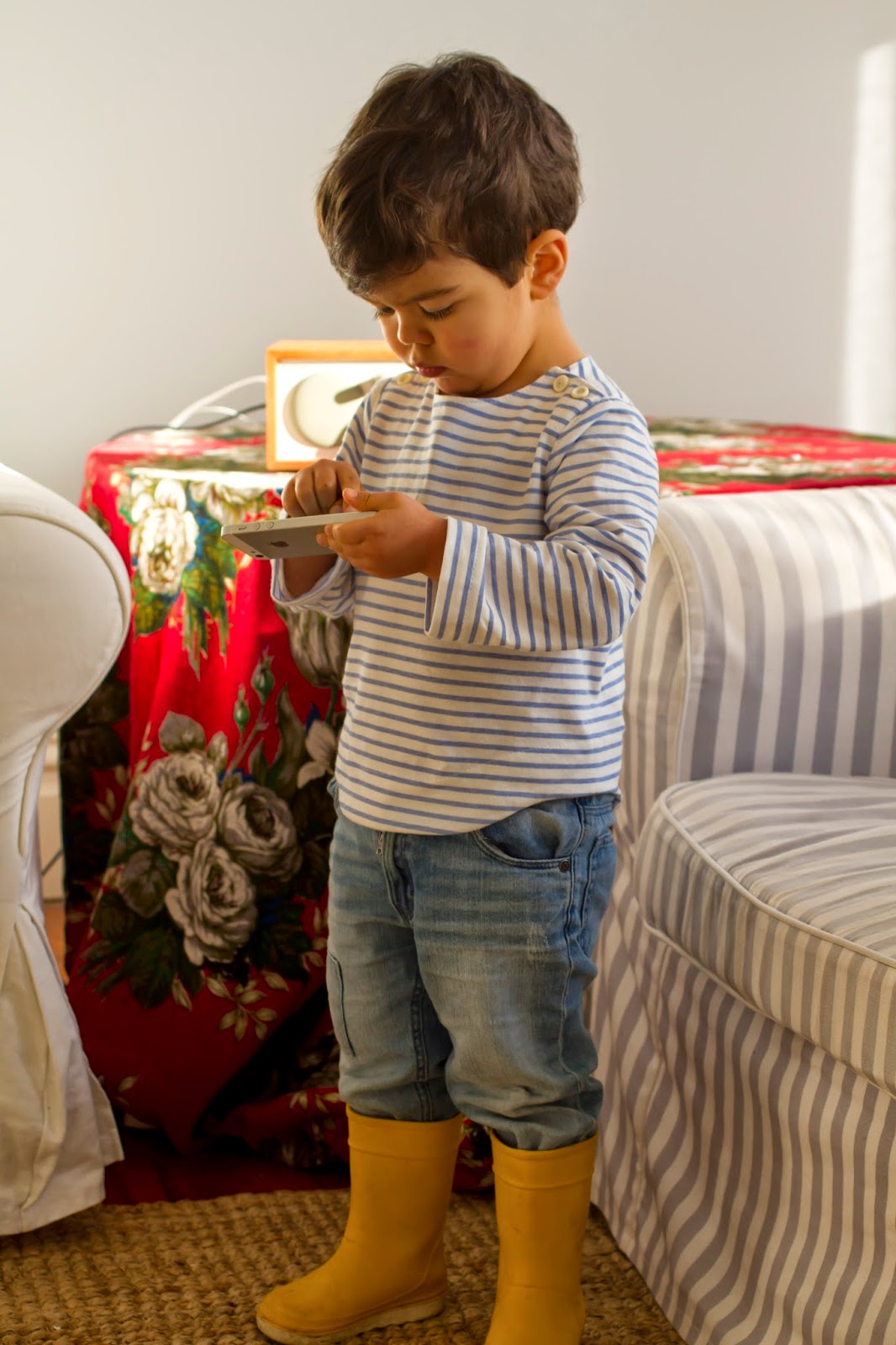
Fiz mais uma peça de roupa para o Rodrigo, desta vez uma marinière clássica. Estas camisolas às riscas são absolutamente intemporais e ficam bem a toda a gente. Usei o molde Sailboat Top da marca Oliver + S (que já tinha utilizado para fazer estes pijamas de Verão, lembram-se?), mas desta vez escolhi um tecido em malha de algodão. Cortei o tamanho 3 anos (o Rodrigo tem 2) e a camisola ficou impecável, se bem que um pouco curta… parece-me que, tal como eu, este rapaz é comprido de tronco (vou ter de começar a adaptar os moldes que escolho para ele). Fica um bretão engraçado, não fica?
PS. Muitas marinières aqui.
I can’t stop making clothes for Rodrigo — my latest piece is a classic marinière. These stripey shirts are timeless and suit absolutely everyone. I followed the Sailboat Top pattern by Oliver + S (I’d already used it to make pyjama tops, remember?) but this time I picked a cotton knit rather than a woven fabric. I cut a size 3 (Rodrigo is only 2) and the fit is great, despite being on the sort side… I’m coming to the conclusion that, just like me, this boy has a long torso (I’ll have to start lengthening the patterns I use for him). He makes for a rather cute Breton, doesn’t he?

PS. Lots of marinières here.
(photos© Constança Cabral)
Segunda Volta :: Round Two

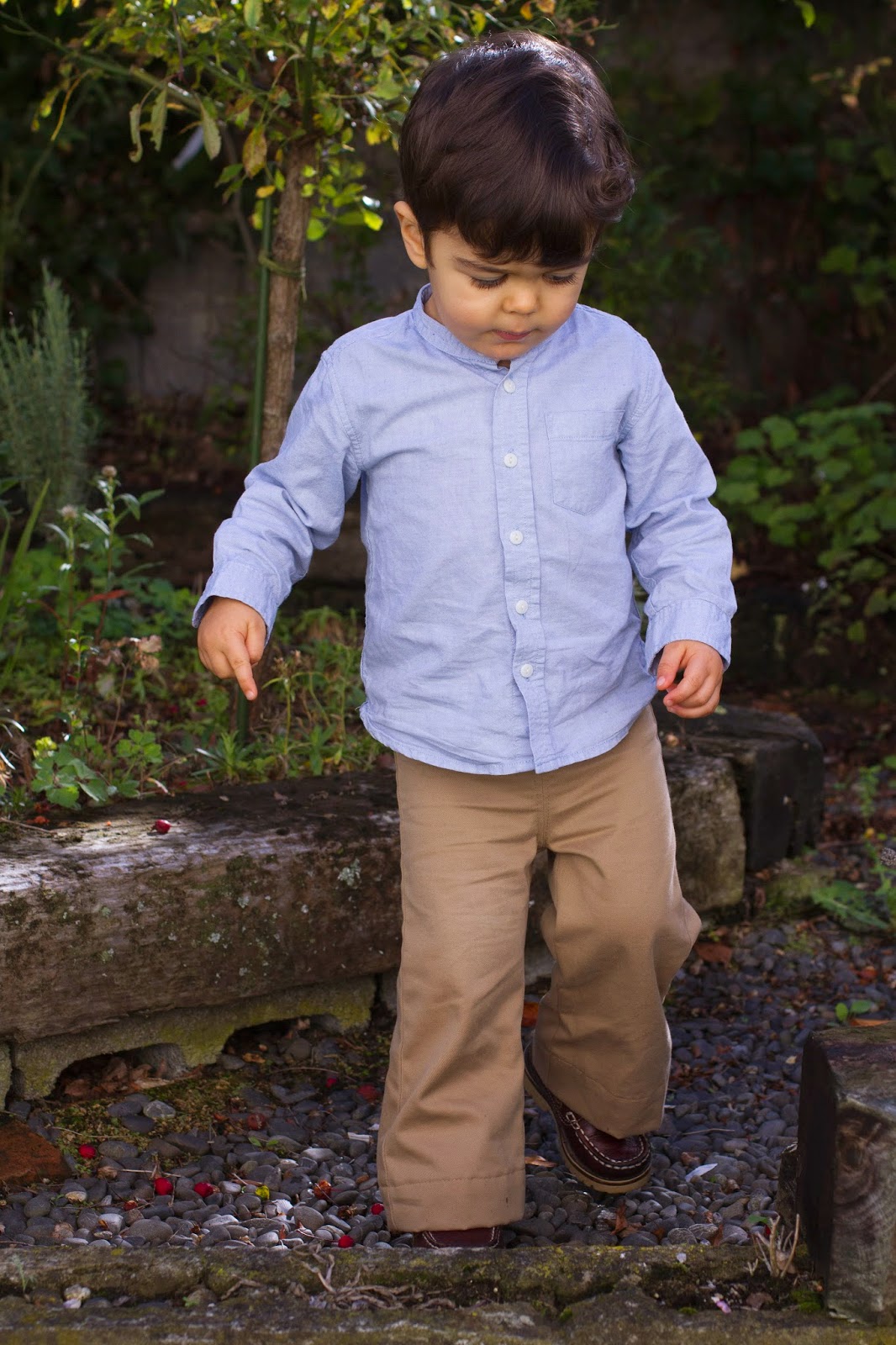
Mais um par de Parsley Pants (que fiz com outras calças antigas do Tiago) e mais uma Easy Linen Shirt (também esta em algodão… hei-de fazer uma em linho para o Verão). Quando os moldes são bem feitos, vale a pena repetir!
Another pair of Parsley Pants (upcycled from yet another pair of Tiago’s trousers) and another Easy Linen Shirt (again made in cotton… I’ll sew up a linen one for summer). The beauty of well-drafted patterns is that you’ll use them over and over again!
(photos© Constança Cabral)
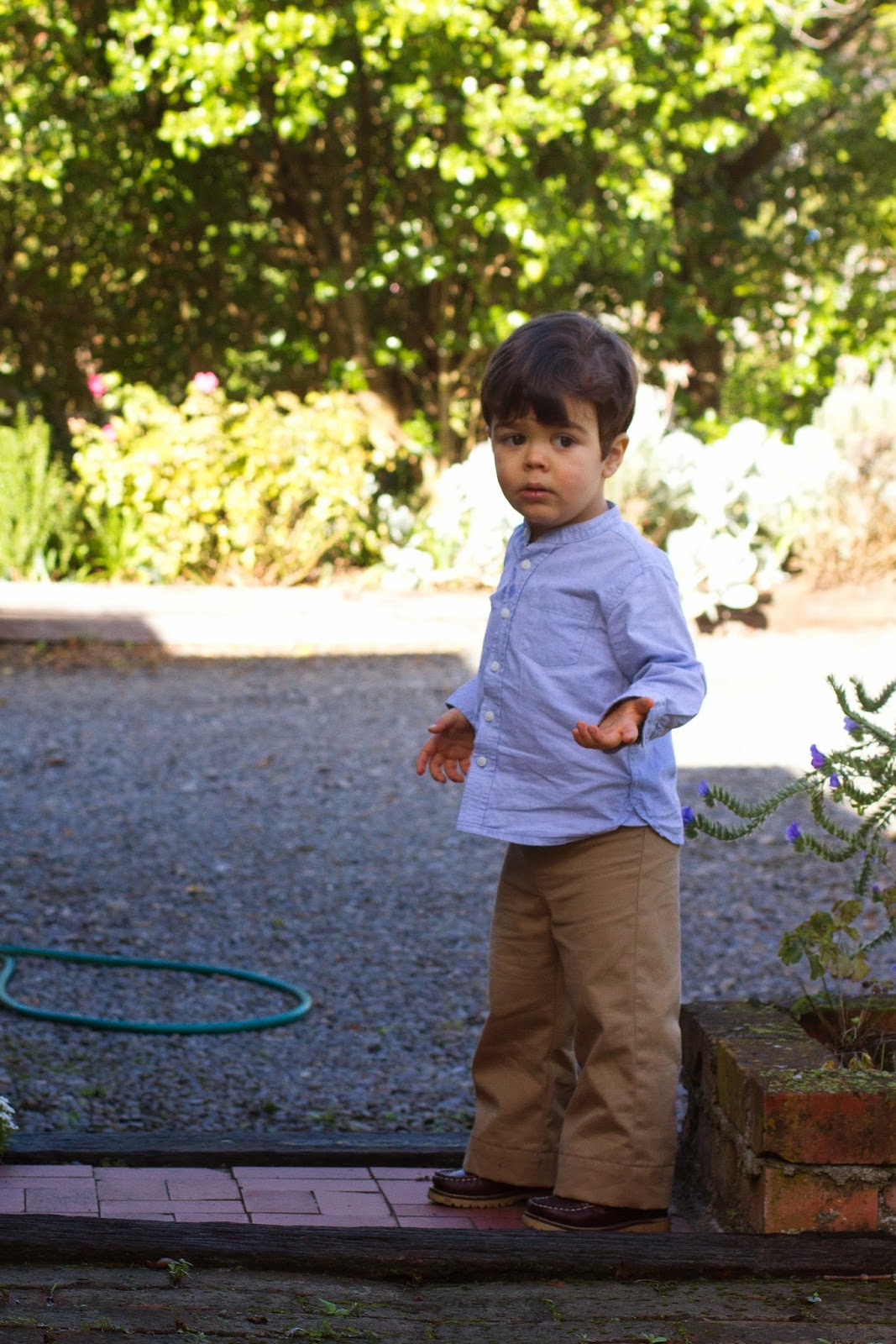
Como Fazer Capa de Édredon + Fronha :: How to Sew a Toddler Duvet Cover + Pillowcase

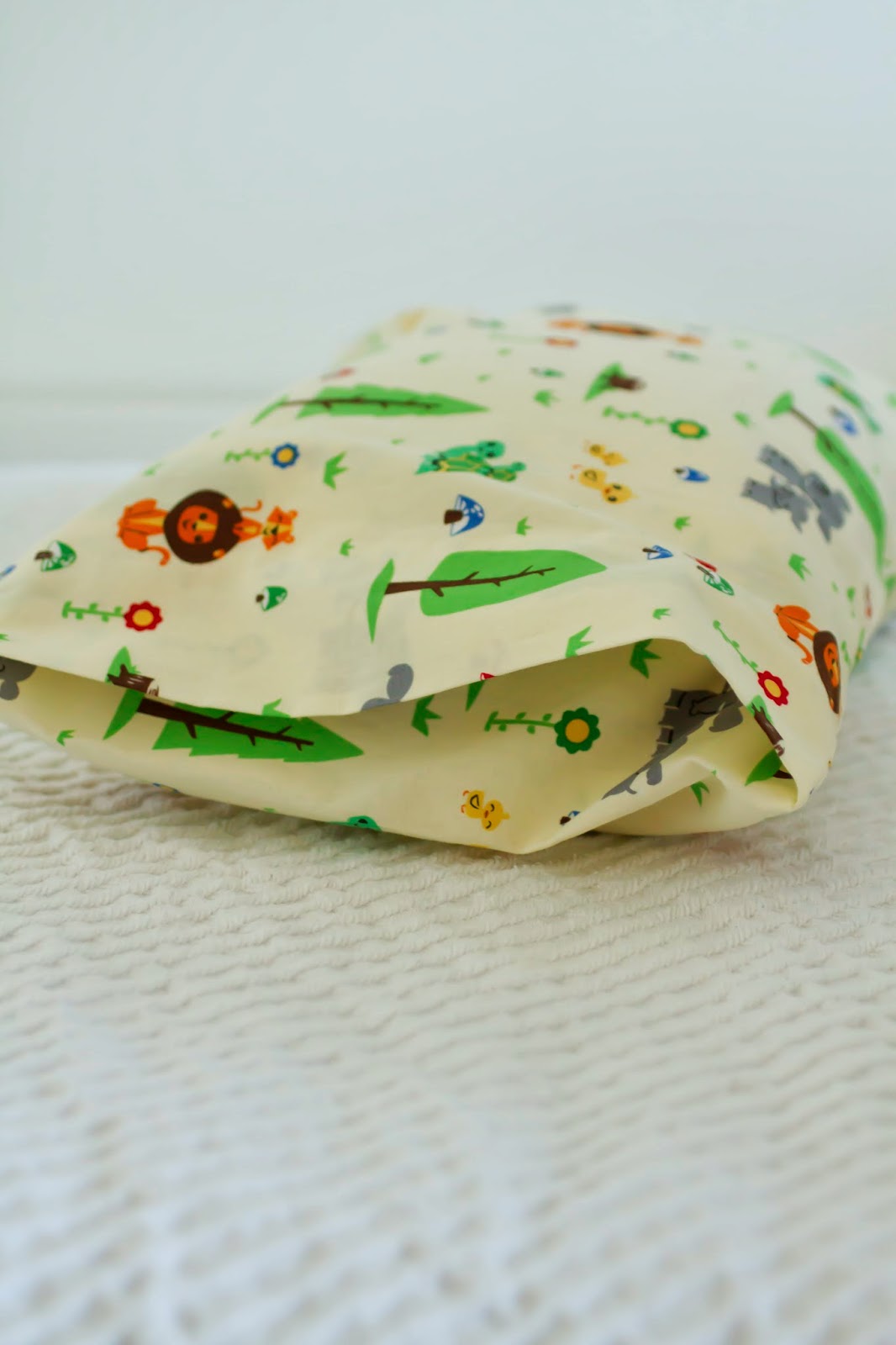
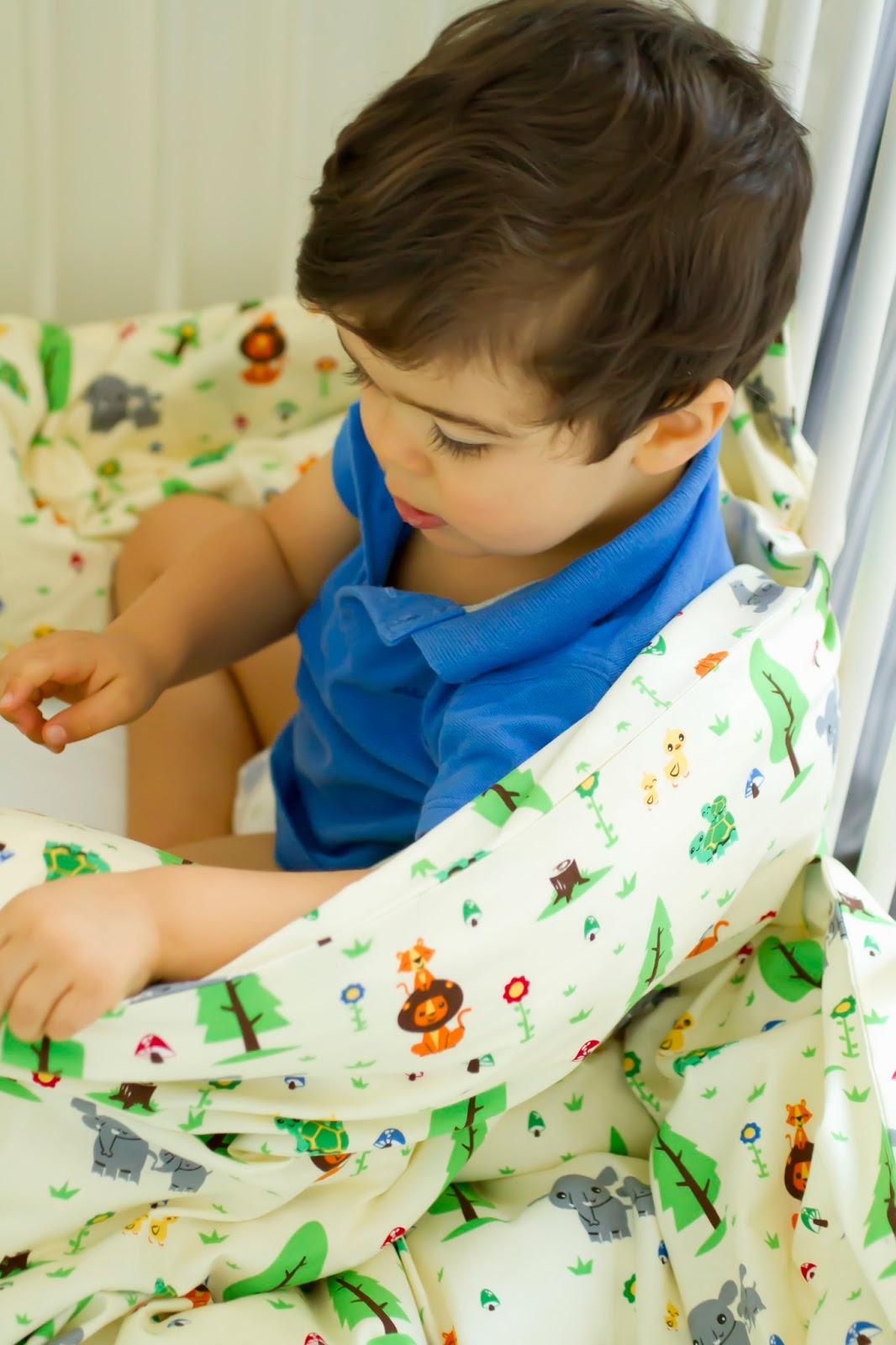
Lembram-se da capa de édredon e fronha que fiz para a cama do Rodrigo? A capa fica aberta em baixo e é ligeiramente mais comprida do que o édredon, o que a permite entalar com facilidade debaixo do colchão. A fronha fecha como um envelope. Aqui ficam as instruções para fazer igual:
Remember the duvet cover and pillowcase I made for Rodrigo’s crib? The duvet cover is open on the bottom and it’s slightly longer than the duvet itself, which makes it easy to tuck the ends under the mattress. The pillowcase has a simple envelope closure. Here’s a tutorial for you:


Materiais (para uma capa de édredon para cama de grades + uma fronha para uma almofada de 30 x 40 cm)
3,50 m de tecido com 1,10 m de largura
fita métrica/régua
tesoura
linha
máquina de costura
ferro de engomar
Materials (for a crib-sized duvet cover and a 30 x 40 cm pillowcase)
3,50 m of fabric that is 1,10 m wide
tape measure/ruler
thread
fabric scissors
sewing machine
iron


Para fazer a capa de édredon:
To make the duvet cover:
1. Cortar 2 rectângulos de tecido com 1,50 de comprimento. Não mexer na largura do tecido (manter as ourelas intactas).
1. Cut 2 rectangles of fabric, each 1,50 m long. Do not touch the width of the fabric (don’t trim the selvedges).

2. Colocar os 2 rectângulos no chão, direito com direito, tendo o cuidado de alinhar bem as ourelas.
2. Place the 2 rectangles on the floor with right sides together, making sure the selvedges are aligned.

3. Acertar as partes de cima e de baixo com uma régua, de maneira a que fiquem direitas. Cortar.
3. Square off the top and bottom (use a ruler and trace a line, then cut).
4. Prender com alfinetes os lados e a parte de cima e coser a toda a volta a 2 cm da borda, deixando a parte de baixo aberta.
4. Pin along the top and sides and sew all around using a 2 cm seam allowance. Do not sew the bottom!

5. Chulear a parte de cima. Virar para o direito e engomar.
5. Zig-zag the top raw edge. Turn right side out and press.

6. Dobrar a parte de baixo 1 cm e vincar com o ferro. Voltar a dobrar 1,5 cm, vincar com o ferro e pespontar. Engomar. Já está!
6. Fold the bottom edge 1 cm and press it. Fold it again 1,5 cm, press and edgestitch all around it. Press. You’re done!

Para fazer a fronha:
To make the pillowcase:
1. Cortar um rectângulo de tecido com 100 x 31 cm, mantendo uma das ourelas intactas (atenção que estas medidas são para uma almofada de 30 x 40 cm).
1. Cut a rectangle of fabric measuring 100 x 31 cm, leaving one of the selvedges uncut (keep in mind that these measurements are for a 30 x 40 cm pillow).

2. Pegar no lado que tem a ourela e, com o avesso virado para cima, fazer uma dobra com 6 cm. Vincar a dobra com o ferro e pespontar. Dobrar o outro lado 1 cm e vincar com o ferro; dobrá-lo novamente 1 cm, voltar a vincar com o ferro e pespontar.
2. Take the side with the selvedge and place it with the wrong side up. Fold the selvedge edge 6 cm, press in place and edgestitch. Take the other side, fold the edge 1 cm and press it place; fold it again 1 cm, press and edgestitch. 

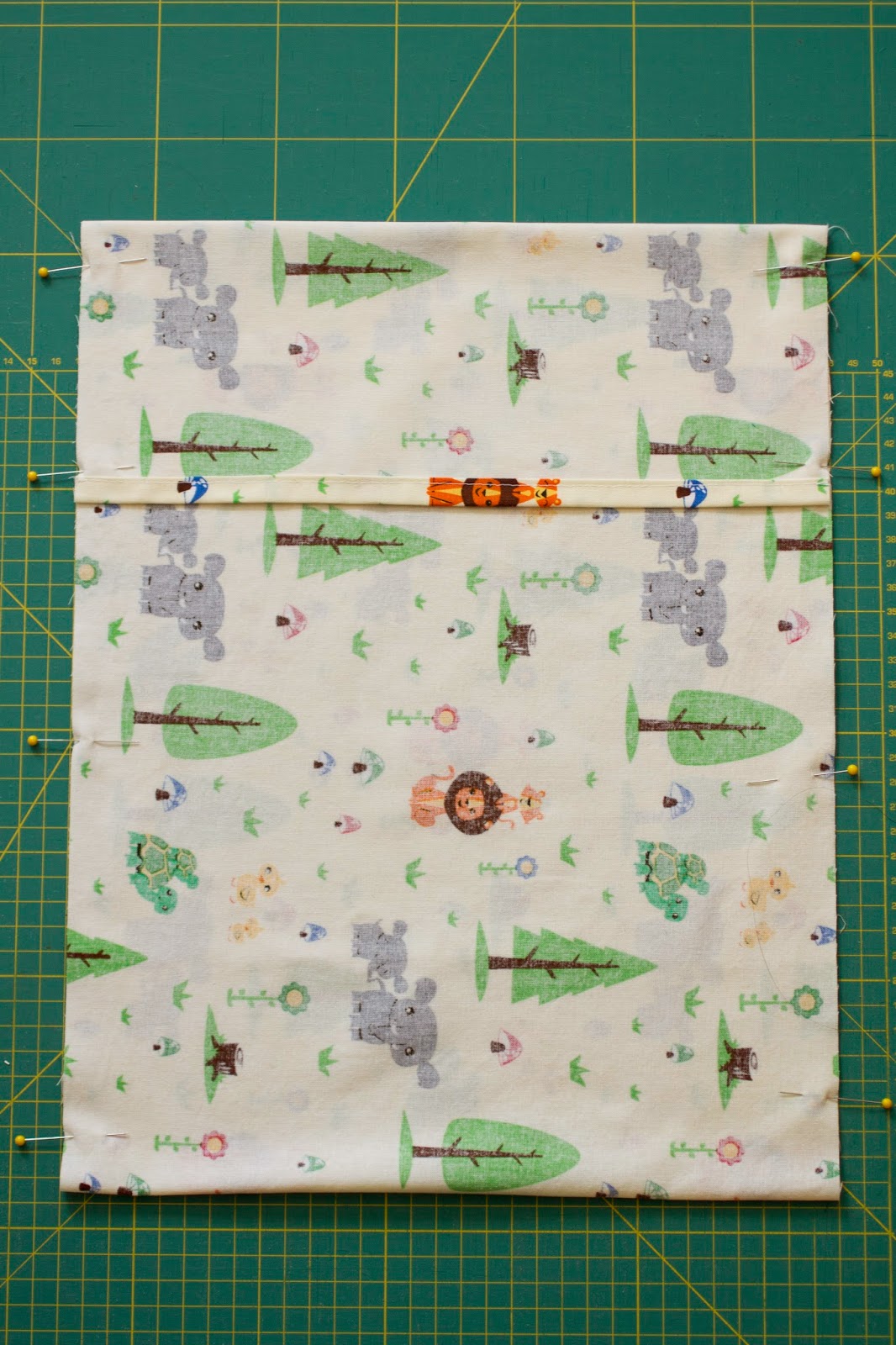
3. Colocar o rectângulo em cima de uma superfície plana, com o direito do tecido virado para cima. Medir 12 cm a partir da extremidade que não tem a ourela e dobrar a outra extremidade do rectângulo até esse ponto — isto significa que estará a fazer uma dobra com 40 cm (o comprimento da almofada). Em seguida, dobrar a parte que resta do rectângulo, colocando-a por cima daquilo que já foi dobrado  (ver imagens abaixo). 
3. Place the rectangle on top of a flat surface with the right side of the fabric facing up. Measure 12 cm from the end that has no selvedge. Grab the other end and fold it upwards up to the point where it meets the 12 cm you just measured — this means you’ll be folding it 40 cm (the length of the pillow). Then fold down the other end, placing it on top of the end that you just folded (see pictures below).

4. Prender os lados do rectângulo com alfinetes e cosê-los a 0,5 cm da borda. Chulear as bordas. Virar a fronha para o direito e passá-la a ferro. Já está!
4. Pin the sides of the rectangle and stitch them using a 0,5 cm seam allowance. Zig-zag the raw edges. Turn the pillowcase right side out and press. That’s it!

(photos© Constança Cabral)
Parsley Pants

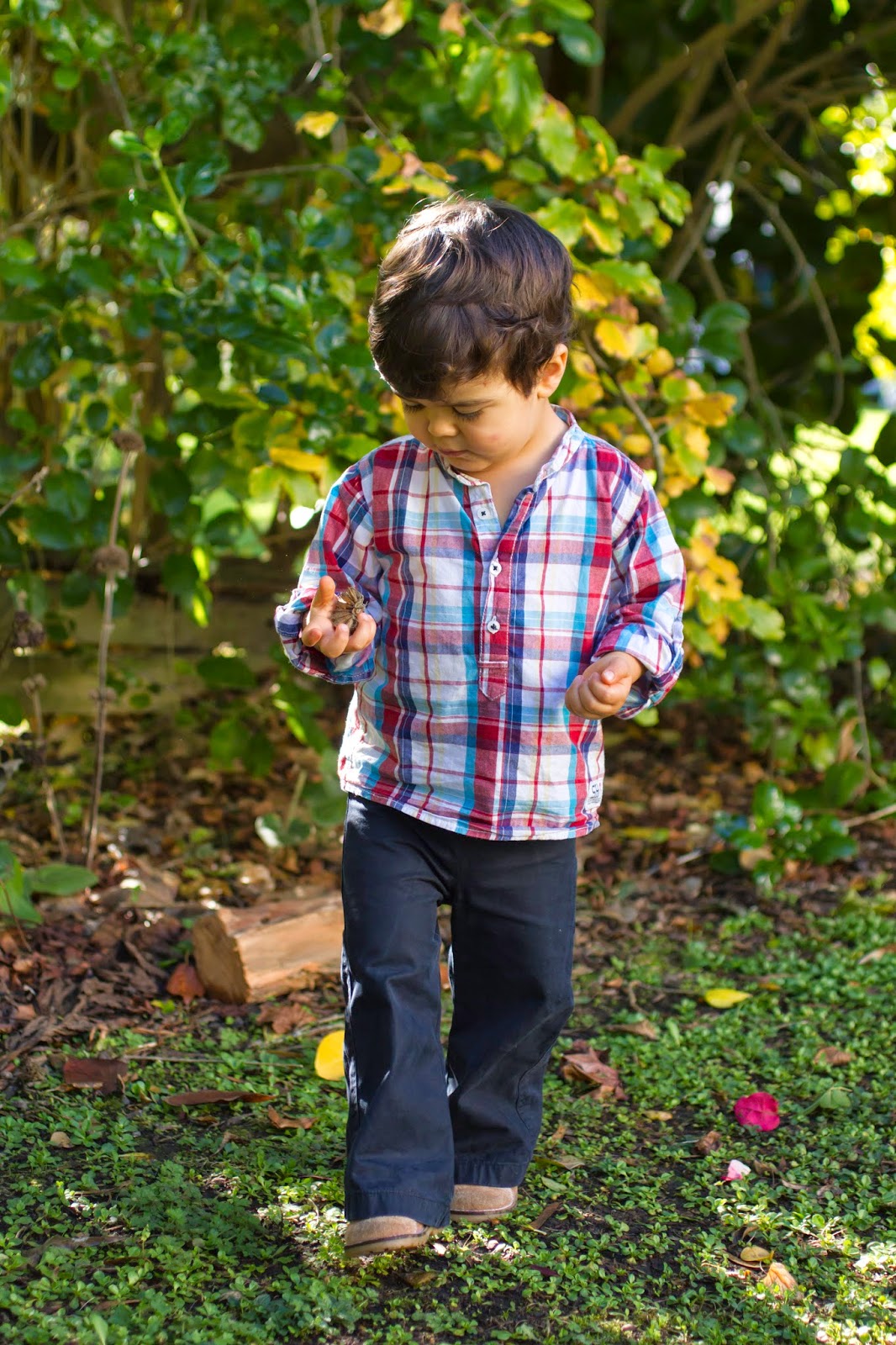
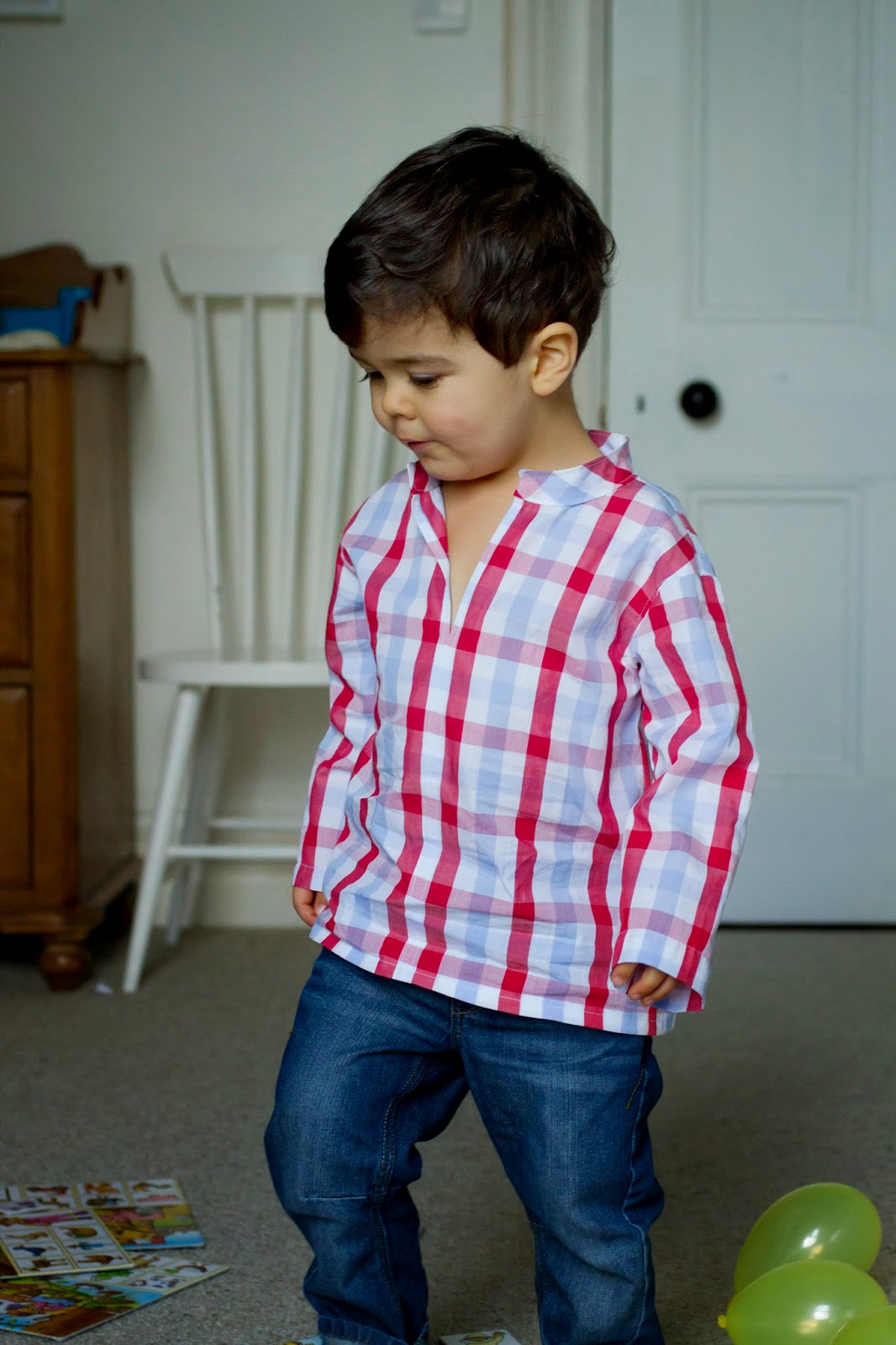
À semelhança dos gatos, estas calças têm mais do que uma vida. Começaram por ser calças do Tiago, usadas durante anos; quando começaram a ficar gastas de tantas lavagens, tingi-as de azul-escuro (a cor original) com Dylon e voltaram a ficar como novas (já experimentaram tingir na máquina de lavar roupa?). Passaram-se mais uns anos e as calças ficaram com umas nódoas impossíveis de tirar — o Tiago trabalha numa fábrica e estraga imensa roupa —, mas a parte de baixo das pernas continuava boa. Foi nessa altura que me lembrei de transformá-las numas calças para o Rodrigo.
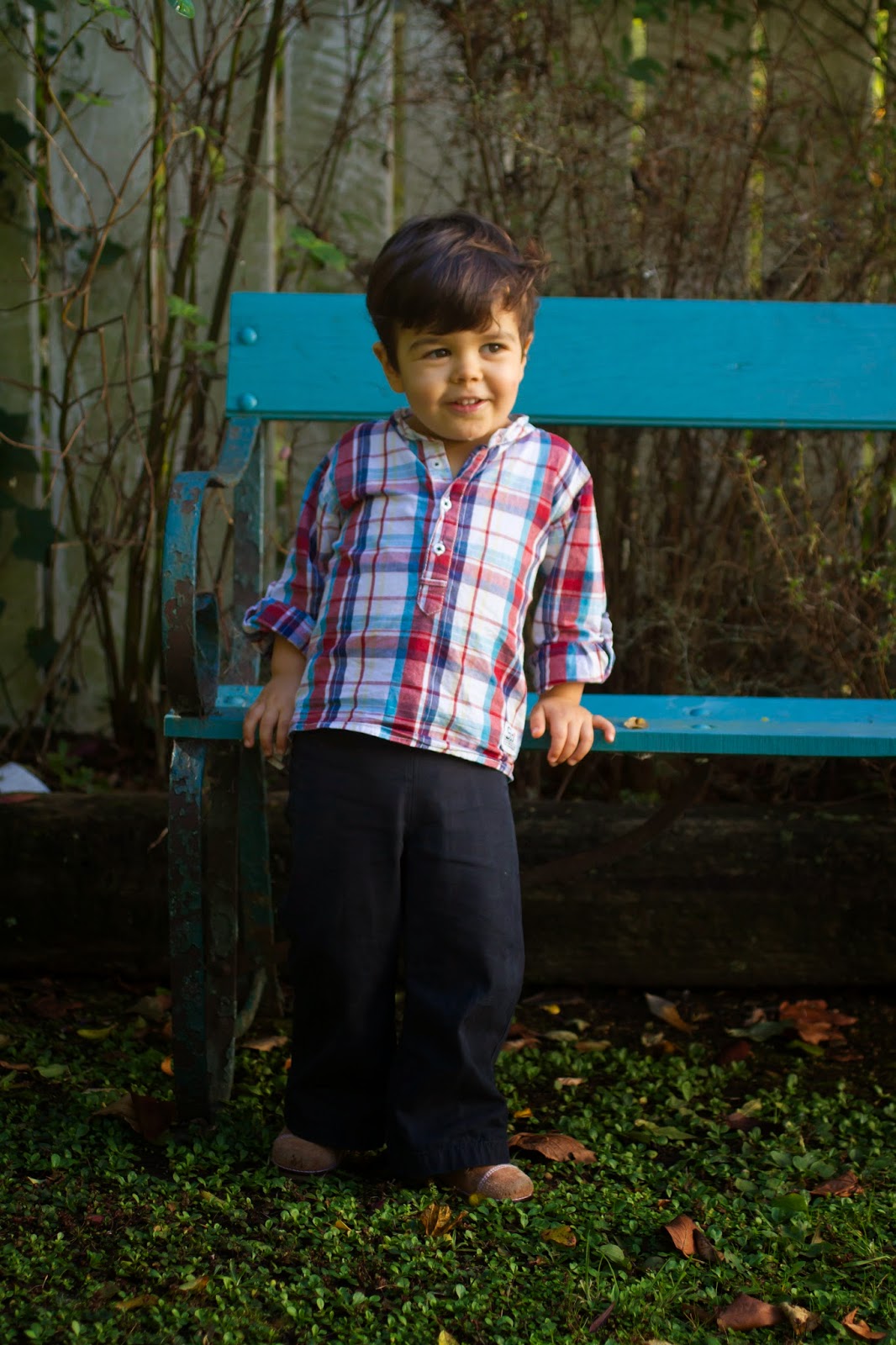
O molde que usei chama-se Parsley Pants (sou grande fã da Rae) e é fácil e rápido de fazer, especialmente porque segui esta sugestão e aproveitei as costuras laterais e as bainhas. Por serem tão escuras, as calças foram difíceis de fotografar (esta foi a segunda tentativa), mas digo-vos que o corte é muito engraçado: o Rodrigo parece uma criança dos anos 70! Acho que também é um molde giríssimo para raparigas… hei-de experimentar fazê-las em tecidos menos clássicos.
E já estou a pensar nas calças de Inverno que vou fazer para o Rodrigo, essas sim completamente Seventies (inspiradas em fotografias do Tiago em pequeno): um par em xadrez escocês!

In the same way as cats are believed to have several lives, these trousers have already been through a few incarnations. First they were just a regular pair of chinos that Tiago wore for a few years; when they started to show their age I dyed them navy blue (their original colour) with Dylon (have you ever tried dyeing clothes in the washing machine?) and they turned out as good as new. A few years have passed since then and the trousers acquired a handful of stains that were impossible to get rid of — Tiago works in an industrial plant and he has a tendency to ruin a lot of clothes — but somehow the legs were still salvageable. And so I decided to turn them into a pair of trousers for Rodrigo.

I used the Parsley Pants pattern (I’m a big fan of Rae‘s) and the whole thing was sewn up so quickly and easily, especially because I followed this tip and kept the original side seams and hems. Because they are so dark they were quite hard to photograph (this was actually our second attempt) but you can take my word for it: the cut is so fun, it makes Rodrigo look like a 1970s child! I reckon it’s also a great pattern for girls… especially if made in a totally different fabric.

I’m already thinking about the next pair of winter trousers I’m going to sew for Rodrigo: inspired by an old photo of Tiago as a young child, I’m going for a truly Seventies look — tartan trousers!

(photos© Constança Cabral)
Sewing for Boys :: Easy Linen Shirt

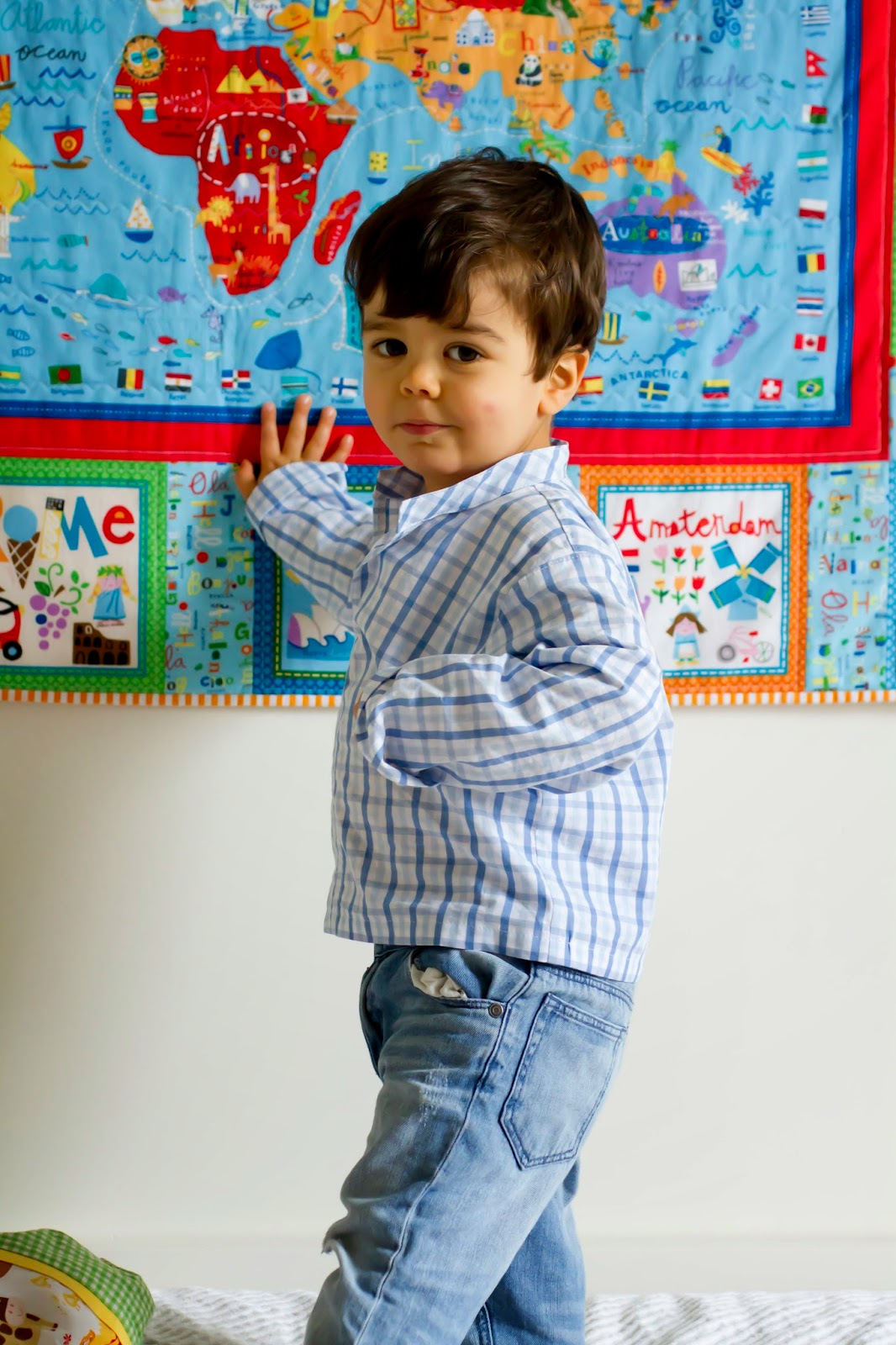
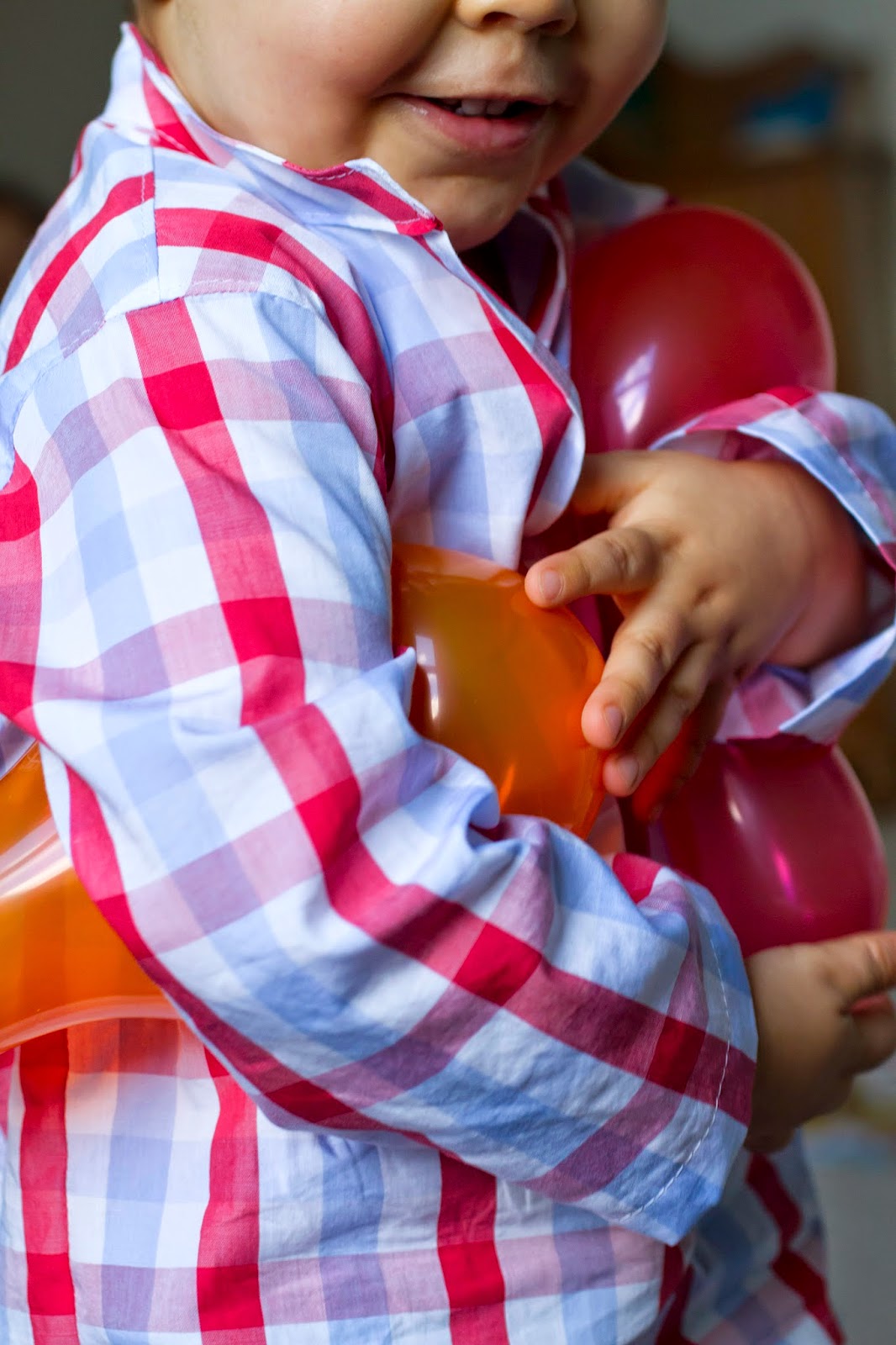
Ando sempre à procura de moldes para roupa de rapaz que sejam um misto entre clássico e descontraído, e que não sejam demasiado complexos (já percebi que não tenho muita paciência para ficar horas a fazer algo que vai ser usado apenas durante uns meses). A peça mais recente que fiz para o Rodrigo foi a ‘Easy Linen Shirt’ do livro Sewing for Boys, e recomendo-a vivamente. 
A camisa assenta bem e, quanto a mim, só precisa de duas pequenas modificações: encurtar as mangas e aumentar um pouco o comprimento do tronco. Não há cá punhos, carcelas nem casas de botões e, mesmo assim, a camisa fica com um ar bastante decente. 
Não usei linho mas sim um algodão de óptima qualidade, perfeito para a função. Já cortei mais uma!

PS. O quilt mapa-mundi foi feito pela minha mãe — podem ler mais sobre ele aqui e aqui.

I’m always on the lookout for boys patterns that are both relaxed and timeless, and not too complex (I’ve come to the conclusion that I have limited endurance for spending hours making something that’ll only be worn for a few months). I’ve recently made the ‘Easy Linen Shirt’ from the Sewing for Boys book and I can’t recommend it enough.

The shirt is well drafted and, as far as I’m concerned, only needs two small alterations: the sleeves are too long and the body is too short. Other than that, it’s a great pattern: I love that it looks so legit even though there are no plackets, cuffs and buttonholes to loose your mind about.

As far as fabric is concerned, I used a high-end shirting cotton instead of linen (there’s no lightweight linen in my stash, unfortunately). I’ve already cut another one!

PS. The world map quilt was made by my mother — you can read more about it here and here.

(photos© Constança Cabral)

Passar Moldes para Tecido :: Transfering Patterns to Fabric

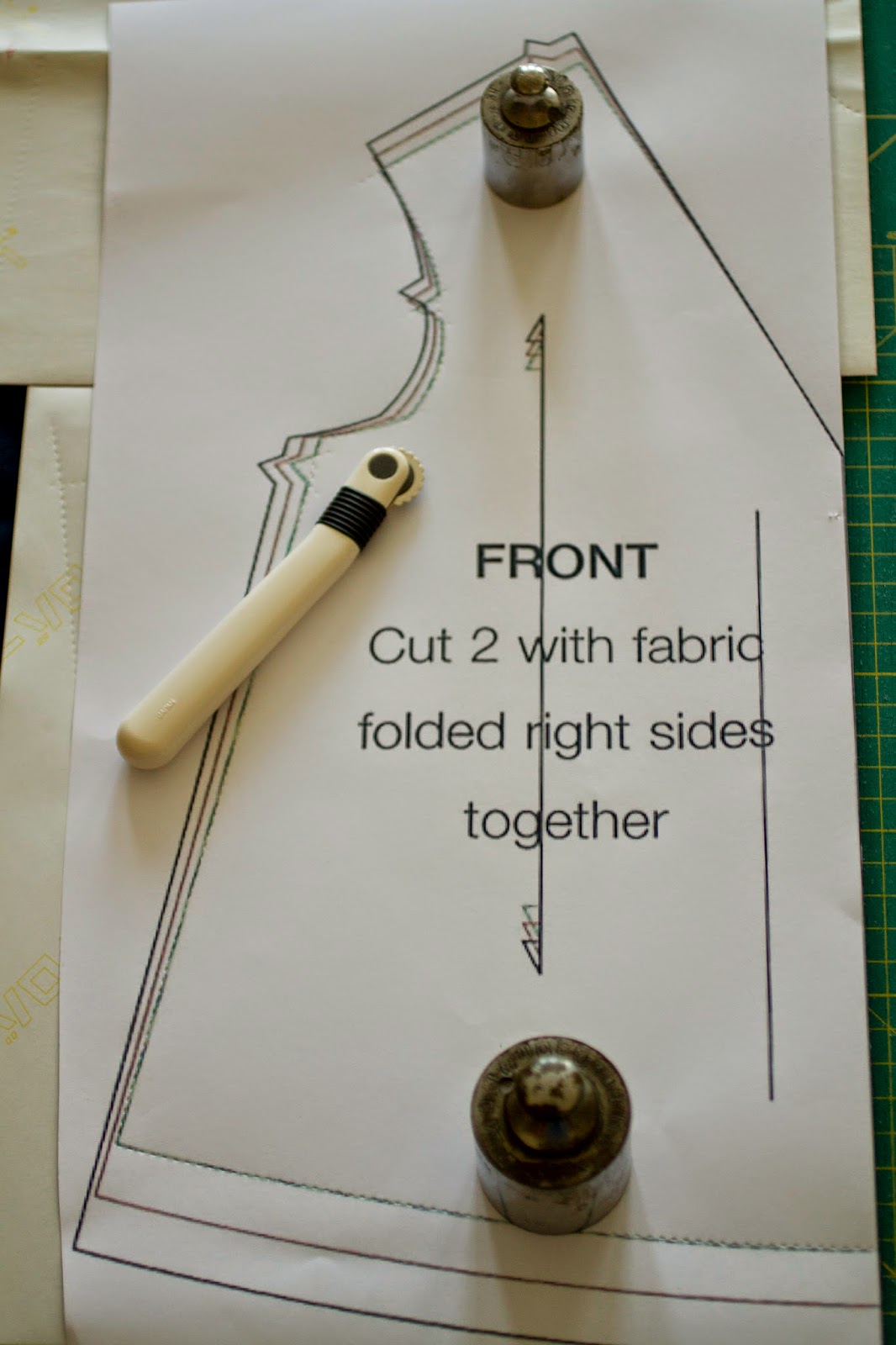
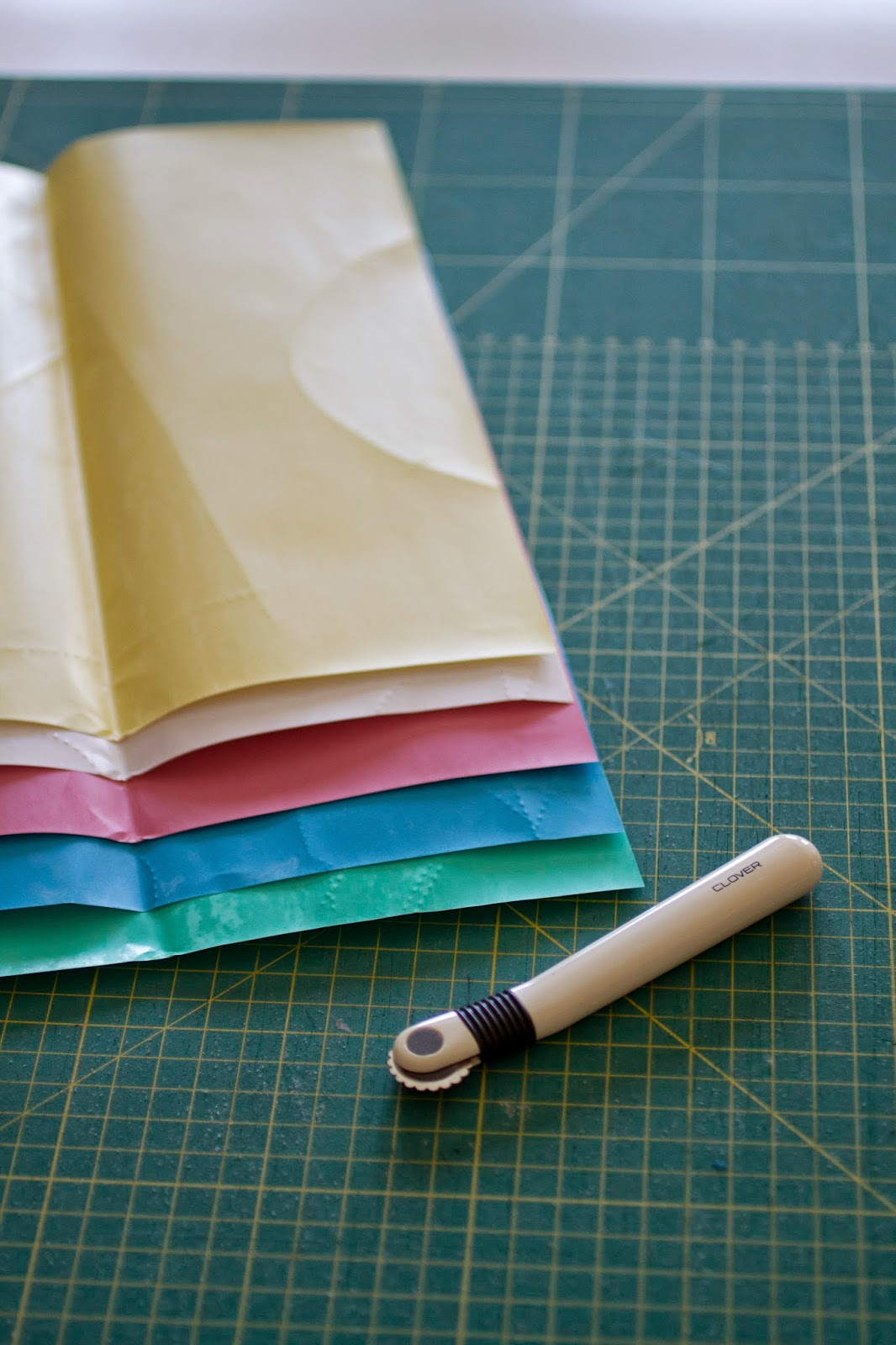
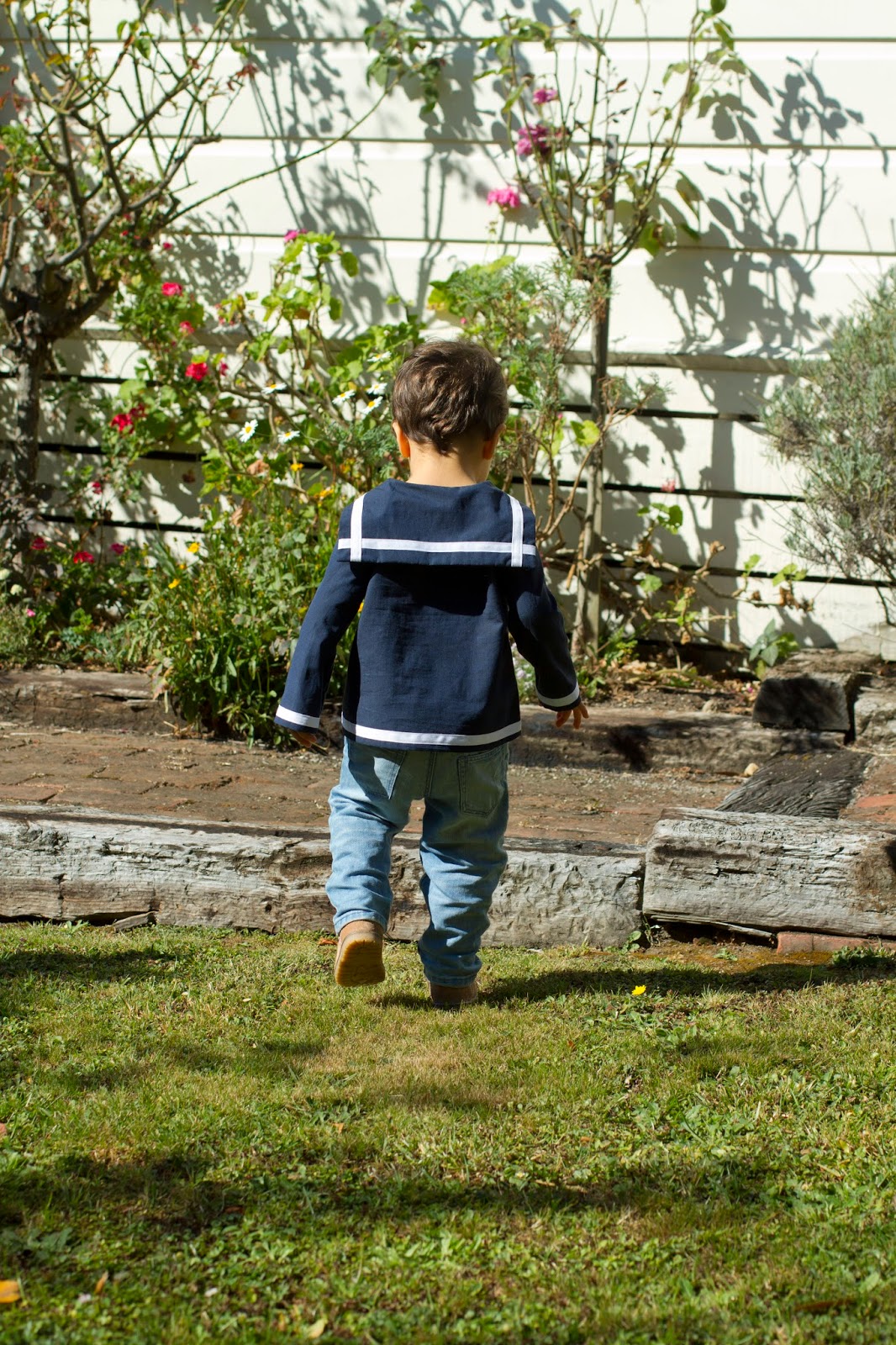
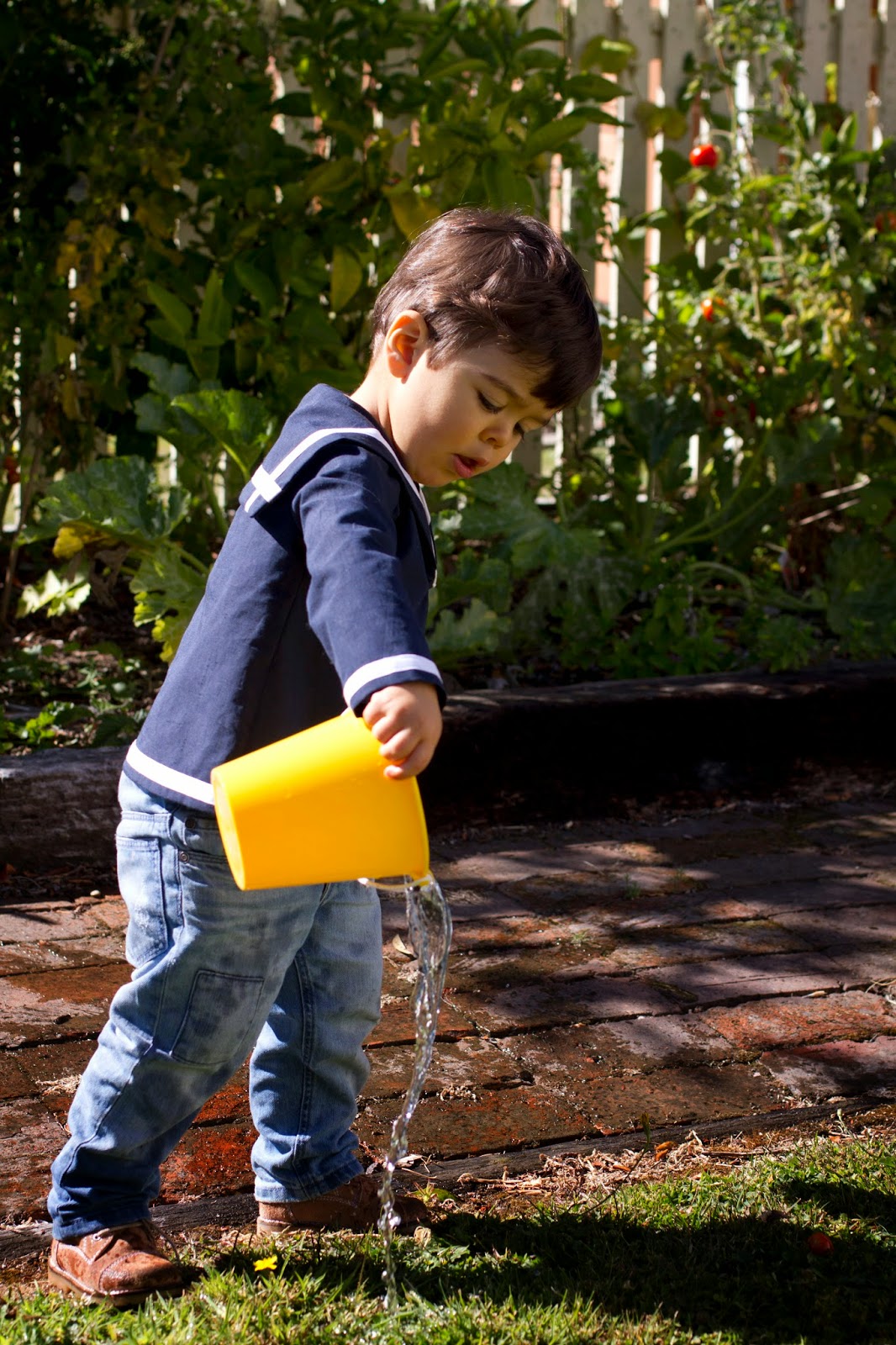
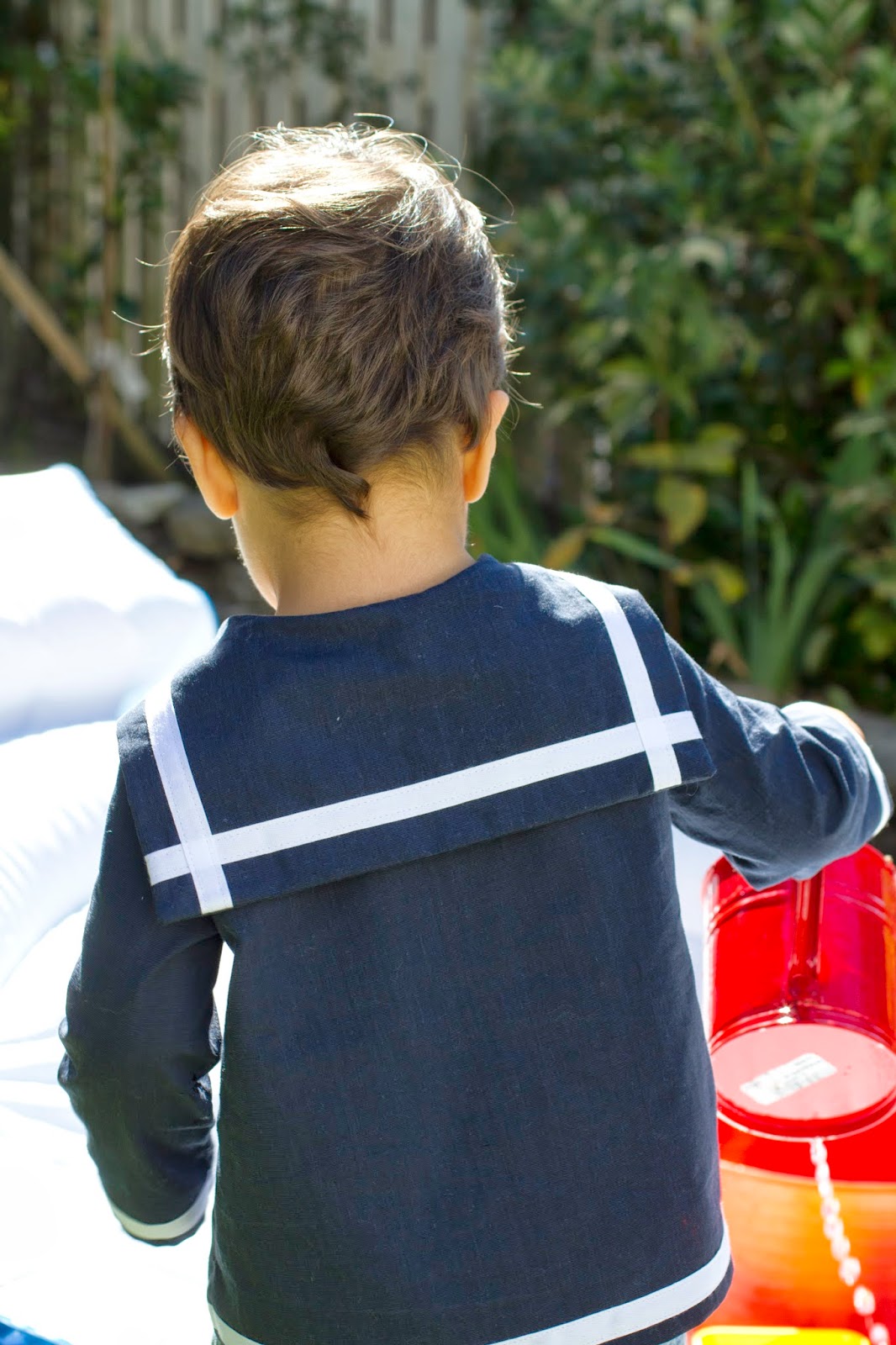
Quando fiz a túnica de marinheiro para o Rodrigo, utilizei um método novo — novo para mim, bem entendido — para passar os moldes para o tecido: papel químico de costura e uma recortilha. Apesar de ser um método clássico, parece-me que é pouco usado hoje em dia. A Tilly escreveu uma boa explicação aqui. Há papel químico de várias cores e tamanhos e as recortilhas encontram-se à venda em qualquer retrosaria.
When I made the sailor top for Rodrigo I used a new method — new to me, I must add — for transferring a pattern to fabric: dressmaker’s carbon paper and a tracing wheel. Even though it’s a classic method, I don’t think it’s being used much these days. Tilly has a great explanation for it here. You can find tracing wheels and carbon paper in many colours and sizes at every haberdashery shop.
Lembram-se de ter falado no facto de o decote da túnica ser demasiado aberto? Resolvi a questão com uma simples t-shirt às riscas!
By the way, remember I mention the fact that the V-neck was too deep to my liking? I’ve found that a simple stripey t-shirt (worn underneath the tunic) solves the problem!

(photos© Constança Cabral)
Mailbox Surprise

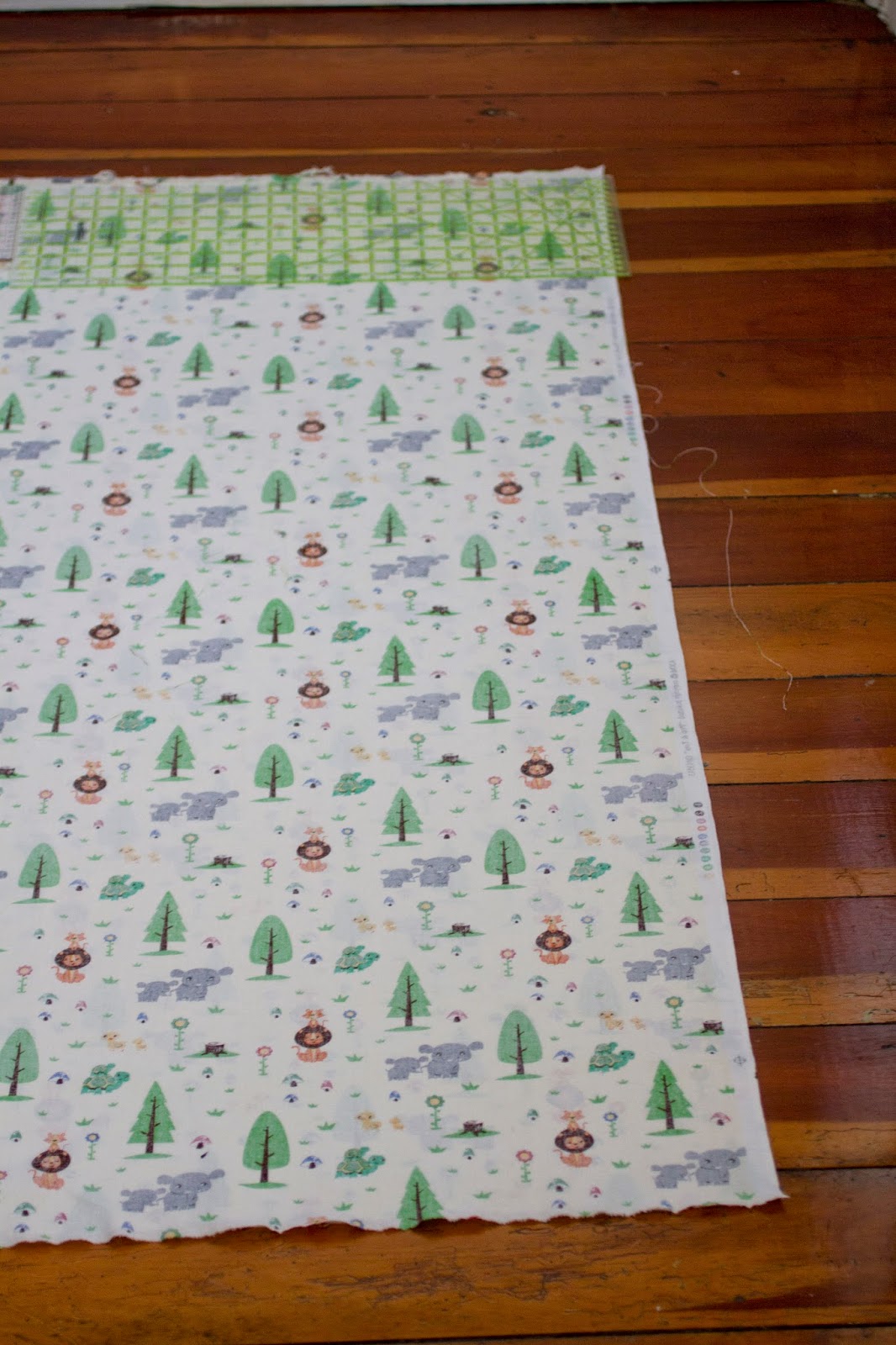
Há uns meses fui convidada pela Marta e pela Marte para participar no Mailbox Surprise, um grupo internacional de costura cujas participantes foram desafiadas a enviar tecidos surpresa a outras participantes, e a apresentar peças de roupa infantil feitas com os tecidos recebidos. Eu recebi tecidos enviados pela Trine, directamente da Dinamarca para a Nova Zelândia. Passem no blog da Marta e vejam o que fiz com eles!
A few months ago I was invited by Marta and Marte to be a part of Mailbox Surprise, a sewing series in which a person sends a surprise gift of fabric to another person, who then has got to sew a piece of clothing for a child using that particular fabric. I received a generous package from Trine all the way from Denmark. Head over to Marta’s blog and read all about my experience!

(photos© Constança Cabral)