Para além de uma máquina de costura e de um ferro de engomar decente, há outro material necessário para fazer um quilt. Só um aparte: sou da opinião de que se deve comprar material de primeira qualidade: mais vale ir comprando as coisas espaçadamente, pesquisar bem e esperar por oportunidades, e saber que vão portar-se bem e durar. Por outro lado, o processo é sempre mais fácil e os resultados muito mais perfeitos e duradouros (assim como bolos feitos com boa manteiga e bom chocolate são sempre melhores). Acredito sinceramente que, em tudo, mais vale ter menos e melhor, do que o contrário.
In addition to a sewing machine and a decent iron, there are some other things you need when you wish to make a quilt. Just a side note: I believe that you should buy first quality material: it’s best to buy things sparingly, to do some research and to wait for deals, and know that they will perform well and last longer. When you do this, the process is always easier and the results always better (just like cakes made with good butter and good chocolate are always superior). I honestly believe that in life it’s best to have less things but better quality things, than the opposite.
1. régua: no mundo do quilting trabalha-se normalmente em polegadas e uma régua de acrílico comprida (a minha tem 8 1/2” x 24”) é muito útil para cortar os tecidos com precisão. Por outro lado, estas réguas incluem transferidores, bons para quando se quer cortar fitas de viés ou triângulos de todos os feitios.
2. base de corte: de um lado em polegadas, do outro em centímetros, estas bases de corte são usadas em conjunto com as réguas de acrílico e os cortadores rotativos. Deve comprar-se o tamanho maior que for possível.
3. tesoura pequena: boa para cortar linhas.
4. tesoura de alfaiate: um dos mais importantes investimentos para quem cose é uma boa tesoura de alfaiate, grande e pesada. Desde que seja bem tratada e reservada exclusivamente para tecidos, durará uma vida.
5. cortador rotativo: excelente para cortar os tecidos com rapidez e precisão.
1. acrylic ruler: a long ruler (mine is 8 1/2” x 24”) is invaluable for cutting fabric with accuracy. It also includes lines in different angles so that you can cut bias tapes and all sorts of triangles.
2. cutting mat: inches on one side, cm on the other, to be used with a ruler and a rotary cutter. You should buy the largest mat you can afford.
3. small pair of scissors: for cutting thread.
4. dressmaker’s shears: one of the most important investments a person who sews can make is a large, heavy pair of scissors. As long as you treat them well and keep them purely for cutting fabric, they should last you a lifetime.
5. rotary cutter: excellent for cutting fabric quickly and accurately.
6. alfinetes: eu gosto de alfinetes grandes e com cabeças de plástico, mas é uma questão pessoal.
7. abre-casas: para quando é precido descoser…
8. linha para a máquina de costura.
9. pé calcador de 1/4″: não é uma necessidade vital, até porque é possível usar um pé calcador normal para fazer costuras com 0,5 cm (1/4” = 0,6 cm). No entanto, quando se está a seguir um esquema é importante usar as margens de costura indicadas ou, pelo menos, manter sempre margens constantes.
10. walking foot: para acolchoar à máquina. Este pé calcador faz com que as três camadas (top + batting + backing) se desloquem ao mesmo tempo, evitando rugas e outras situações indesejáveis.
6. pins: I like long pins with plastic heads but it’s a matter of personal taste.
7. seam ripper: sometimes you really have to use it…
8. all-purpose thread.
9. 1/4” foot: this isn’t strictly necessary — you can get away with using the edge of your regular presser foot to sew 0.5 cm seams (1/4” = 0.6 cm). However, if you’re following a pattern it’s important to use the seam allowances it tells you to or, at least, always keep them consistent.
10. walking foot: for machine quilting. This special foot makes the three layers (top + wadding/batting + backing) move at the same time, which avoids puckers and other undesirable situations.
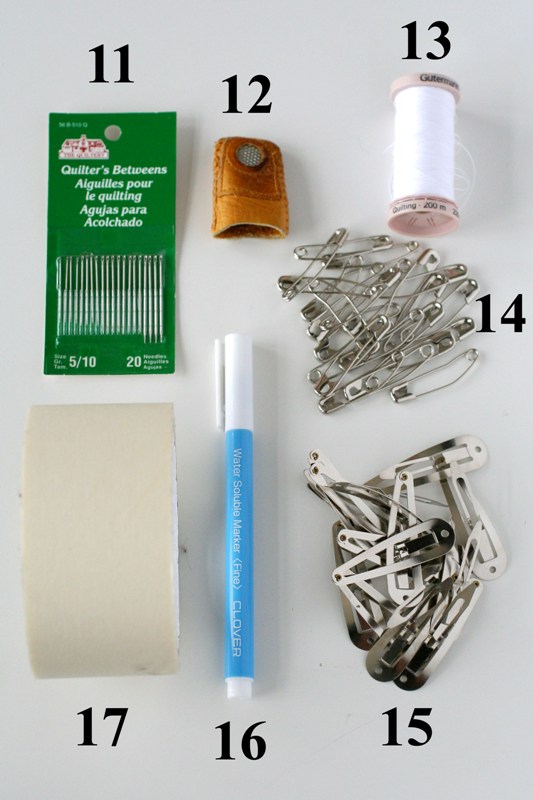
11. agulhas para acolchoar à mão: muito curtas e finas, também são úteis para coser o binding à mão.
12. dedal: eu gosto deste dedal de couro, mas um dedal normal de metal também resulta.
13. linha de quilting: própria para acolchoar à mão, esta linha tem um revestimento (uma espécie de cera) que a torna mais resistente.
14. alfinetes-de-ama curvos: óptimos para “alinhavar” as três camadas e mantê-las no sítio enquanto se acolchoa o
quilt (ver utilização
aqui).
15. ganchos para
binding: úteis para quando se cose o debrum à mão (ver utilização
aqui).
16. caneta de tinta solúvel em água: boa para marcar as linhas para acolchoar.
17. fita adesiva: de pintor ou de caixotes, o importante é que seja larga e resistente. Usa-se para fixar o backing ao chão quando se faz a sanduíche.
11. hand-quilting needles: short and fine, they’re also great when you sew the binding by hand.
12. thimble: I like this leather thimble but you can use a regular metal one.
13. quilting thread: for hand-quilting only, this thread has a special coating (a sort of wax) that makes it very hard-wearing.
14. curved safety pins: great for “basting” the three layers together and keep them in place whilst quilting (see them in use here).
15. binding clips: useful when hand-sewing the binding (see them in use here).
16. water soluble pen: good for marking those quilting lines.
17. sticky tape: painter’s tape or packing tape, it must be large and quite heavy duty. You’d use it to tape the backing to the floor when making the quilt sandwich.
(photos: Constança Cabral)




























 Constanca Cabral