Como Fazer Geleia de Amora :: How to Make Blackberry Jelly

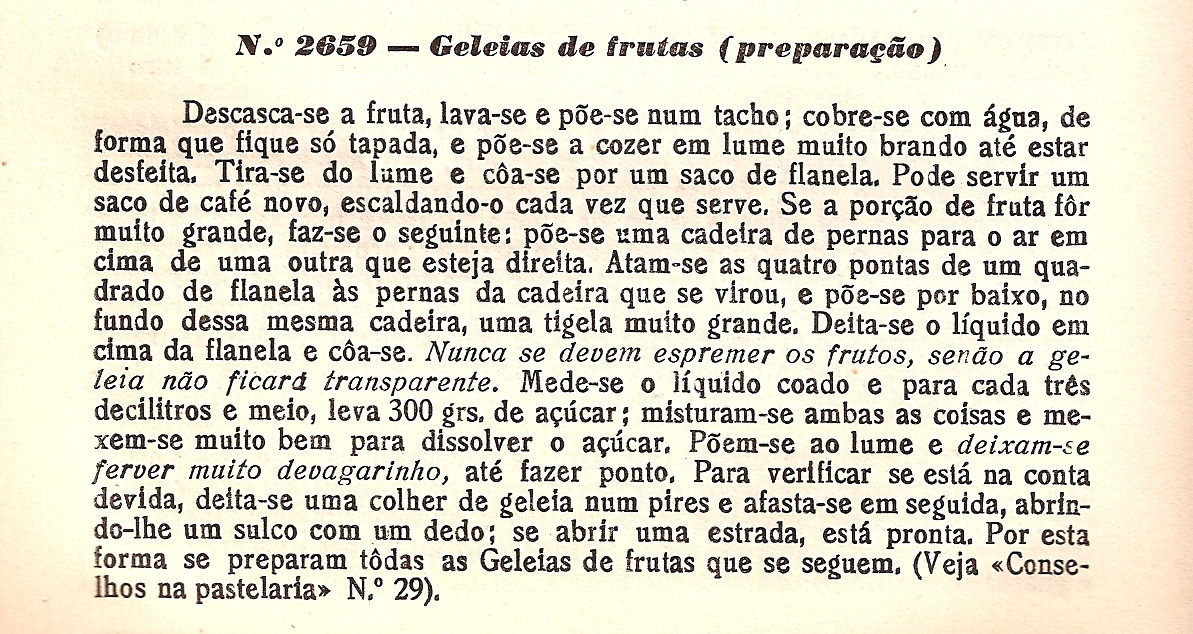
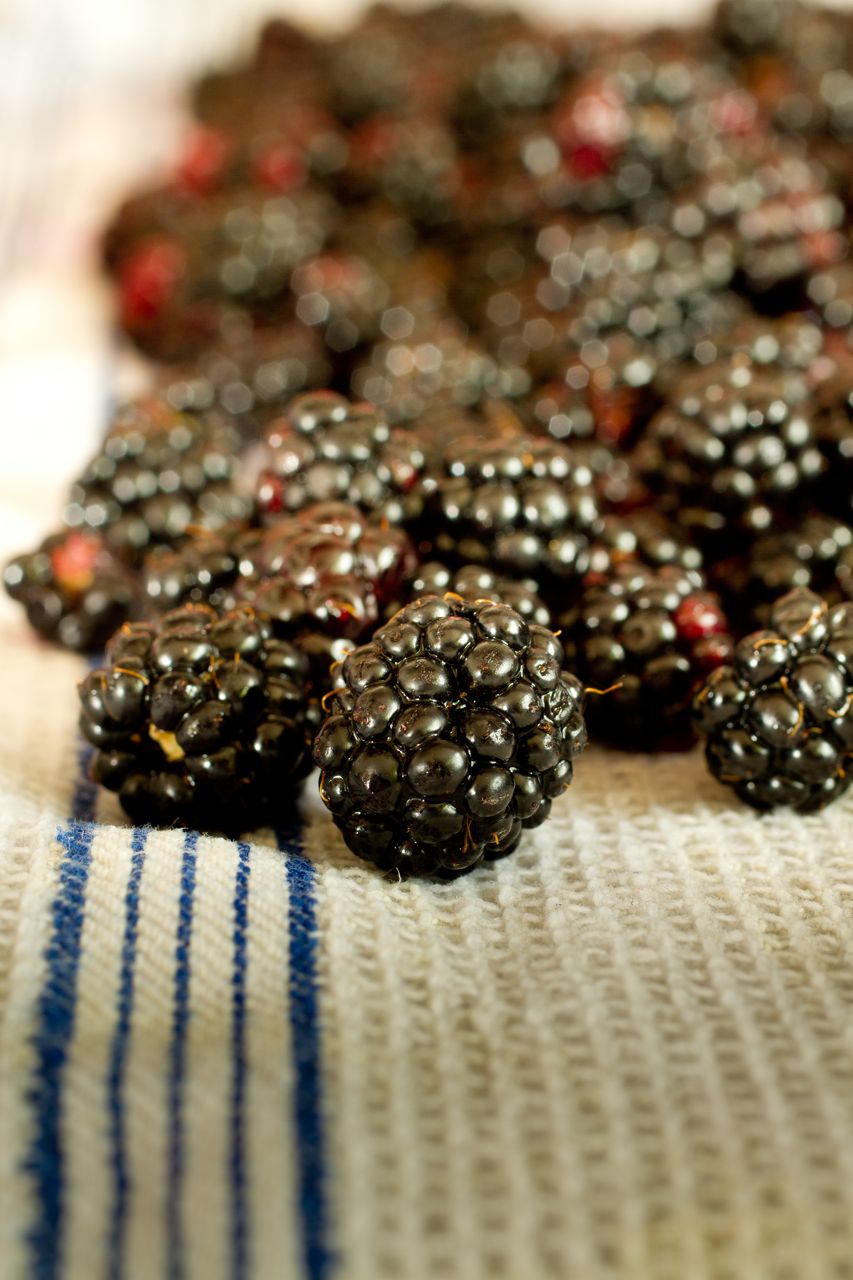
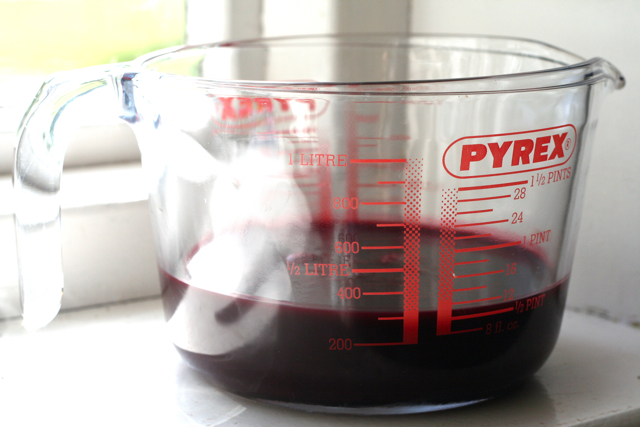
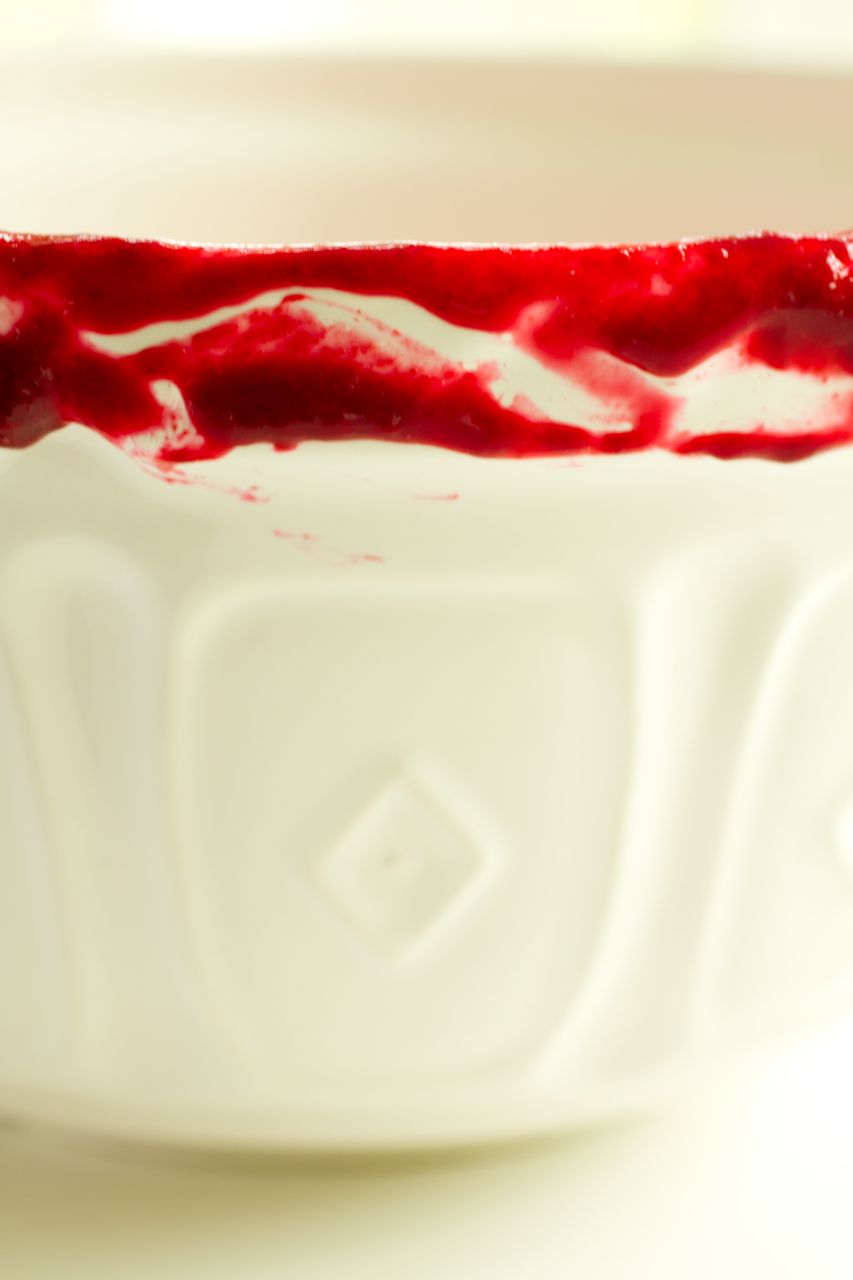
Afinal Setembro foi um mês óptimo para apanhar amoras silvestres. Fiz duas vezes geleia — uma só de amora e outra de amora e maçã (as maçãs têm muita pectina, o que ajuda à gelificação) — e decidi documentar o processo. Digitalizei a receita de geleia do Pantagruel da minha avó (ed. 1952); se quiserem saber mais sobre a forma como eu faço conservas, podem ler o meu post sobre doce de framboesa.
After all September turned out to be a great month to pick wild blackberries. I made jelly twice — the first time I only used blackberries, later on I added cooking apples to the mix (they’re high in pectin, which helps the jelly set) — and decided to document the process. The first image shows a basic jelly recipe from a classic Portuguese cookery book, the Pantagruel (I’ve got my grandmother’s copy from 1952) but there’s a great recipe in Pam Corbin’s preserves book. If you want to know more about how I go about preserving fruit, you can read my post on making raspberry jam.
(photos: Constança Cabral)

Abrunhada :: Damson Cheese

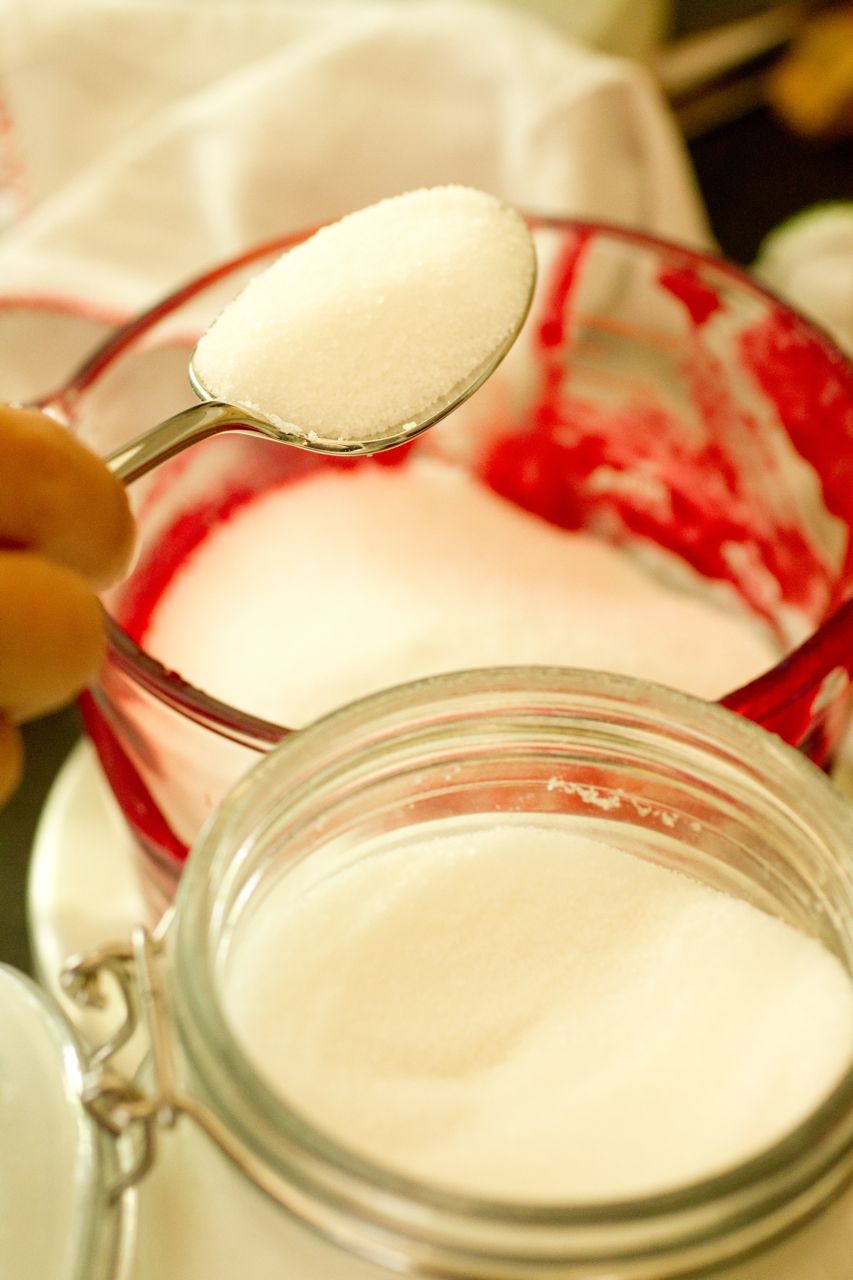
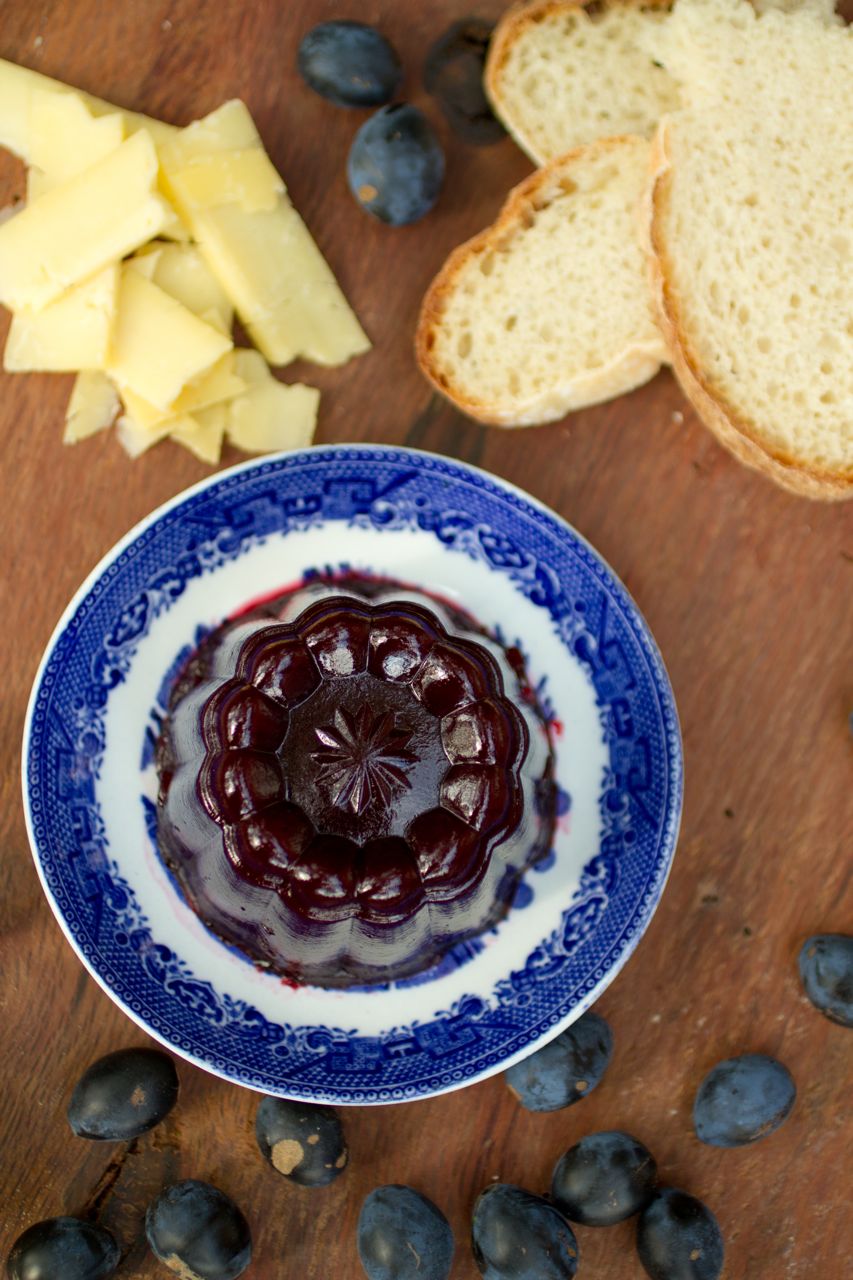
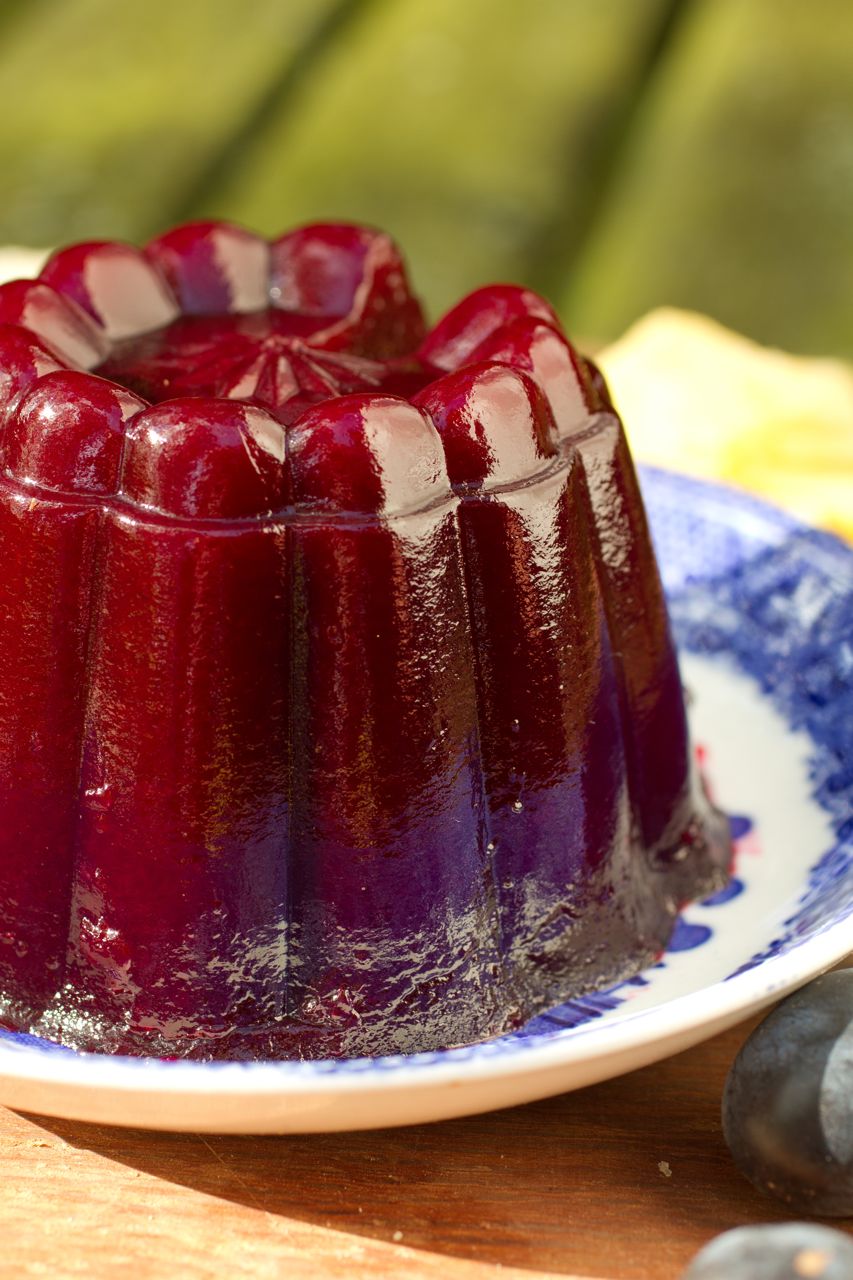
Uma das coisas que fiz com aqueles abrunhos foi abrunhada (marmelada de abrunho). O método que usei é muito parecido com o da marmelada e o resultado é uma pasta moldável, algo ácida e óptima quando combinada com um queijo seco. Primeiro há que cobrir os abrunhos com água num tacho e deixá-los cozer em lume baixo, até que rebentem e as cascas e os caroços se separem da polpa. Passa-se esse preparado por um passador de rede e, para cada 600 ml de puré, adicionam-se 450 g de açúcar. Deixa-se derreter o açúcar em lume baixo e depois ferve-se o preparado com o lume no máximo, mexendo até que faça ponto de estrada (quando a colher de pau faz um risco no fundo do tacho que se aguenta durante alguns segundos). Por fim, deita-se em taças esterilizadas (eu usei uma forma antiga de gelatina), deixa-se secar uns dias e desenforma-se (ou não).
One of the things I made with those damsons was damson cheese. It’s very similar to making quince cheese and the result is a malleable paste, a bit tart and great when paired with dry cheese. Start by covering the damsons with water and let them cook until they burst and the flesh and stones have come away from the pulp. Then push everything through a sieve and for every 600 ml of purée add 450 g of granulated sugar. Let the sugar dissolve in a low heat and then increase the heat and let it boil (keep stirring so it doesn’t burn) until you scrape the spoon through it and you can see the base of the pan for a few seconds. Finally, pour the mixture into sterilised bowls (I used an old glass mould), let it dry for a few days and that’s it!

(photos: Tiago Cabral)

Ameixas Bravas :: Damsons

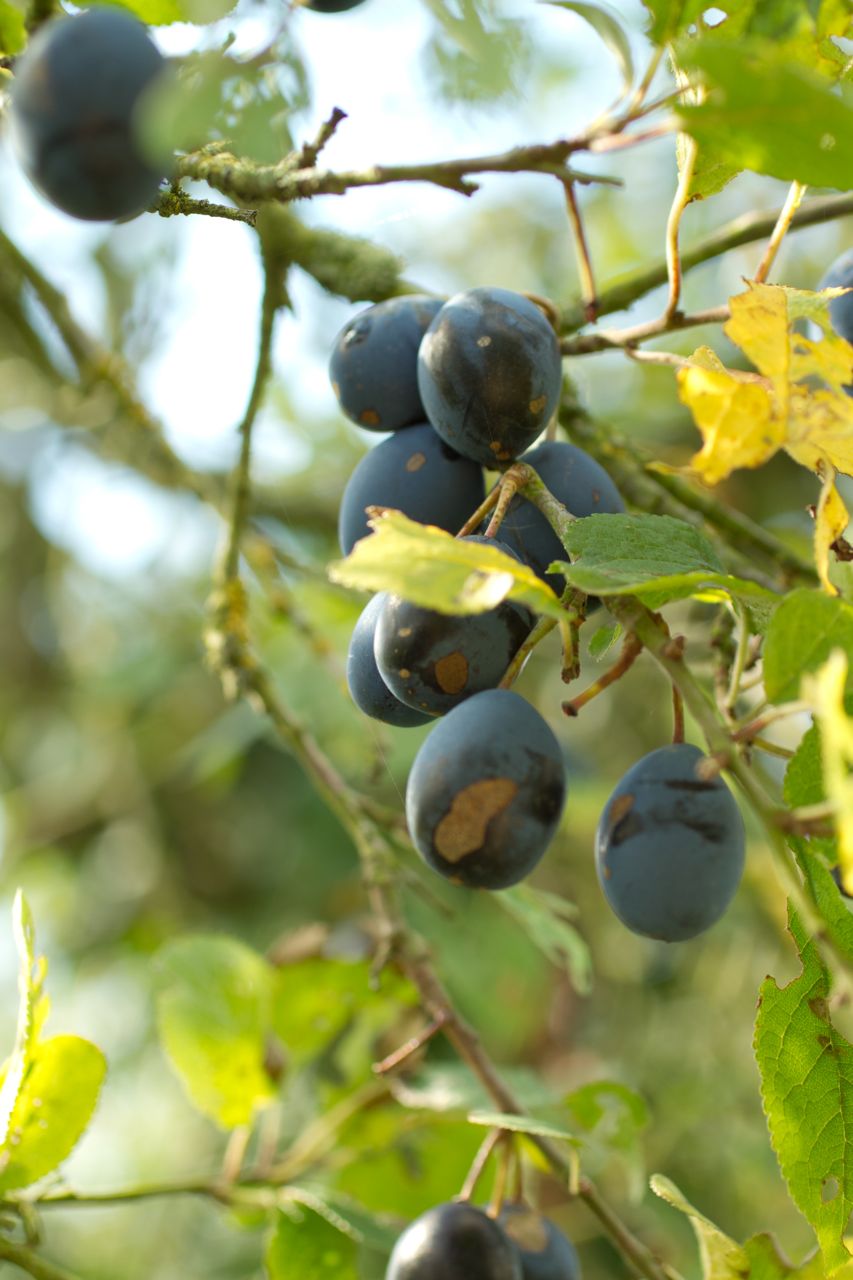
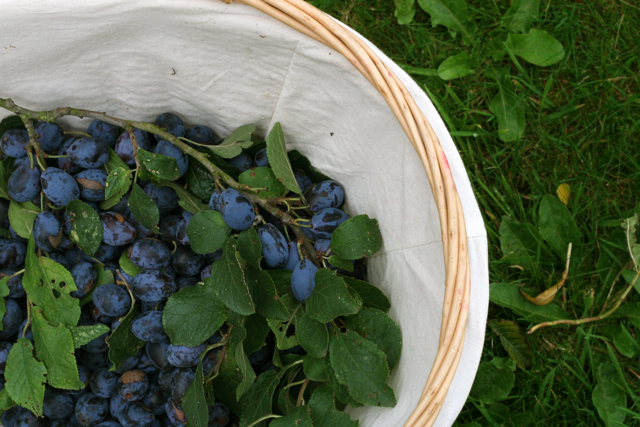
Hoje de manhã saí cedo de casa para ir apanhar amoras. Há um ano apanhei algumas e fiz geleia, e este ano queria repetir a dose. A certa altura um vizinho meteu conversa comigo, disse-me que já era tarde para apanhar amoras e perguntou-me se não queria apanhar antes damsons (um tipo de ameixa muito comum na Grã-Bretanha). Vim para casa com um cesto cheio e planos para fazer doce e licor de ameixa. Como é bom viver no campo! 
This morning I left the house early in search of blackberries. Last year I managed to pick a few and make jelly, and I wanted to do it again this year. Whilst I was raiding the hedgerows a neighbour came up to me, asked me what I was picking and told me it was much too late for blackberries. He was nice enough to offer me some damsons though. I came home with a basket full of fruit and now I’m planning to make damson jam and damson gin. Oh the joys of country living!

(photos: Constança Cabral)

Grow Your Own Herbs in Pots :: Book Review

Quando recebi o livro Grow Your Own Herbs in Pots: 35 Simple Projects for Creating Beautiful Container Herb Gardens,  escrito pela jardineira e artista Deborah Schneebeli-Morrell, achei logo que seria um óptimo livro para recomendar aqui no blog. Nem toda a gente tem a sorte de ter um jardim e nem todas as pessoas têm tempo e/ou interesse em cultivar flores e vegetais — no entanto, temos de concordar que não há plantas mais versáteis do que as ervas aromáticas. Compactas, decorativas, perfumadas, extremamente úteis na cozinha e com inegáveis propriedades medicinais, prestam-se bem ao cultivo em vasos. Qualquer pessoa pode cultivar as suas ervas aromáticas preferidas na varanda, jardim, pátio, terraço ou parapeito da janela da cozinha. E este livro pode ser um bom ponto de partida para a execução de um pequeno canteiro aromático.
Na minha opinião, Grow Your Own Herbs in Pots tem vários elementos que jogam a seu favor. Começa por ser extremamente apelativo: o papel é grosso e mate e as fotografias de boa qualidade e bastante detalhadas. Depois, a escolha de recipientes é realmente inspirada: a autora planta manjericão em latas de azeite, salsa em caixas de vinho, menta em bules de chá, coentros em tinas de zinco, funcho em caixas de peixe (sim, aquelas de esferovite!)… escolhas muito de acordo com as actuais tendências de reciclar e reutilizar (que eu subscrevo totalmente). Por outro o lado, o livro está bem organizado em secções: começa com informações gerais sobre cultivo biológico, substratos, sementeiras, propagação e por aí fora; seguem-se três partes intituladas ” ervas para a cozinha”, “ervas para a saúde” e “ervas perfumadas e decorativas”. As explicações são detalhadas, pequenos truques são mencionados ao longo das páginas em pequenas caixas verdes e o discurso é informal e cativante. O livro faz parte da colecção The Green Home da Cico Books.
As soon as I received the book Grow Your Own Herbs in Pots: 35 Simple Projects for Creating Beautiful Container Herb Gardens, written by gardener-artist Deborah Schneebeli-Morrell, I thought that it would be a great book to recommend here on my blog. Not everyone is lucky enough to have a garden and not every single person has the time and/or the inclination to grow flowers and vegetables — however, it’s common knowledge that herbs are the most versatile plants out there. Compact,  decorative, scented, extremely useful in the kitchen and with undeniable medicinal properties, they are very easy to grow in pots. Everyone can cultivate their favourite herbs in their balcony, terrace, garden, patio or even on the kitchen windowsill. And this book can be a good starting point in getting your very own herb border going.

In my opinion, Grow Your Own Herbs in Pots scores highly on several aspects. For starters, the book is extremely appealing: the paper is thick and matte and it has detailed, good-quality pictures. The choice of containers is very inspiring: the author plants basil in olive oil cans, parsley in a wine box, coriander in a galvanized bath, mint in a tea pot and fennel in fish boxes (yes, those polystyrene ones!)… choices that are much in tune with contemporary tends of re-using and recycling (with which I wholeheartedly agree). On the other hand, is well-organised into sections: it starts with general information about choosing herbs, growing organically, which compost to use, how to sow seeds and take cuttings, and so on; followed by three main chapters on “cook’s herbs”, “herbs for health” and “decorative and scented herbs”. All explanations are quite detailed, small tricks are displayed in little green boxes dotted around the pages and the discourse is informal and engaging. The book is part of The Green Home collection of Cico Books.

(photos: Constança Cabral)

Crónica dos Bolbos :: The Bulb Chronicle

29/09/2010
22/10/2010
10/11/2010
30/12/2010
30/12/2010
28/01/2011
5/02/2011
26/02/2011
7/03/2011
27/03/2011
27/03/2011


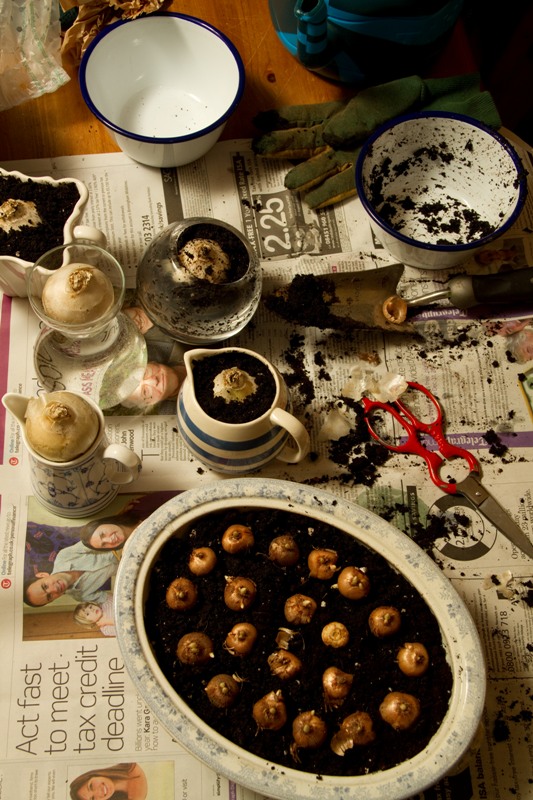
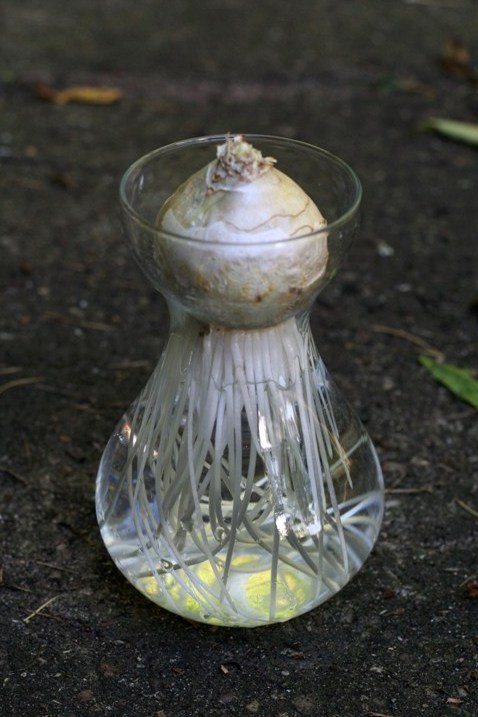
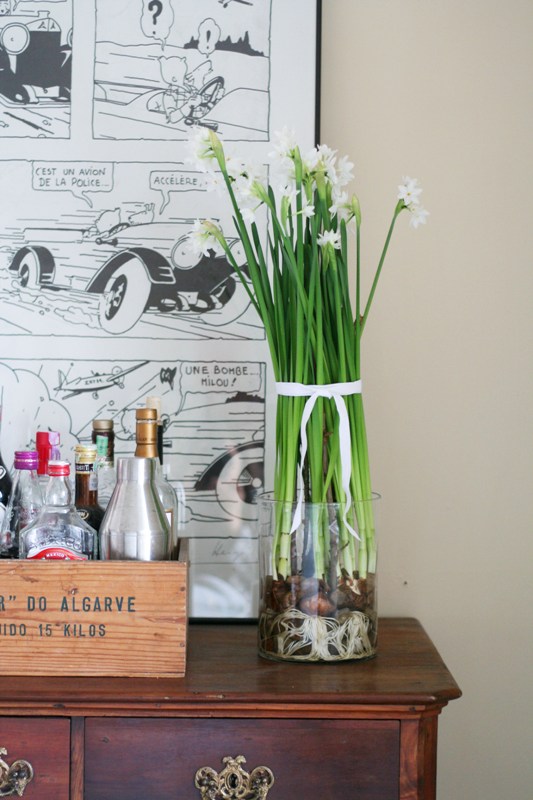
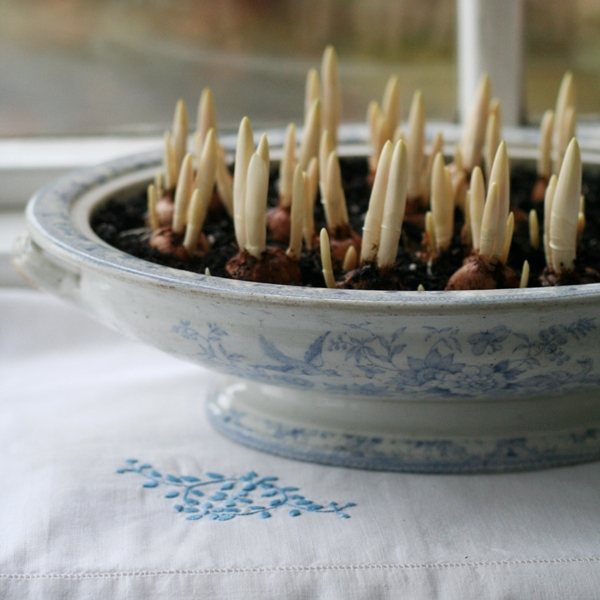
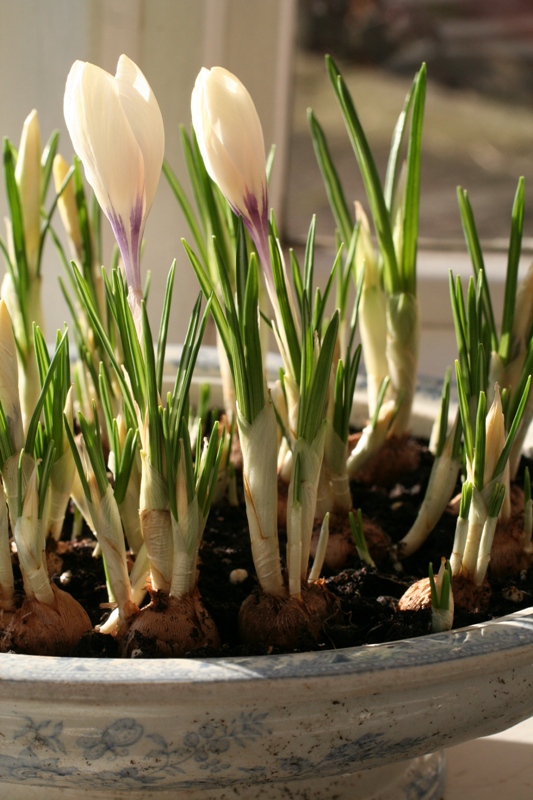
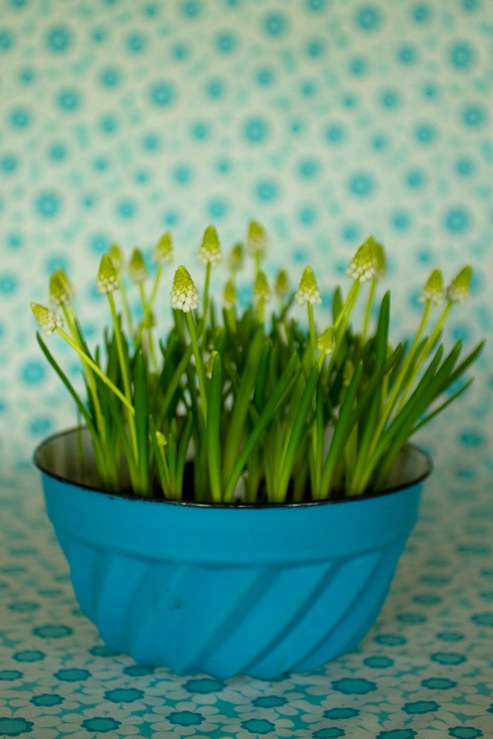
Agora que estamos em plena Primavera, chegou a altura de fazer o balanço das minhas tentativas de forçar bolbos em 2010-2011. Neste post expliquei como tudo começou e que conselhos segui e hoje, olhando para esta sucessão de fotografias, parece-me que o saldo é bastante positivo. À excepção dos narcisos da última imagem, tudo floresceu. Mas, mais importante do que isso, aprendi imenso, treinei a minha paciência, jardinei durante o Inverno e tive uma óptima desculpa para vasculhar lojas de caridade e feiras de antiguidades em busca de recipientes. Em Setembro tenciono começar tudo outra vez.

Now that Spring has truly sprung it’s time to assess my bulb forcing attemps in 2010-2011. In this post I wrote about how it all began and which advice I decided to follow and today, looking at all these pictures, I think the balance is quite positive. With the exception of the narcissi in the last photo, everything bloomed. But more importantly than that, I’ve learnt a lot, exercised my patience skills, managed to garden during Winter and had a great excuse to browse charity shops and antique fairs in search of containers. In September I plan to start all over again.

(photos: Constança Cabral; Tiago Cabral)
Verde :: Green

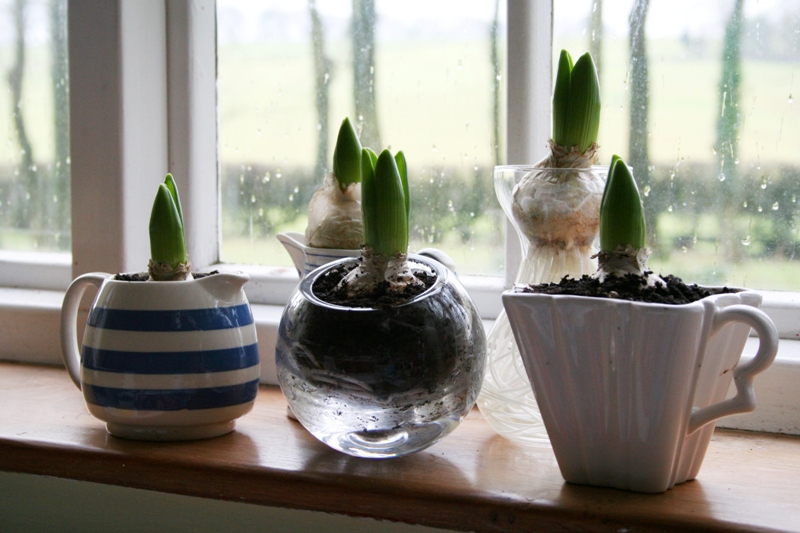
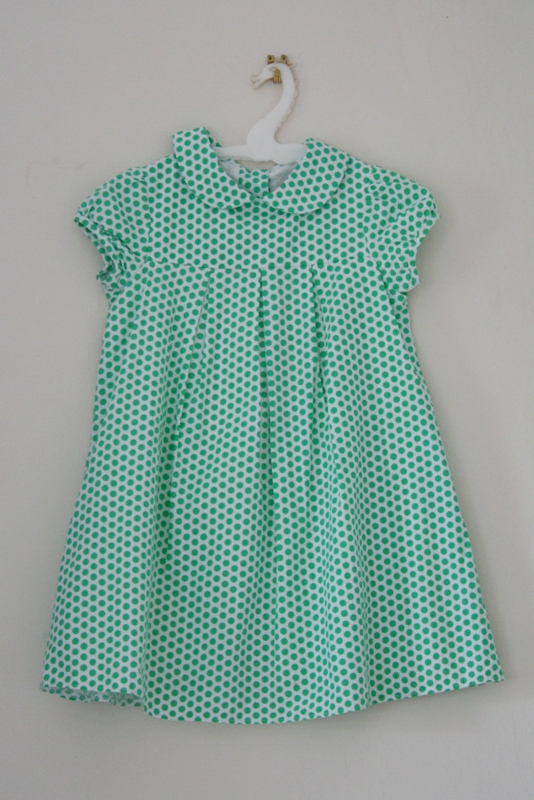
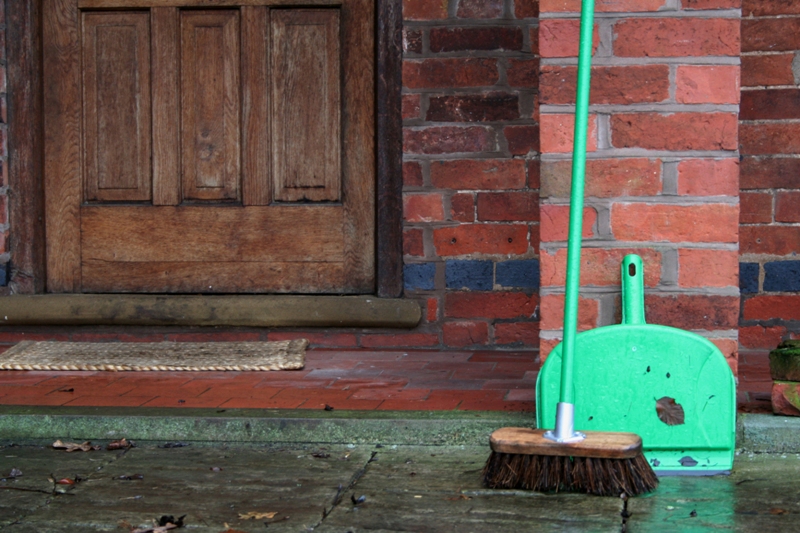
Apontamentos verdes por estes lados:
Green details around here:
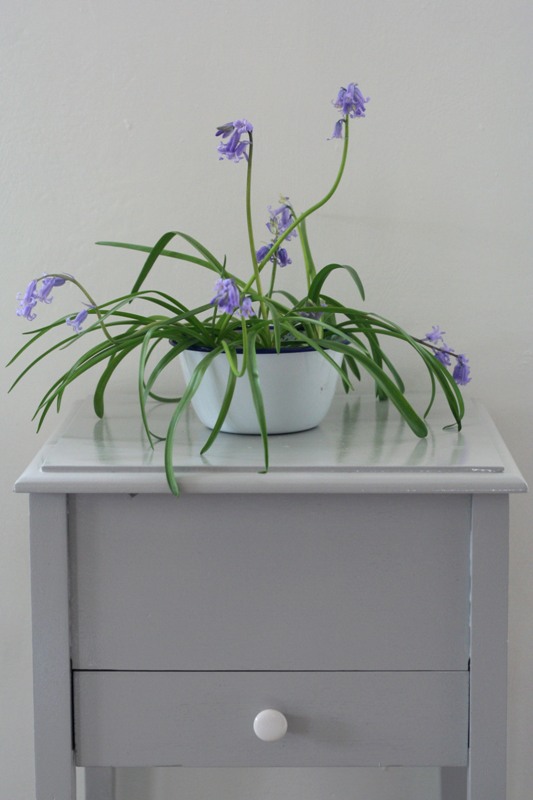
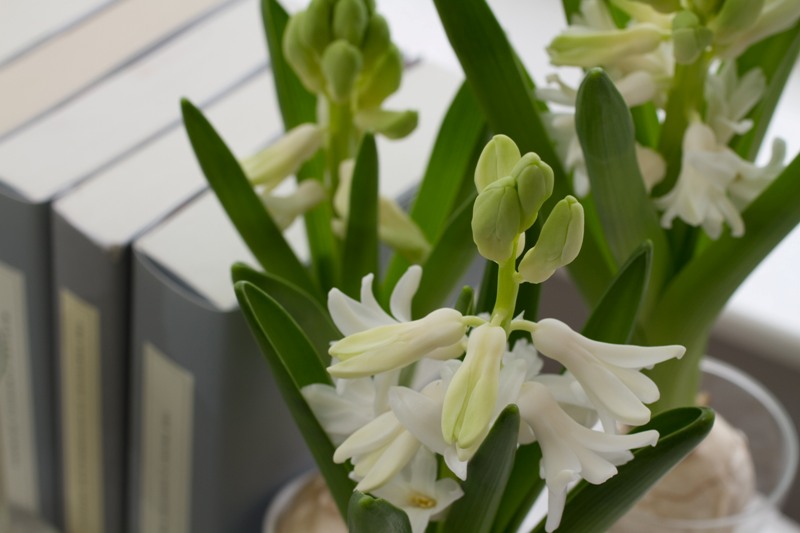
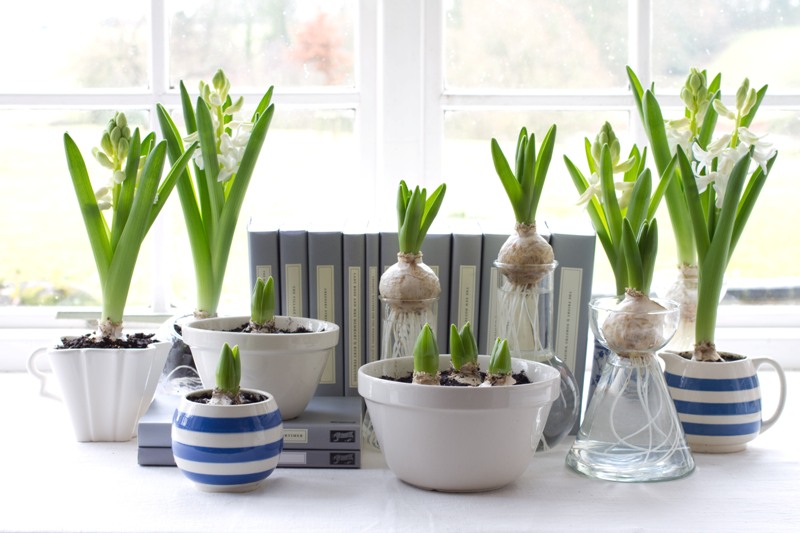
Os bolbos estão a crescer lentamente. Fazem-me companhia no parapeito da janela do escritório.
The bulbs are growing slowly. They keep me company on the study windowsill.
Encontrei este vestido para 4 anos, em excelente estado, numa loja de caridade. Custava £1. Era impossível deixá-lo lá.
I found this dress for a 4-year-old in a charity shop. It’s in excellent condition. It cost £1. It was impossible for me to just leave it there.
Ontem finalmente varri todas as folhas que cairam este Outono e pu-las numa pilha para fazer isto. Hoje doem-me músculos que nem sabia que existiam.
Yesterday I finally gathered all the autumn leaves and put them in a pile in order to make this. Today I’ve got aching muscles that I didn’t even know existed.

(images: Constança Cabral)