Doce de Morango e Limão :: Strawberry and Lemon Jam

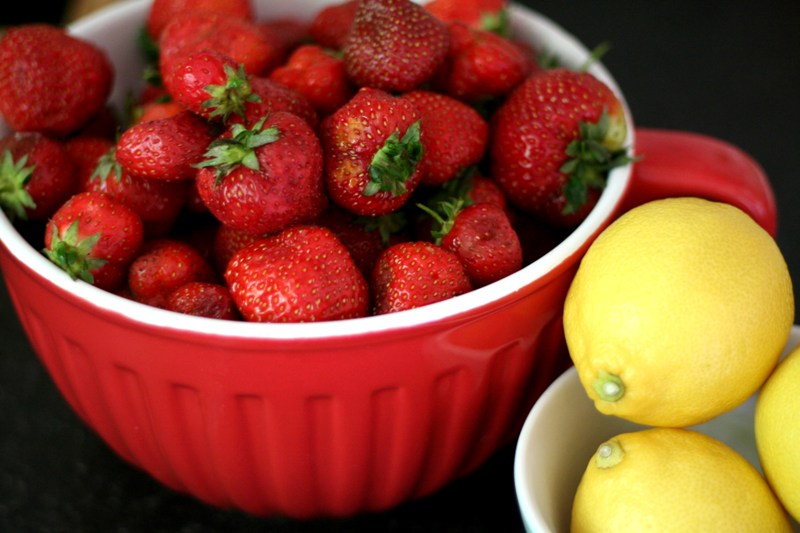
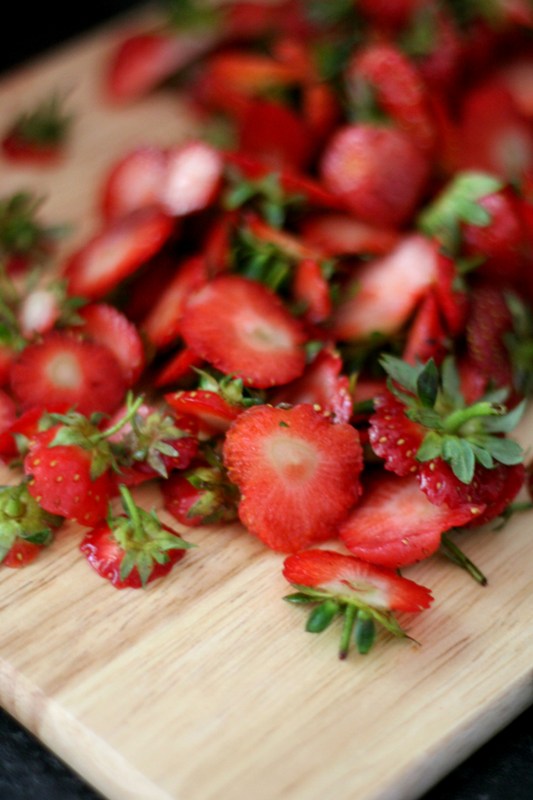
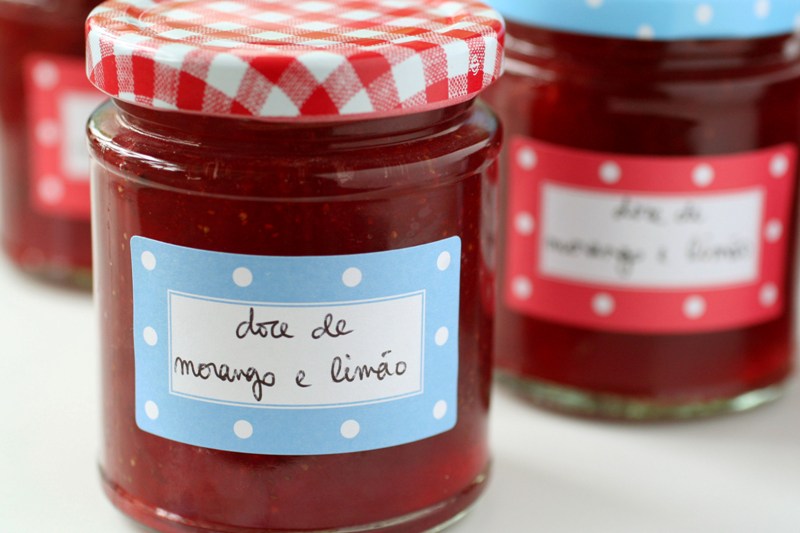
Não muito longe de nossa casa há uma farm shop que nesta altura só vende espargos, morangos e framboesas. A fruta é dividida em duas categorias: fruta de mesa e fruta para fazer doce. Com as caixas de morangos que lá comprámos fiz doce de morango, conforme receita deste livro (que recomendo vivamente). Como não adoro compotas demasiado doces (daí gostar tanto de doce de groselha preta), ao sumo de limão prescrito na receita acrescentei ainda bastante raspa de limão. Programa para hoje à noite: fazer doce de framboesa!
This time of the year, there’s a farm shop not too far from our house that only sells asparagus, strawberries and raspberries. The fruit is divided in two categories: good to eat and good to make jam with. With the boxes of strawberries we’ve bought over there I made strawberry jam, following a recipe from this book (which I highly recommend). Since I’m not a fan of very sweet jams (that’s the reason why I’m so fond of blackcurrant jam), in addition to the prescribed lemon juice I added lots of lemon zest to the mixture. And guess what I’ll be doing this evening: raspberry jam!

(photos: Constança Cabral)

Parabéns Tiago! :: Happy Birthday Tiago!

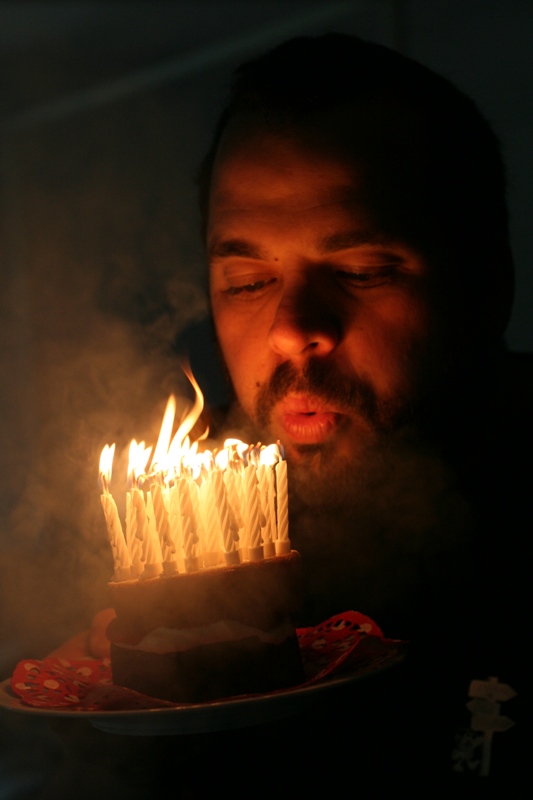
O Tiago hoje faz anos e fiz-lhe um mini Victoria Sandwich: 100 gramas de manteiga, 100 gramas de açúcar, 2 ovos, 100 gramas de farinha e uma colher de fermento; bater tudo, cozer em forno médio em duas pequenas formas redondas, rechear com chantilly caseiro e morangos. Polvilhar com icing sugar e já está!
Today is Tiago‘s birtday so I baked him a mini Victoria Sandwich: 100 grams of butter, 100 grams of sugar, 2 eggs, 100 grams of flour and a teaspoon of baking powder; mix it all together, divide the batter into two small round cake tins, bake in a medium oven, sandwich the cakes together with whipped cream and strawberries. Sprinkle with icing sugar and voilà!

(photos: Constança Cabral)

Mich Turner’s Cake Masterclass :: Book Review

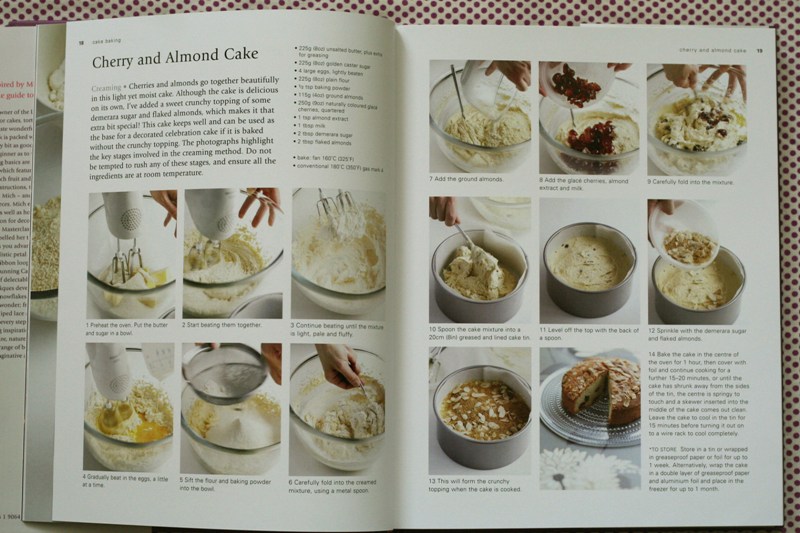
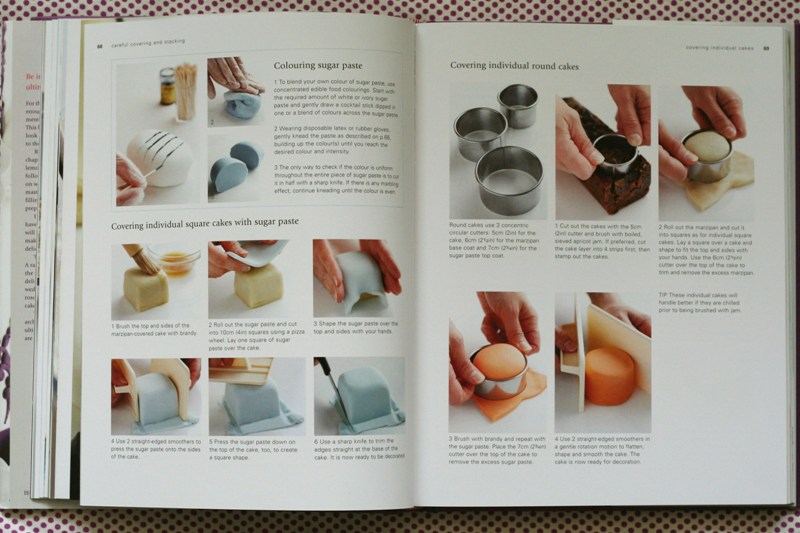
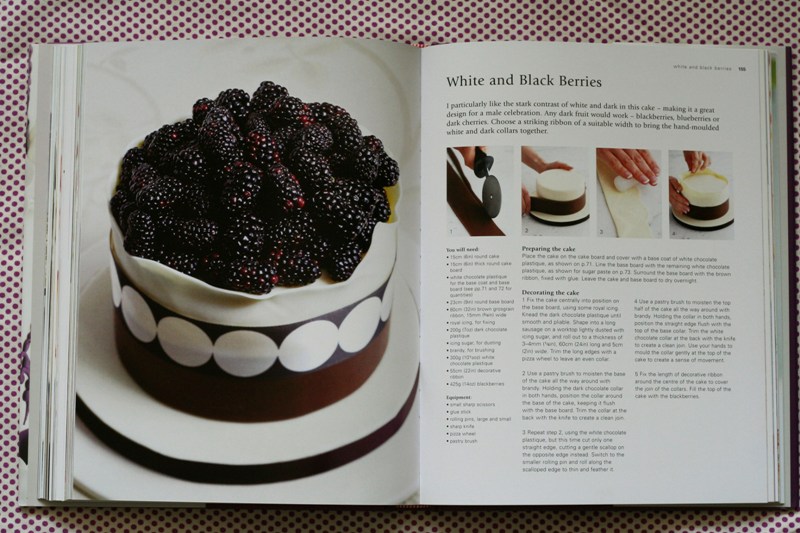
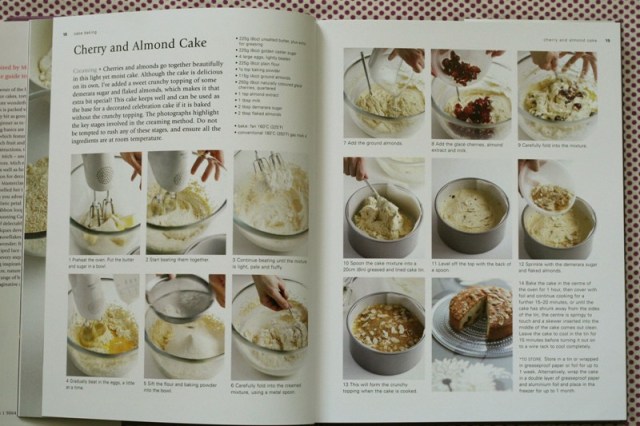
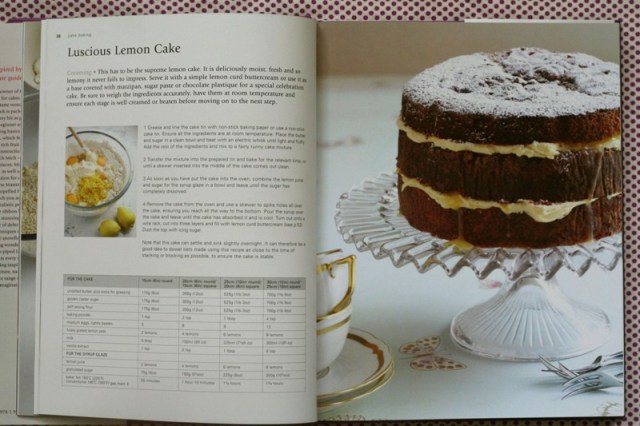
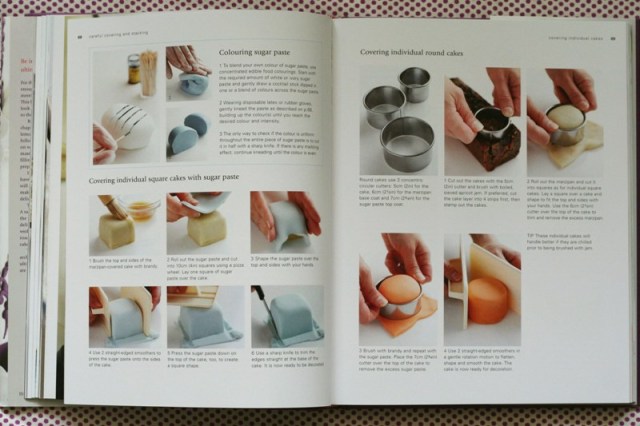
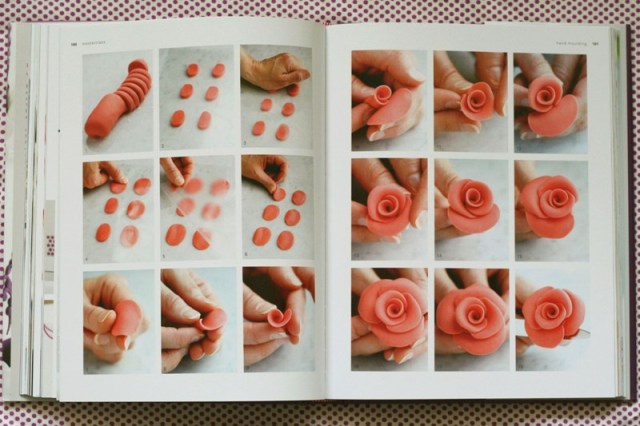
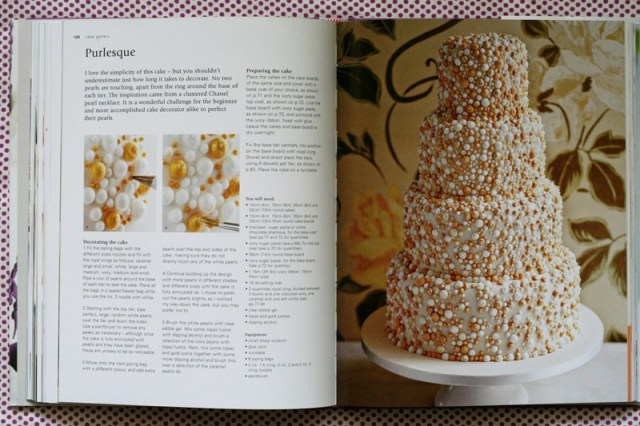
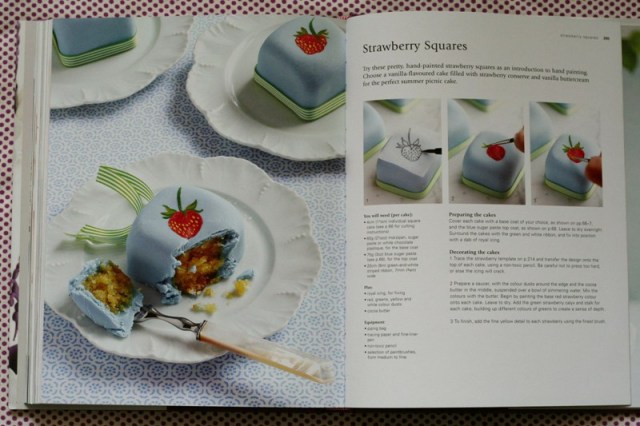
Desde pequena que faço bolos, mas raramente me aventuro em criações muito sofisticadas — não por preguiça ou falta de interesse, mas sim por ignorância pura. Fiquei muito entusiasmada quando recebi um exemplar do livro Mich Turner’s Cake Masterclass e, mal comecei a folheá-lo, vi a luz. Eis um livro bem estruturado que funciona quase como se estivessemos a participar num curso dado pela Mich Turner: cada capítulo funciona como uma aula, há inúmeras fotografias passo-a-passo, o grau de dificuldade vai aumentando ao longo do livro, as múltiplas técnicas estão bem explicadas e as imagens são de excelente qualidade. O livro começa com uma descrição do equipamento necessário, depois fornece 15 receitas-base de bolos. Em seguida há uma secção sobre cremes e recheios e várias páginas sobre bolos em andares e diferentes tipos de coberturas. O capítulo intitulado Masterclass ensina a utilizar sacos de pasteleiro para fazer riscas, pintas e desenhos e explica como fazer flores de açúcar, inserir fitas e pintar motivos nas coberturas dos bolos. Por fim, há uma extensa Cake Gallery em que a teoria é posta em prática com bolos para todos os gostos e ocasiões, desde casamentos, festas de crianças, aniversários, jantares íntimos, almoços de Verão…
I’ve been baking cakes ever since I was a little girl but rarely do I venture into very sophisticated creations — not because I’m lazy or just not interested but mainly due to sheer ignorance on the subject. I was delighted to receive a copy of Mich Turner’s Cake Masterclass to review and from the moment I started browsing it, I saw the light. Here’s a well structured book that feels like you’re taking part on a course taught by Mich Turner: each chapter works like a class, there are several step-by-step pictures, the degree of difficulty increases as the book progresses, the multiple techniques are thoroughly explained and the photos are excellent. The book starts with a section on essential equipment and then gives out 15 recipes and methods for fool-proof cakes. Then comes a chapter on fillings and frostings and several pages about covering and stacking cakes. The “Masterclass” chapter teaches you to hand pipe, paint and mould everything from pearls and stripes to various types of flowers. Finally, the last 100 pages are filled with a “Cake Gallery” where you can put the techniques into practice and create cakes for all tastes and occasions, such as weddings, children parties, birthdays, romantic dinners, Summer fêtes…
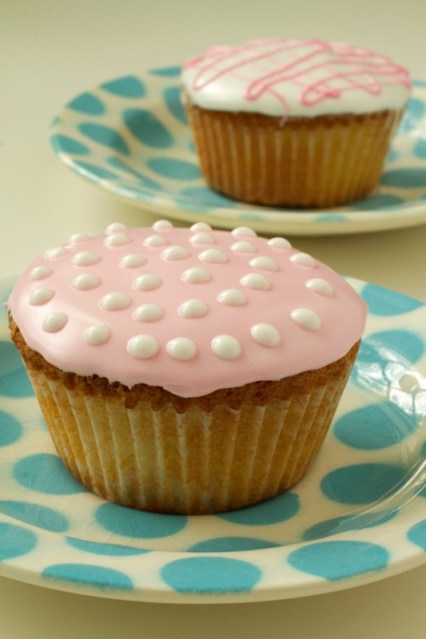
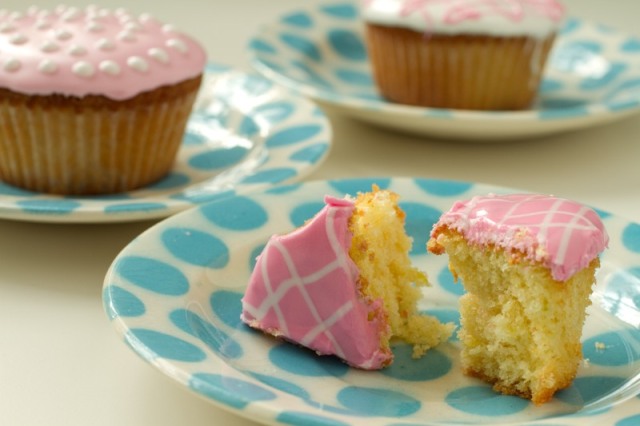
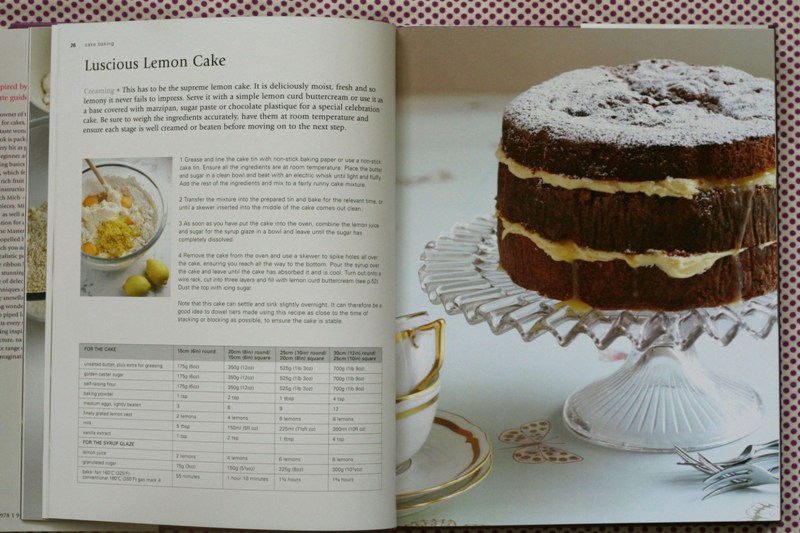
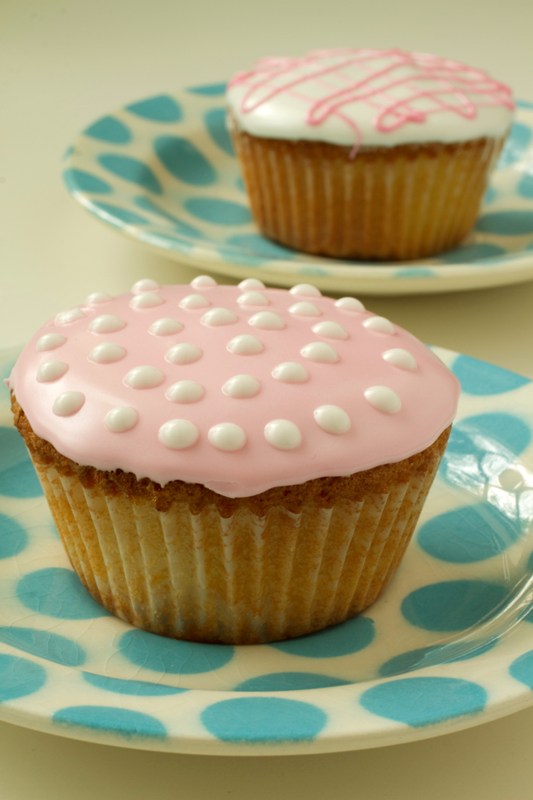
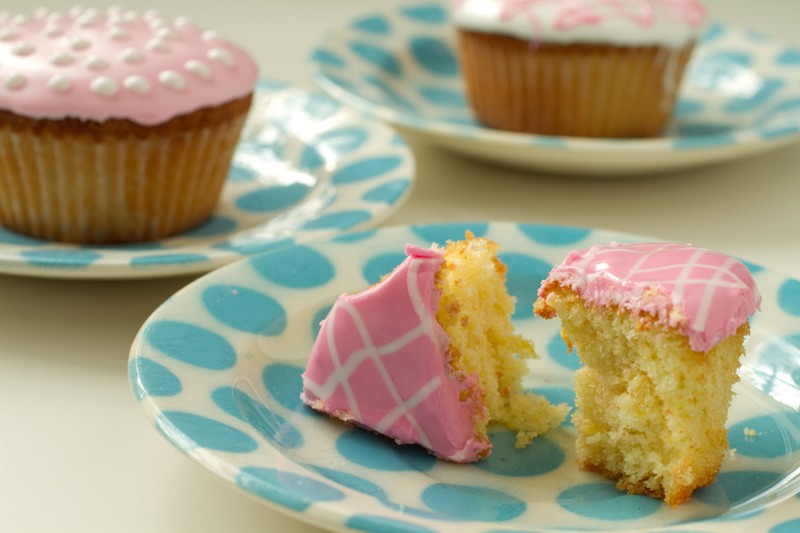
Após ter lido e relido o livro, não resisti a pôr em prática alguns dos ensinamentos. Fiz o Lucious Lemon Cake mas dividi a massa por 12 formas de queque; quando os bolos arrefeceram, cobri-os com royal icing (e pela primeira vez na vida usei corantes alimentares) e desenhei-lhes riscas e pintas com um saco de pasteleiro. Os bolos ficaram óptimos e estou cheia de vontade de experimentar outras técnicas mais avançadas. Se quiserem ver a Mich Turner a moldar rosas de pasta de açúcar, vejam este vídeo.
After having read and reread the book I couldn’t resist having a go myself at baking and decorating the Mich Turner way. I made the Lucious Lemon Cake but instead of baking a single large cake, I divided the batter into 12 small cake tins; as soon as the cakes were cool I covered them with royal icing (and for the first time in my life used food colouring) and piped lines and dots over them. They turned out great and now I want to experiment with more advanced techniques. If you’d like to see Mich Turner hand moulding sugar roses, check out this video.
(photos: Constança Cabral;  Tiago Cabral)

Biscoitos à Portuguesa :: Biscuits the Portuguese Way

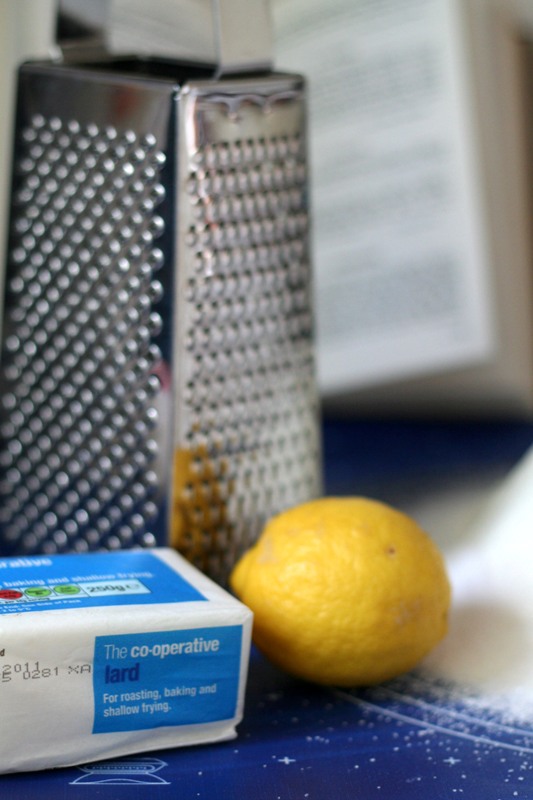
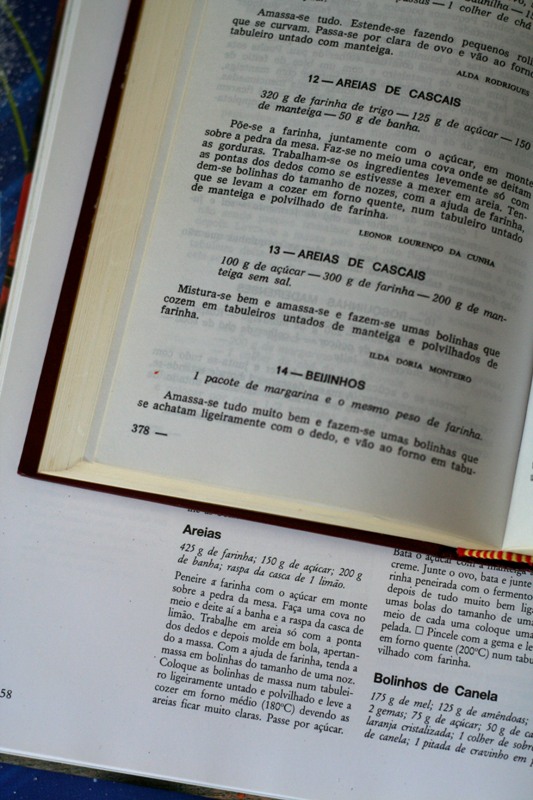
Há muito tempo que andava com vontade de experimentar fazer biscoitos portugueses, aqueles que há nas padarias de bairro e em casa das avós. Puxei do Coisas Boas (ed. Livros do Brasil) e do Receitas Escolhidas da Maria de Lurdes Modesto (não tenho o Cozinha Tradicional Portuguesa, mas hei-de comprá-lo um dia) e experimentei fazer areias de Cascais. Estas receitas pouco têm a ver com as actuais: um só parágrafo, nada de imagens e muito poucas explicações (assumia-se que as pessoas soubessem o básico). Achei graça à parte de peneirar a farinha “sobre a pedra da mesa”, como se toda a gente ainda tivesse uma mesa com tampo de liós na cozinha (quem me dera!). Quanto aos biscoitos, não os acho nada de especial mas a Mafalda adora.
For a long time now I’ve been meaning to try making Portuguese biscuits, the ones you find in traditional bakeries and grannies’ homes. I pulled out my Portuguese books and made something called “areias de Cascais”, a sandy biscuit (“areia” literally means sand) made with flour, sugar, lard, lemon zest and cinnamon. These old recipes are so different from modern cookbooks: one single paragraph, no pictures and little explanations (it was assumed people knew the basics). As for the biscuits, I don’t think they’re anything special but Mafalda loves them.

(photos: Constança Cabral)

Flores Cristalizadas II :: Crystallized Flowers II

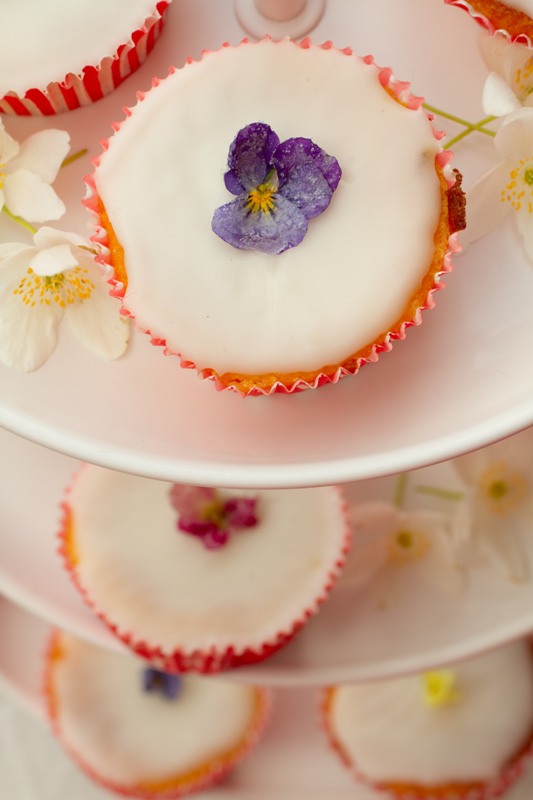
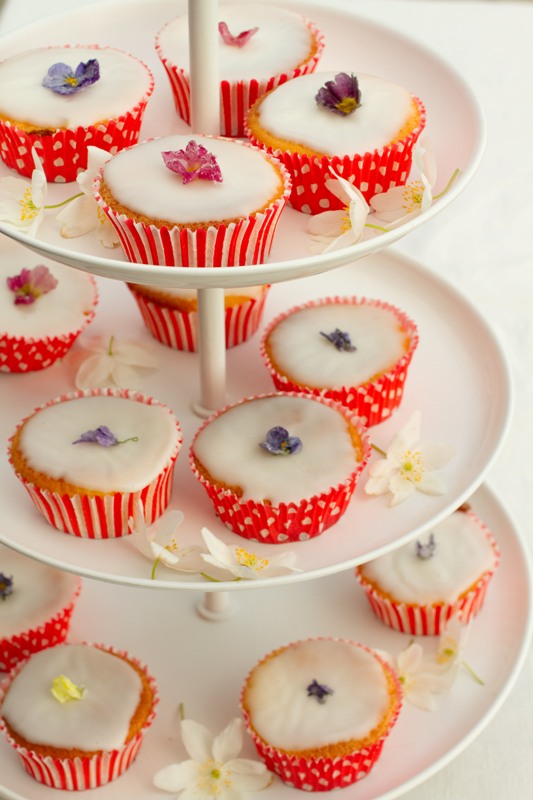
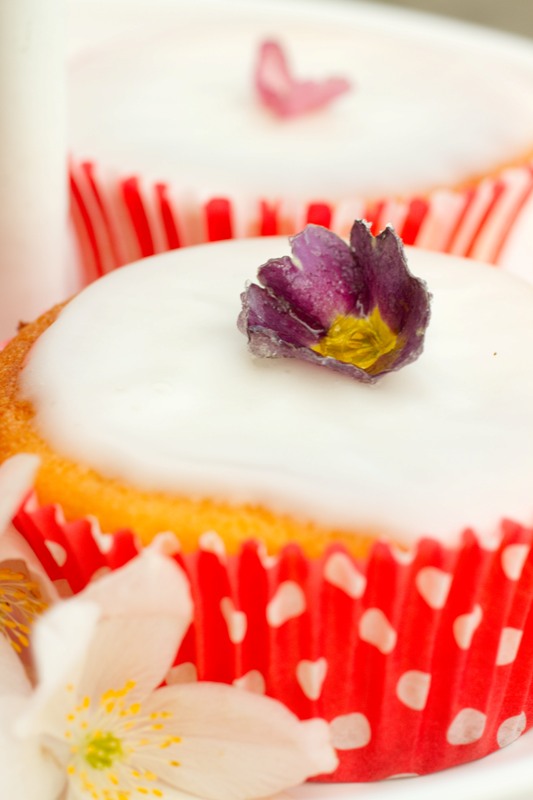
Apesar de embirrar um bocado com cupcakes (reconheço que são giros, mas acho-os quase sempre secos e demasiado doces), pensei logo que seriam a maneira ideal de usar as flores cristalizadas que fiz ontem. Então em vez de fazer uma receita especificamente para cupcakes, fiz o bolo de limão e iogurte com cobertura do flores cristalizadas que fiz ontem. Em vez de fazer uma receita especificamente de cupcakes, fiz a massa de um bolo de iogurte e limão (e respectiva cobertura de sumo de limão e icing sugar) que vem no Baking Bible da Mary Berry. O resultado é óptimo: húmido, fofo e doce qb.

Although I’m not a huge fan of cupcakes (I admit they’re cute but they’re usually too dry and too sweet for my taste), while I was making the crystallized flowers I kept thinking cupcakes would be the ideal way to showcase the flowers. So instead of making a cupcake/fairy cake recipe, I went with the iced lemon and yoghurt cake from  crystallised flowers I couldn’t help thinking that something like a cupcake/fairy cake would be the ideal way of showcasing the flowers. So instead of making a cupcake recipe, I went with the iced yoghurt and lemon cake from Mary Berry’s Baking Bible. The result is delicious: moist, dense and not too sweet. 

(photos: Tiago Cabral)

Spring :: Crystallized Flowers

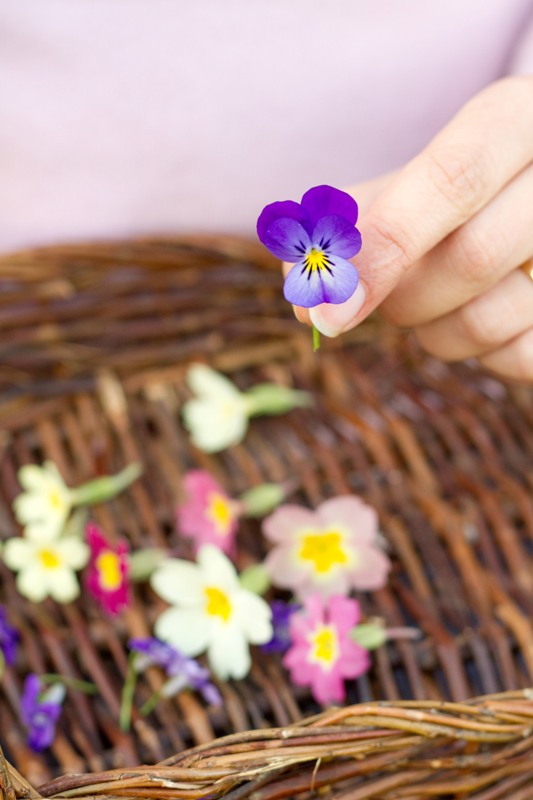
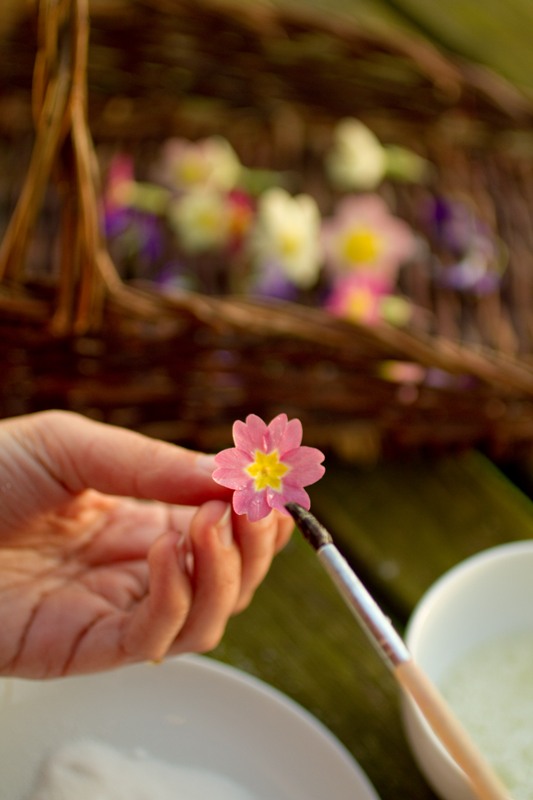
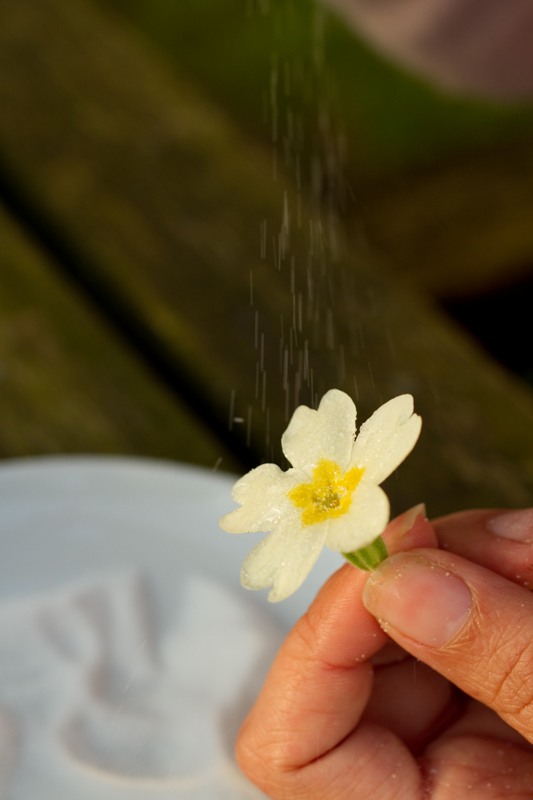
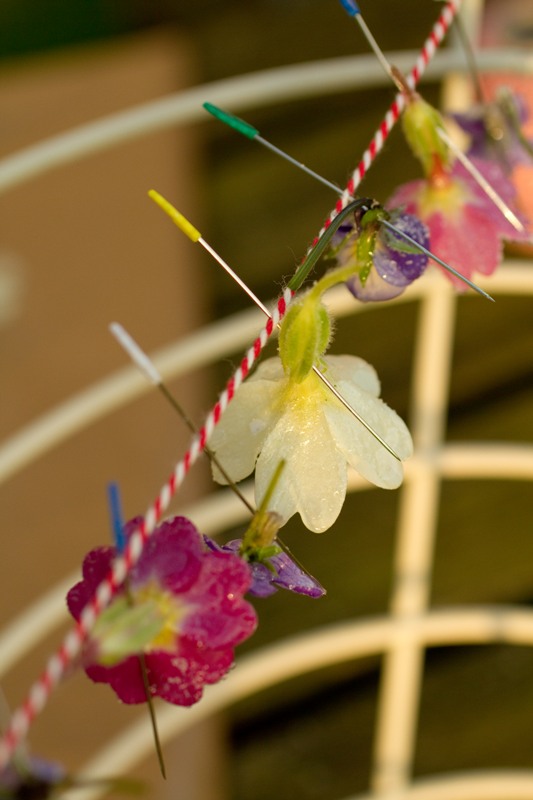
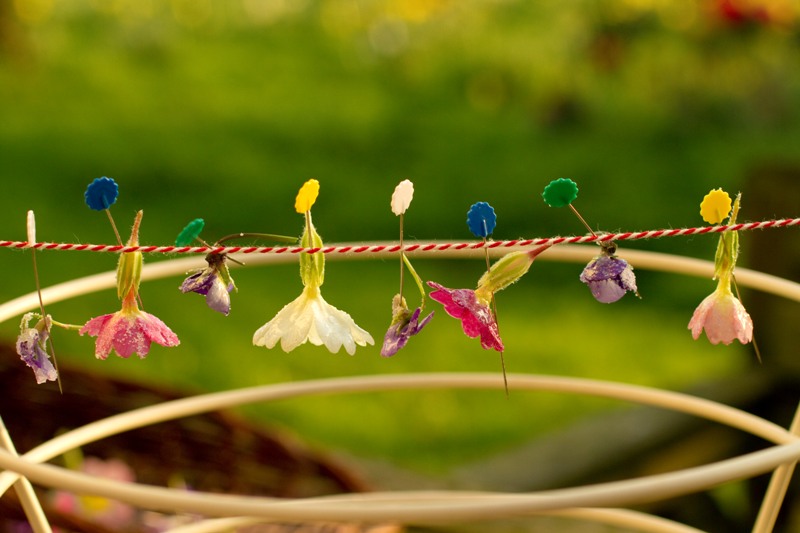
Após ter ouvido a Mary Berry falar no Woman’s Hour sobre flores cristalizadas (capítulo IV deste programa), resolvi experimentar fazer o mesmo. O nosso jardim está cheio de flores comestíveis, como prímulas e violetas, e esta operação foi uma óptima desculpa para aproveitarmos o fim de tarde lá fora. O processo é simplicíssimo: há que primeiro pincelar as flores com uma clara de ovo, batida com umas gotas de água até fazer espuma, e depois polvilhar com açúcar fino. Depois de secas, podem enfeitar bolos e, claro, podem ser comidas! Convém que sejam flores de jardim ou de produção biológica – as flores de florista estão carregadas de pesticidas e não devem ser ingeridas.
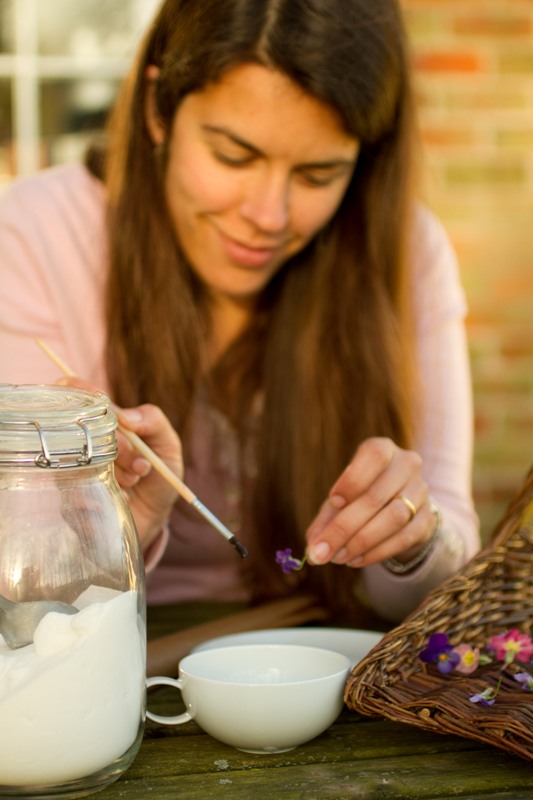
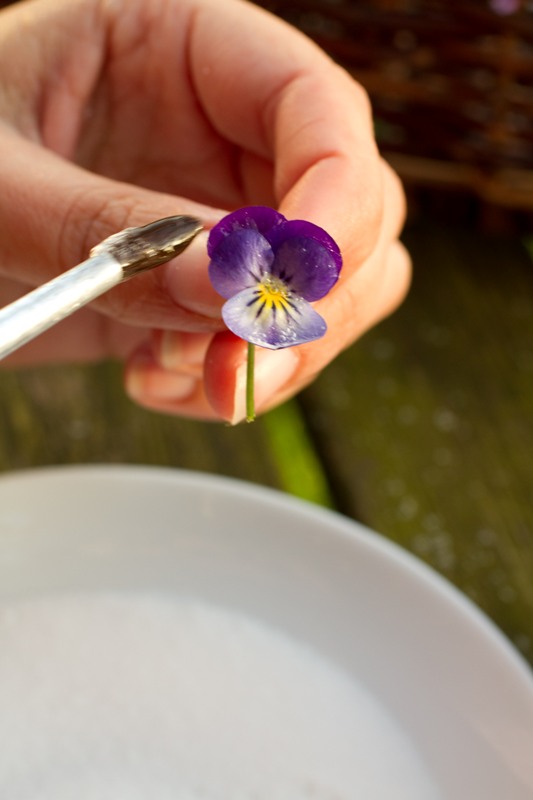
After hearing Mary Berry talk about crystallized flowers on Woman’s Hour (chapter IV of this episode), I decided to have a go at it. Our garden is full of edible flowers like primroses and violets so this provided the perfect excuse to spend the sunset outdoors. The operation couldn’t be simpler: first you paint the flowers with an egg white mixed with a few drops of water and whisked until it’s frothy, and then you sprinkle them with caster sugar. When they’re dry you can use them to decorate cakes and you can of course eat them! It’s best to use either garden or organic flowers, since bought flowers are full of chemicals and therefore shouldn’t be eaten.

(photos: Tiago Cabral)

O Melhor Bolo de Anos :: The Best Birthday Cake


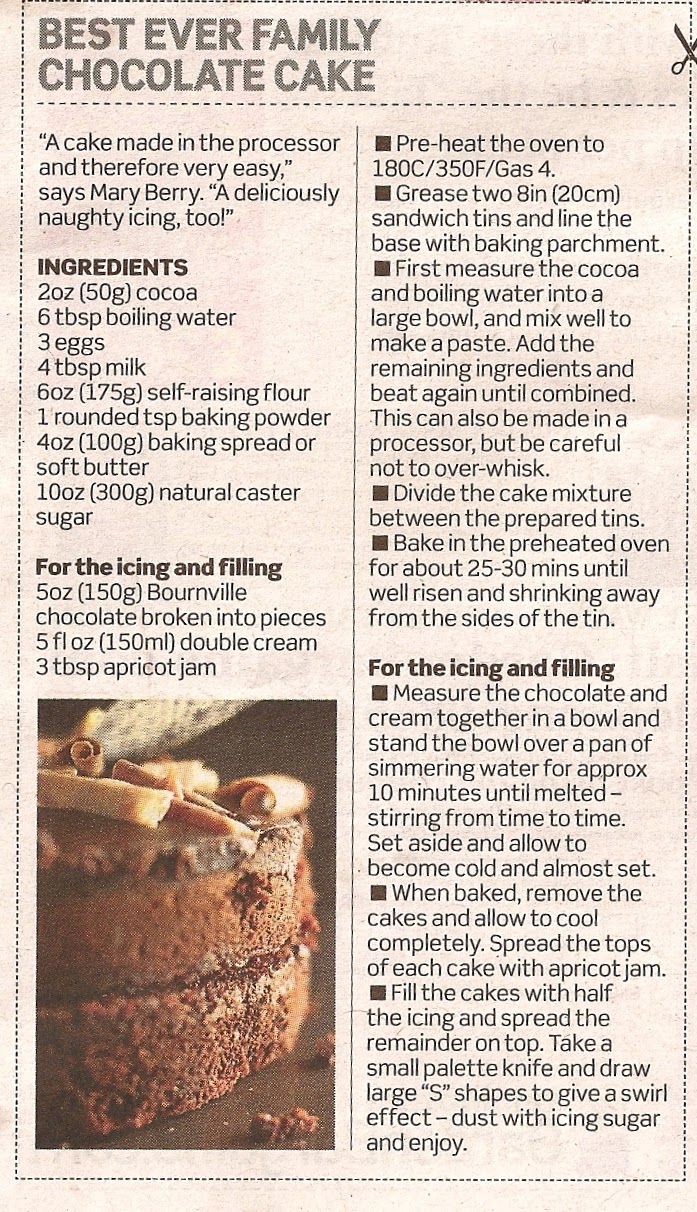
Ando sempre à procura de uma boa receita para um bolo de anos a sério: alto, denso e preferencialmente de chocolate. Este que fiz ontem é do Baking Bible da Mary Berry – como a receita saiu há uns meses no Sunday Telegraph, suponho que a possa partilhar aqui convosco. As minhas únicas alterações foram omitir o doce de alperce e acrescentar raspa de laranja ao recheio e cobertura.
I’m always on the lookout for a good recipe for a proper birthday cake: one that is tall, dense and preferably chocolatey. This one I baked yesterday is from Mary Berry’s Baking Bible – since this recipe came in The Sunday Telegraph a few months ago, I suppose I can share it here with you. My only alterations were adding some orange grated rind to the icing and filing and leaving the apricot jam out.


(photos: Tiago Cabral)

Bolo de Chocolate e Laranja Amarga :: Chocolate & Marmalade Cake

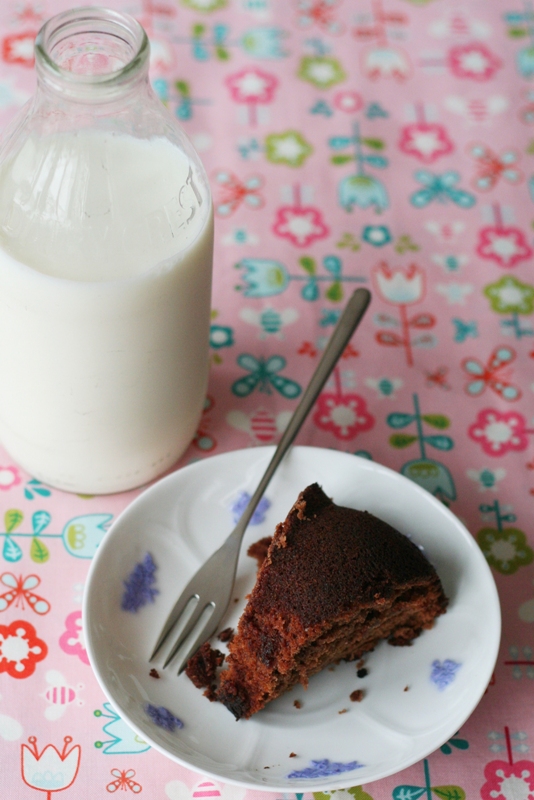
O que fazer com frascos e frascos de marmalade demasiado boa para ser deitada fora, mas não suficientemente boa para ser oferecida? Uma das opções é disfarçá-la em bolos. A clássica combinação de chocolate e laranja nunca me desilude e o bolo, apesar de não ser muito fotogénico e parecer seco, é denso, subtil e bastante saboroso. O truque é não o deixar cozer demais. Encontrei a receita aqui.
What to do with jars and jars of marmalade that’s too good to be thrown away but not good enough to be gifted? One of the options is to use it in cakes. The classic combination of chocolate ad orange never fails to please me and this cake, although a bit dry and sad looking, is actually quite dense, subtle and delicious. The trick is not to overbake it. I found the recipe here.

(image: Constança Cabral)