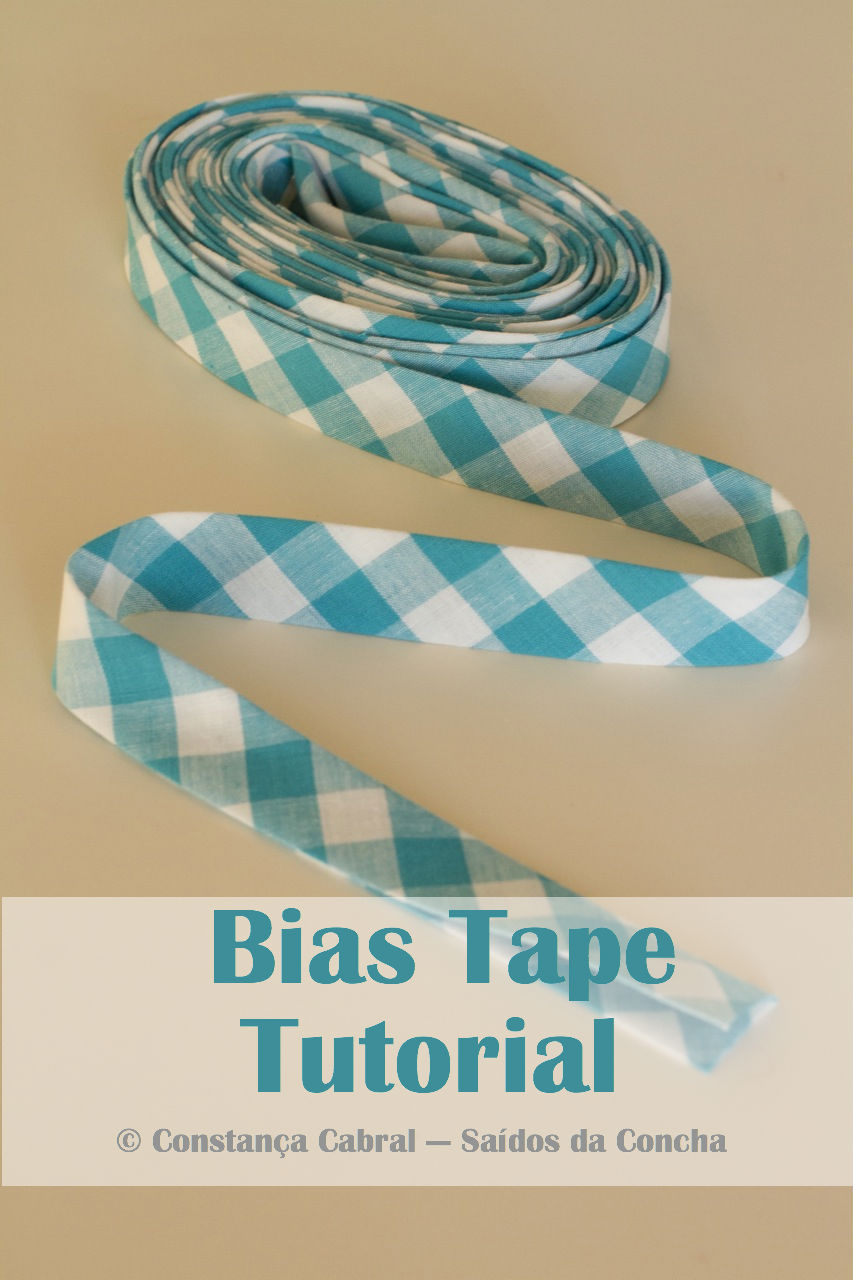
Hoje vou mostrar-vos a maneira como eu faço fitas de viés. Há outras técnicas, claro, mas esta forma de fazer é simples e resulta sempre. Vamos a isto?
Today I’m going to show you how I make bias tape. There are other techniques, of course, but this one is simple and effective. Are you ready?
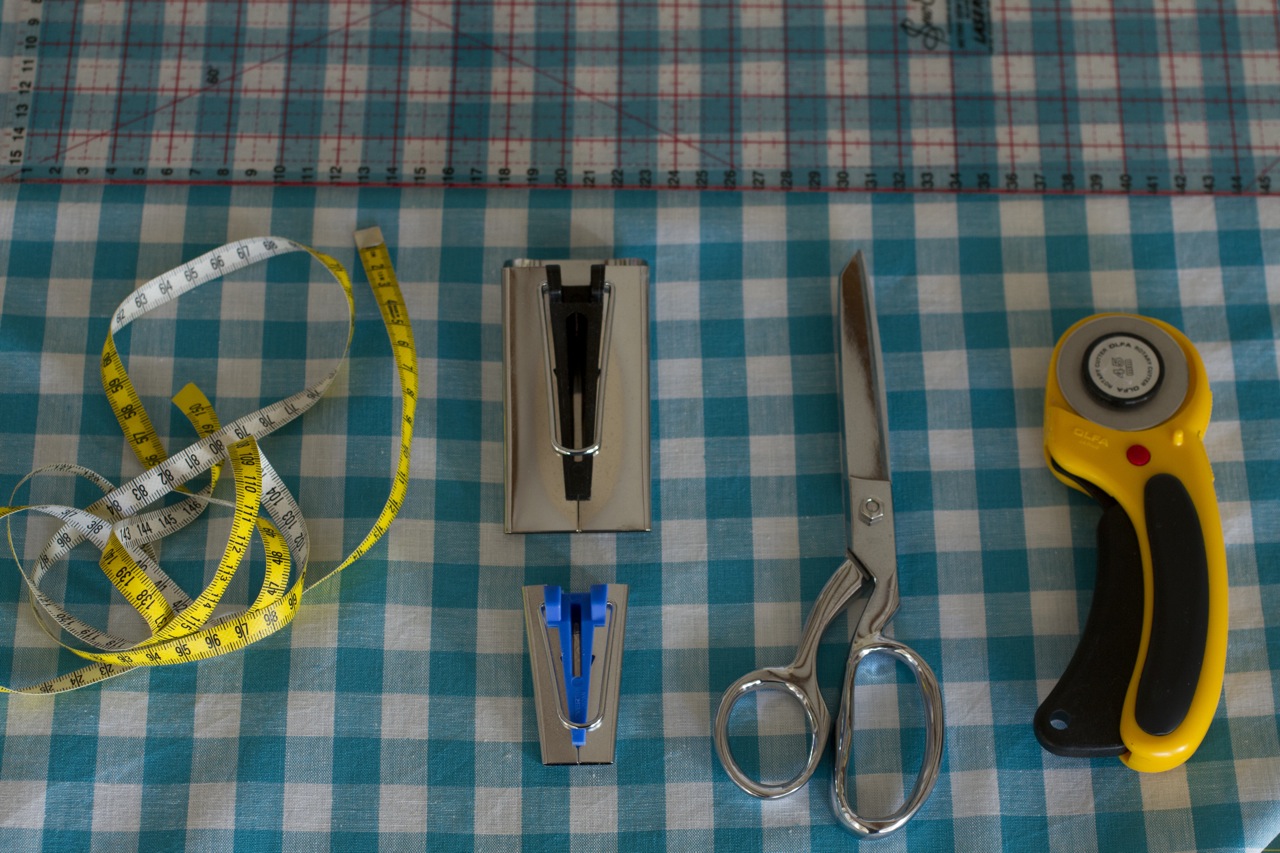
1. Comece por reunir todos os materiais necessários: tecido, fazedor de viés, tesoura, cortador rotativo, fita métrica, régua em acrílico, tapete de corte, ferro de engomar, máquina de costura.
1. Start by gathering all the necessary supplies: fabric, bias tape maker, scissors, rotary cutter, tape measure, acrylic ruler, self-healing cutting mat, iron, sewing machine.
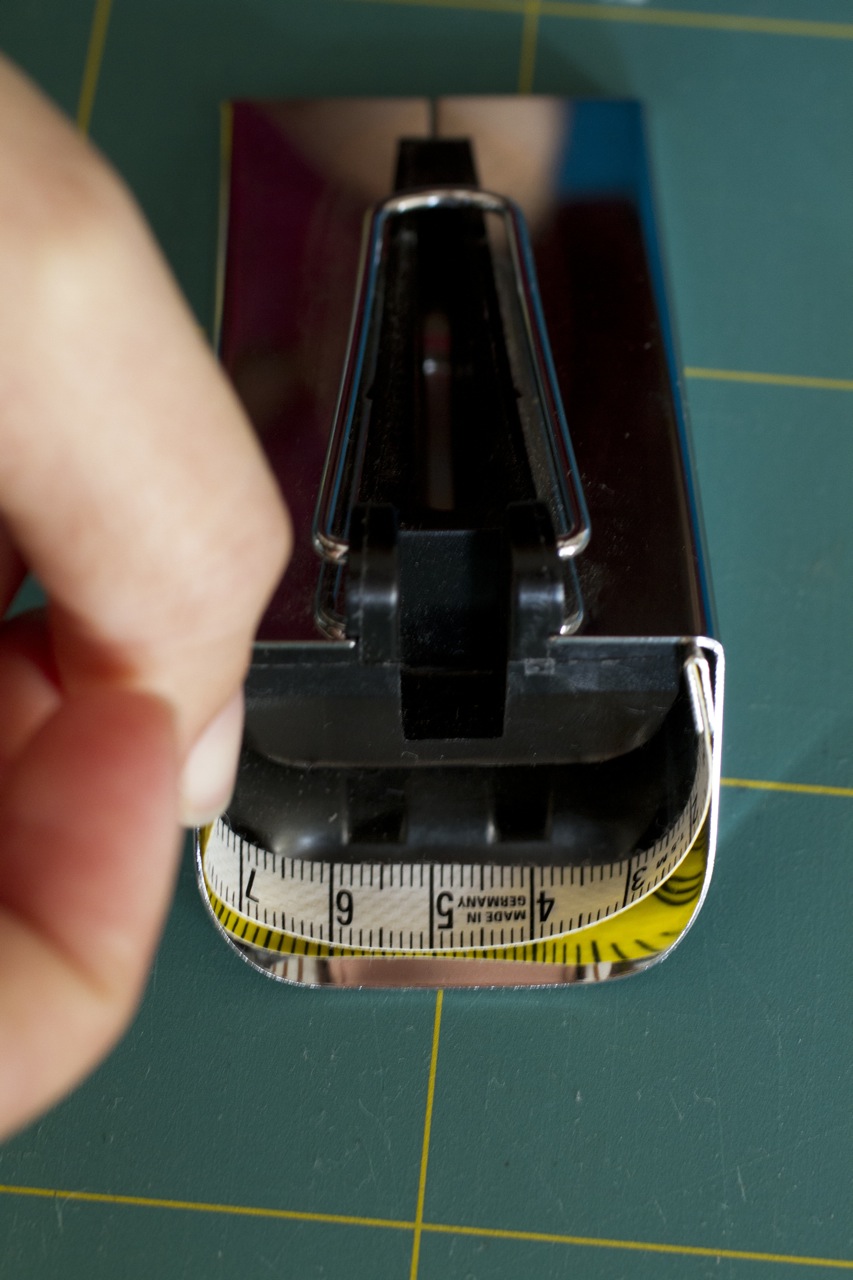
2. Existem vários tamanhos de fazedores de viés; este que usei faz viés com 2,5 cm de largura. Para saber a largura das tiras de tecido que irá cortar, há que medir o interior do mesmo: este tem 10 cm.
2. Bias tape makers come in different sizes; this one I’m using makes bias tape that’s 2,5 cm / 1” wide. In order to know the width of the fabric strips you’re about to cut, first you must measure the inside of the bias tape maker: this one is 10 cm / 4” wide.
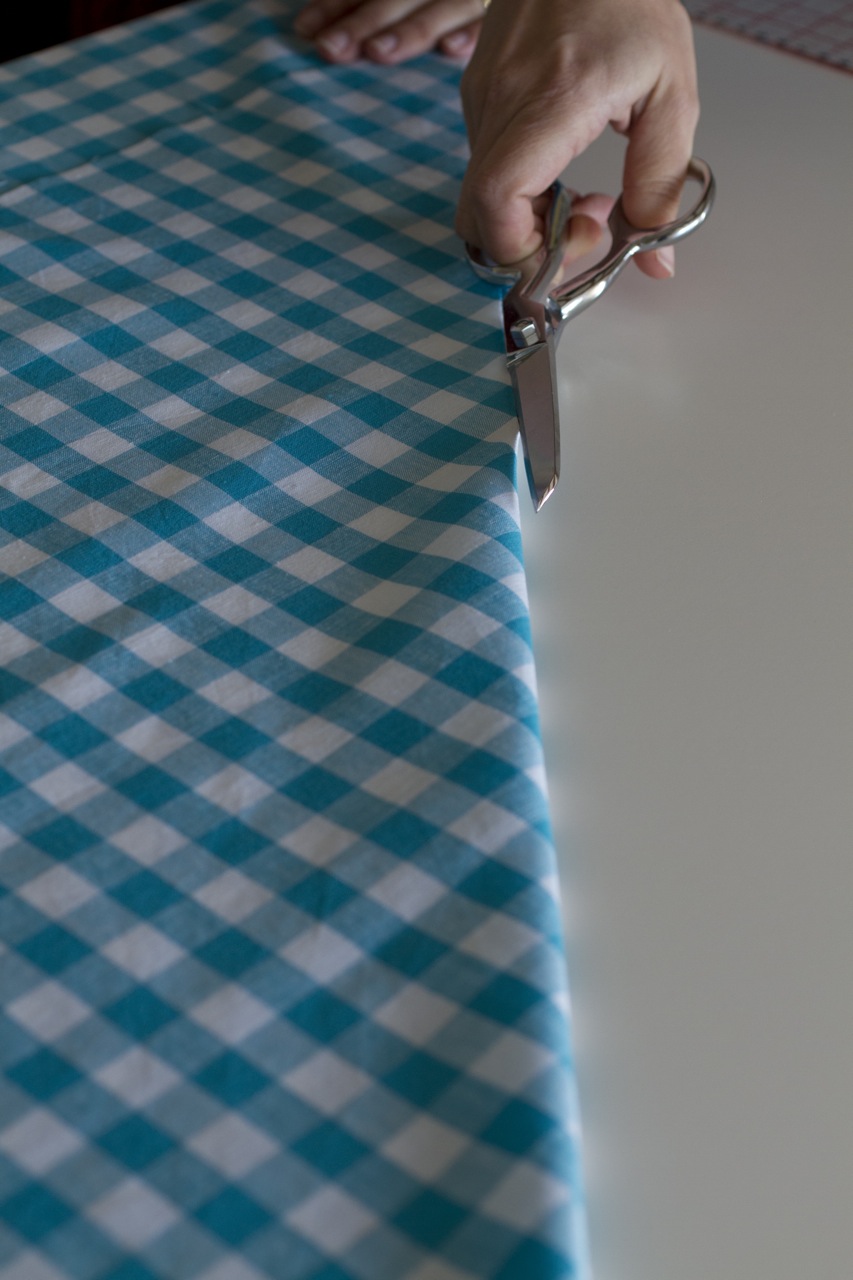
3. Dobre o tecido a 45º e corte ao longo da dobra com uma tesoura. O seu tecido terá agora a forma de um triângulo.
3. Fold your fabric at a 45º angle and cut along the fold with a pair of scissors. Your fabric will now have a triangular shape.
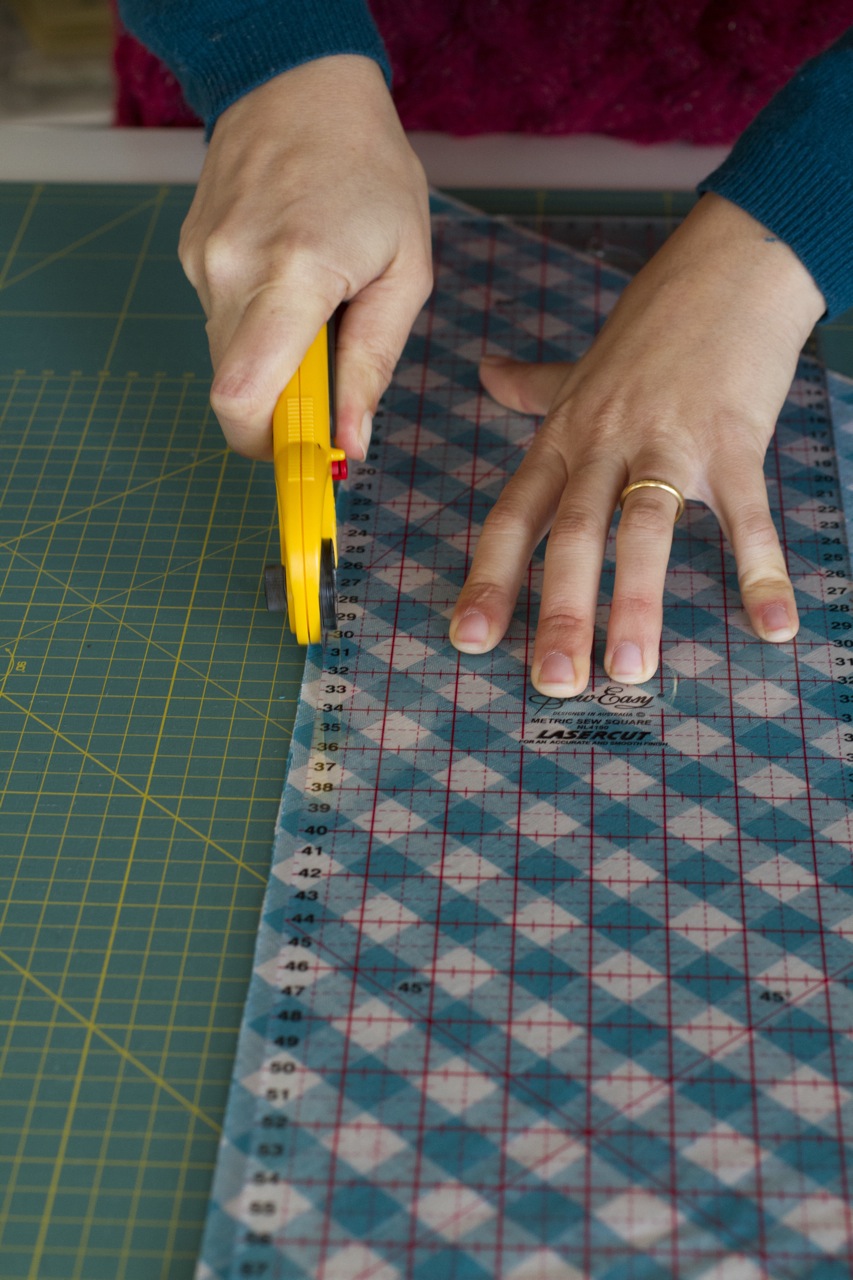
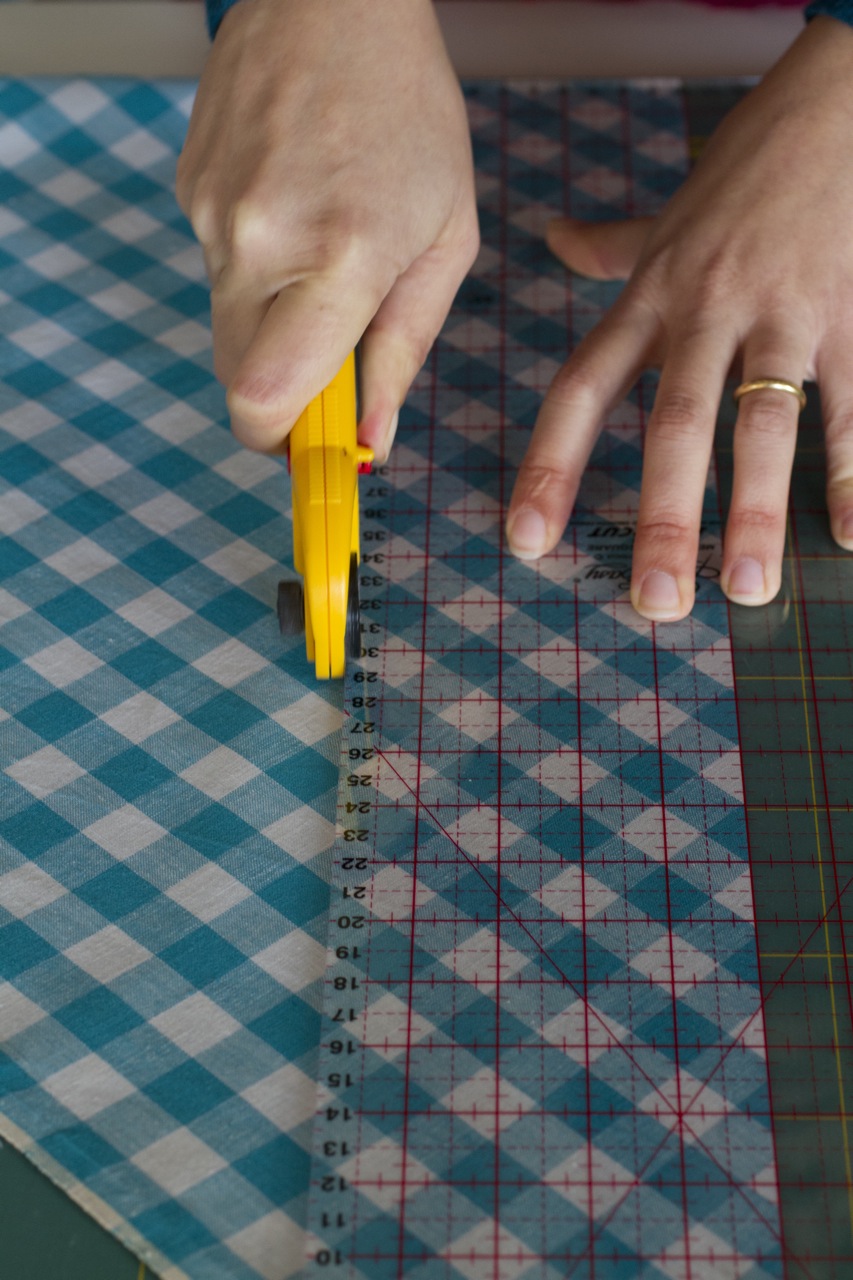
4. Dobre o triângulo ao meio, alinhando o corte em viés que acabou de fazer. Use a régua e o cortador rotativo para acertar esse mesmo corte.
4. Fold the triangle in half along the bias edge you’ve just cut. Using the ruler and the rotary cutter, trim that edge.
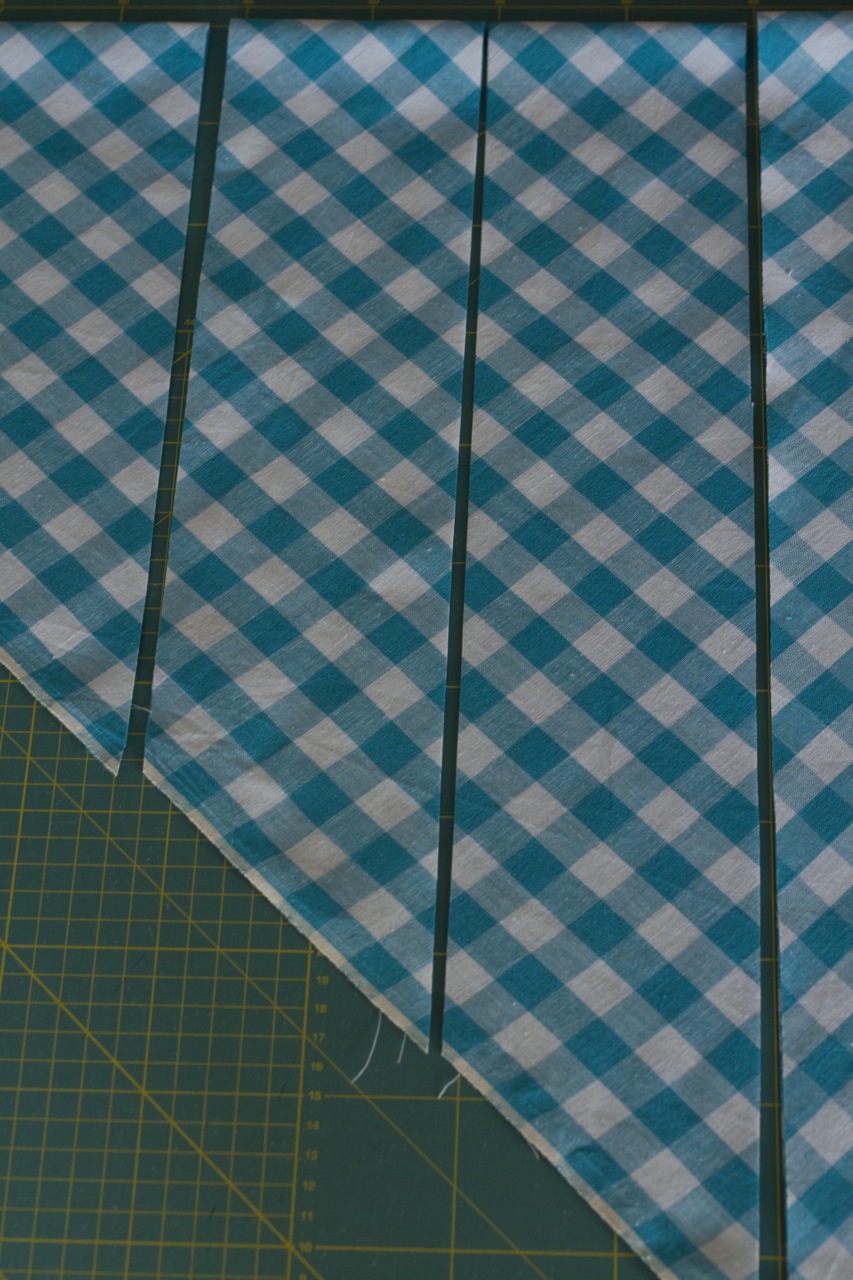
5. Agora corte tiras com 10 cm de largura até ao fim do tecido.
5. Now cut 10 cm / 4” wide strips until you run out of fabric.
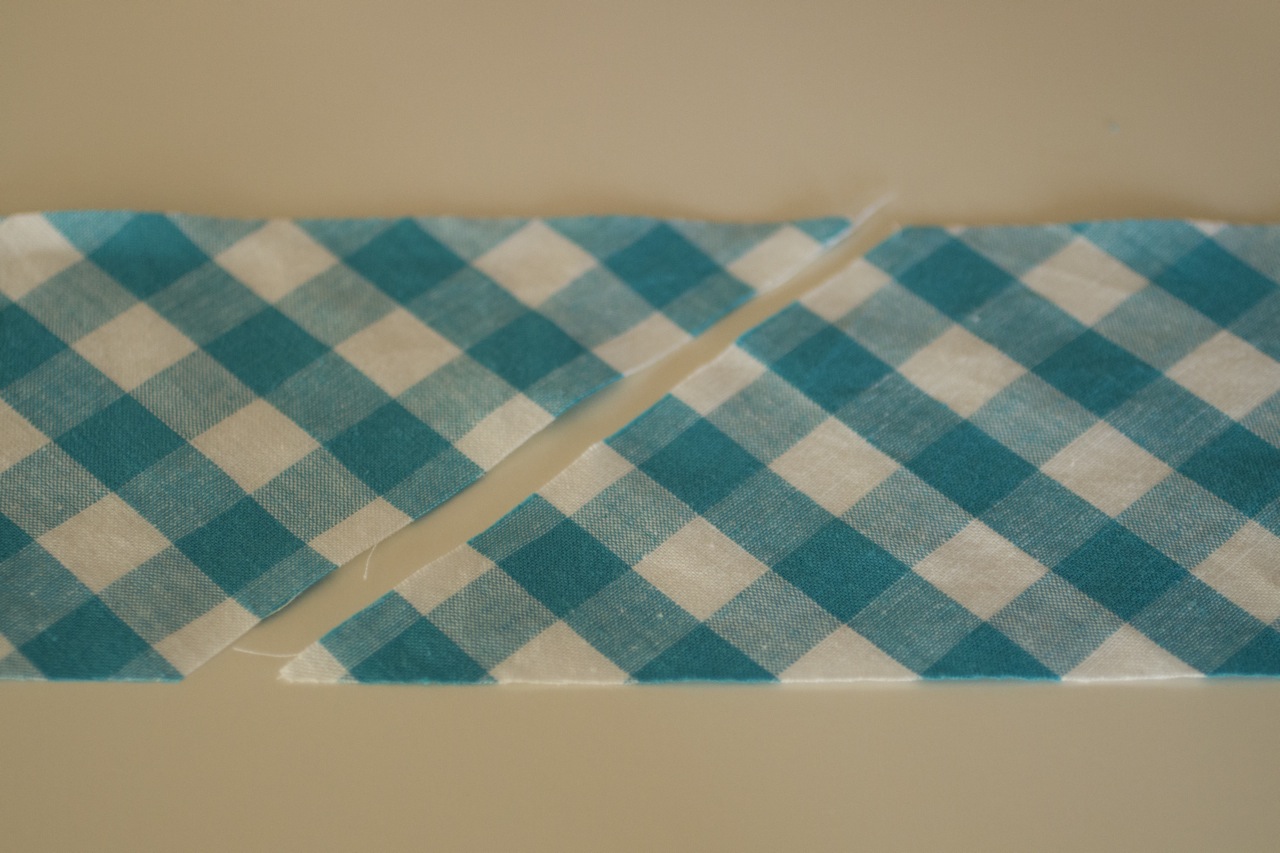
6. Pegue em duas tiras com extremidades em ângulos opostos.
6. Take two strips that have edges in opposite angles.
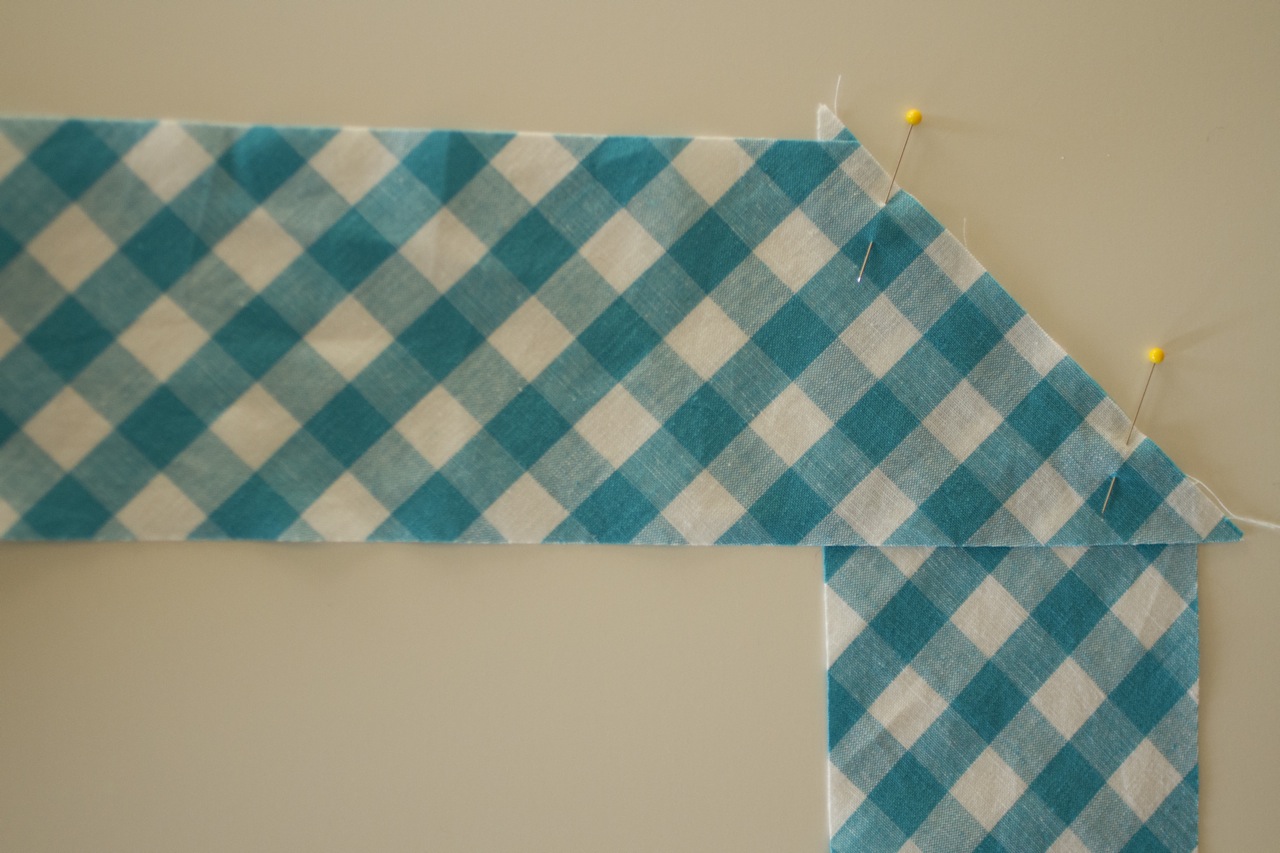
7. Deite uma tira sobre a outra, direito contra direito (este tecido que usei é igual dos dois lados, por isso é impossível ver a diferença entre direito e avesso), de maneira a formarem um ângulo recto, e descompensando um pouco as pontas (cerca de 0,5 cm, medida que corresponde à margem de costura).
7. Lay one strip on top of the other, right sides together (this particular fabric I’m using looks the same on both sides so you can’t really tell which is side is which), at a 90º angle, and make sure you overlap the edges by approx. 0,5 cm / ¼” (this is your seam allowance).
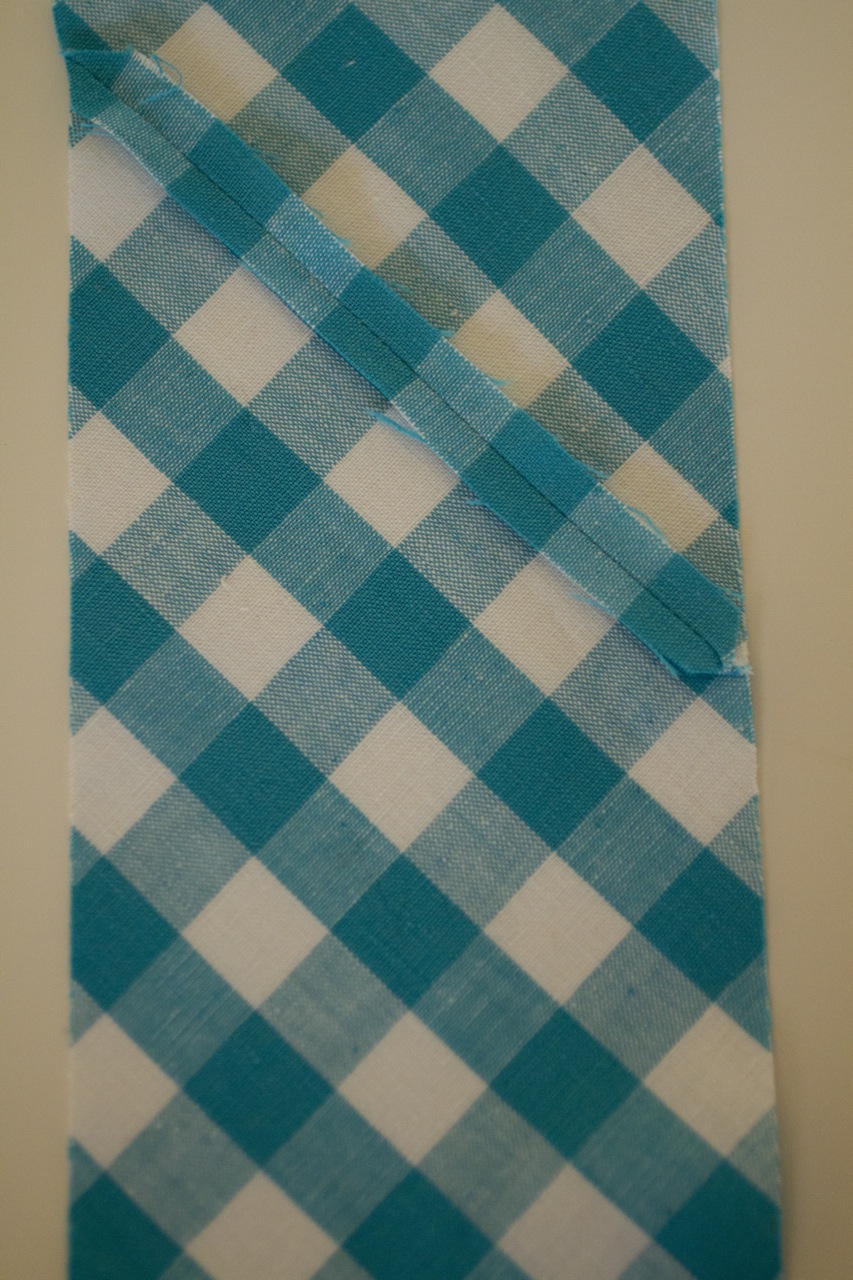
8. Cosa à máquina usando uma margem de costura de 0,5 cm. Abra a costura com o ferro e corte o excesso de tecido. Repita até ter obtido uma tira contínua.
8. Machine-sew the seam using a 0,5 cm / ¼” seam allowance. Press the seam allowance open and clip off the excess fabric. Repeat to join the remaining strips.
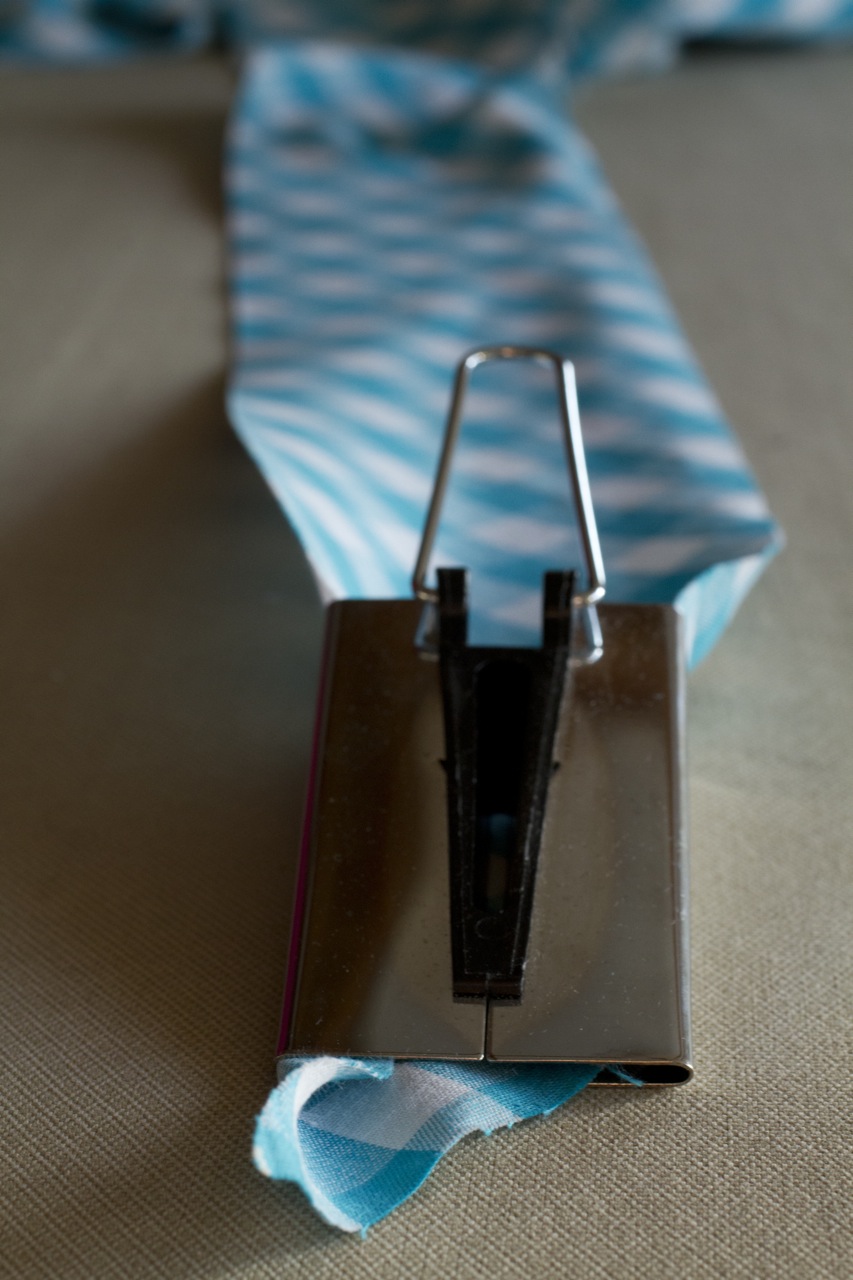
9. Com o avesso virado para cima, enfie uma extremidade da tira de tecido através do fazedor de viés.
9. With the wrong side of the fabric facing up, feed the edge of the strip into the bias tape maker.
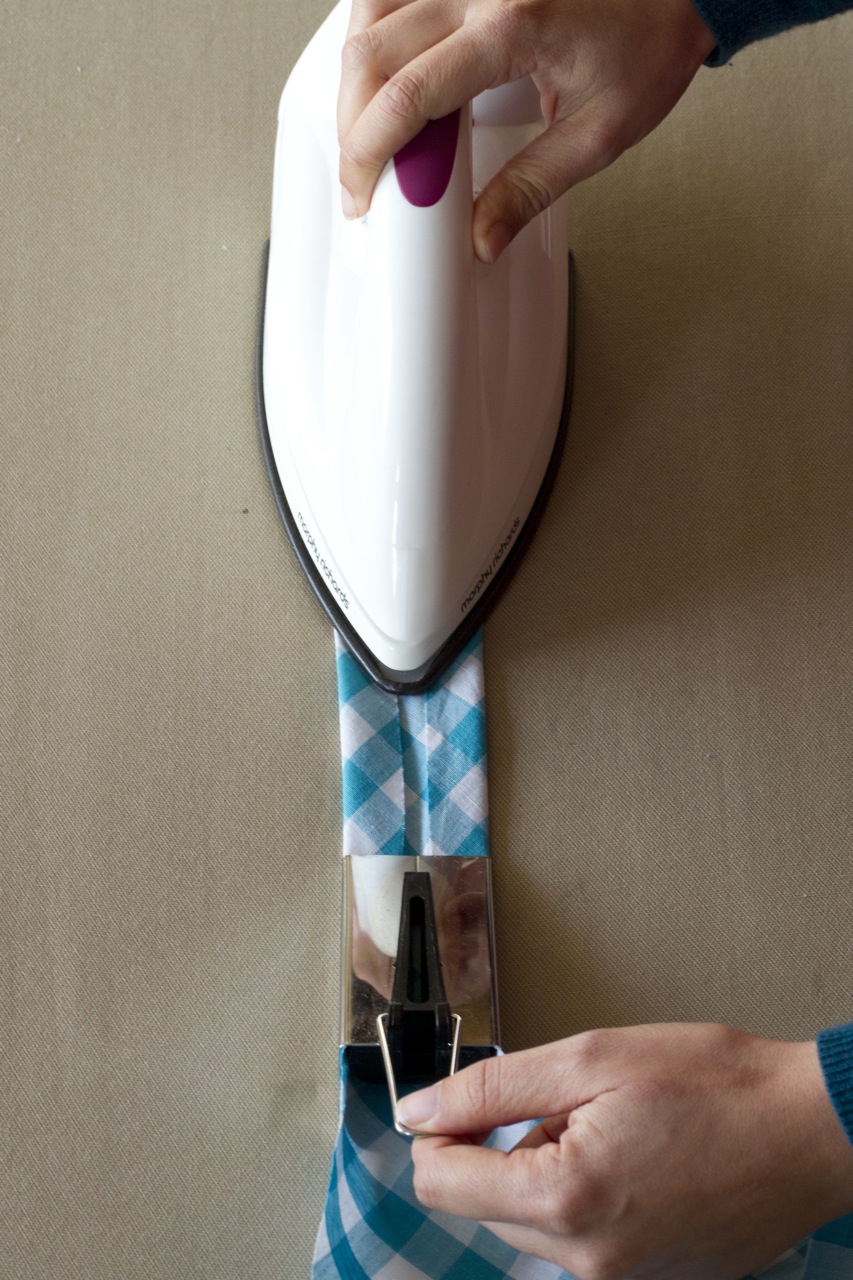
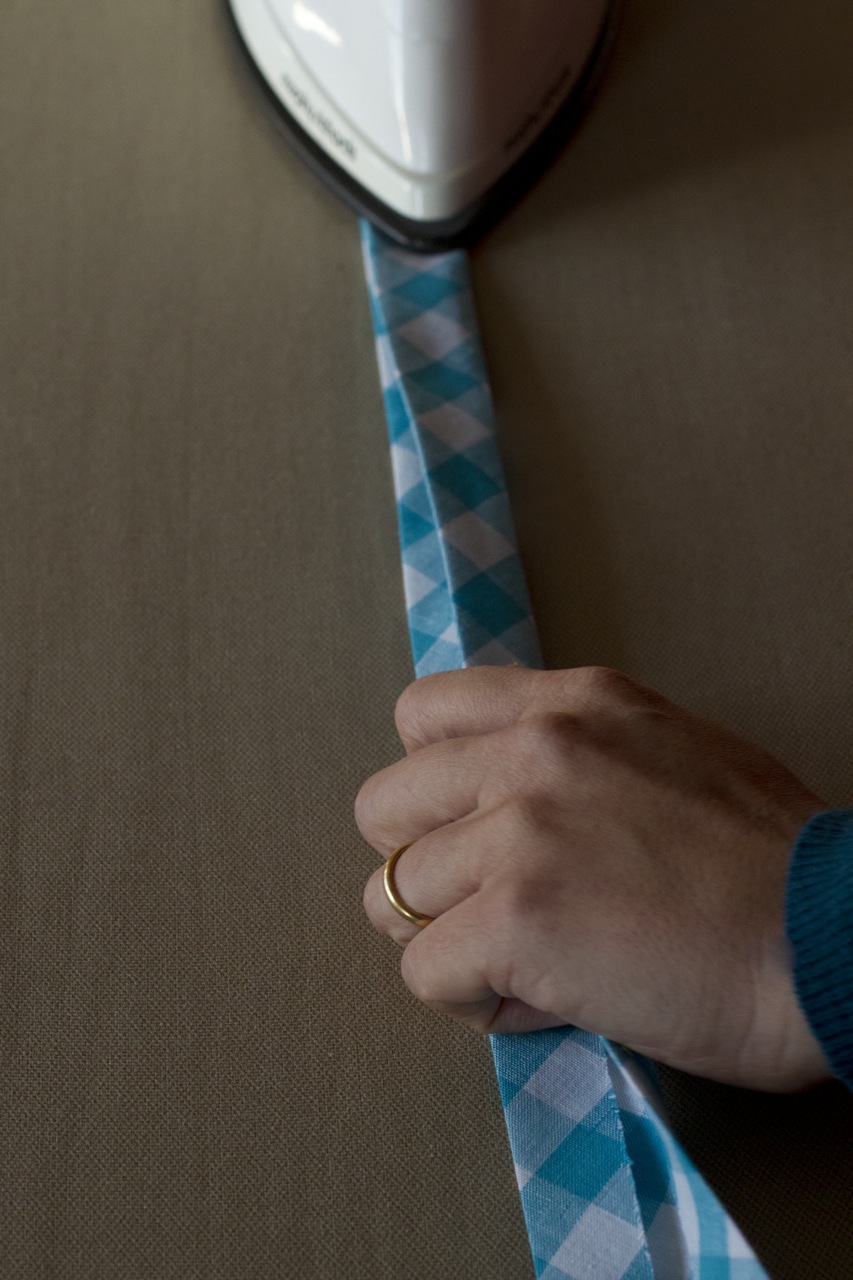
10. Vá puxando lentamente o fazedor de viés e engome as dobras que se vão formando.
10. Slowly pull the maker and press the folds as they come out of it.
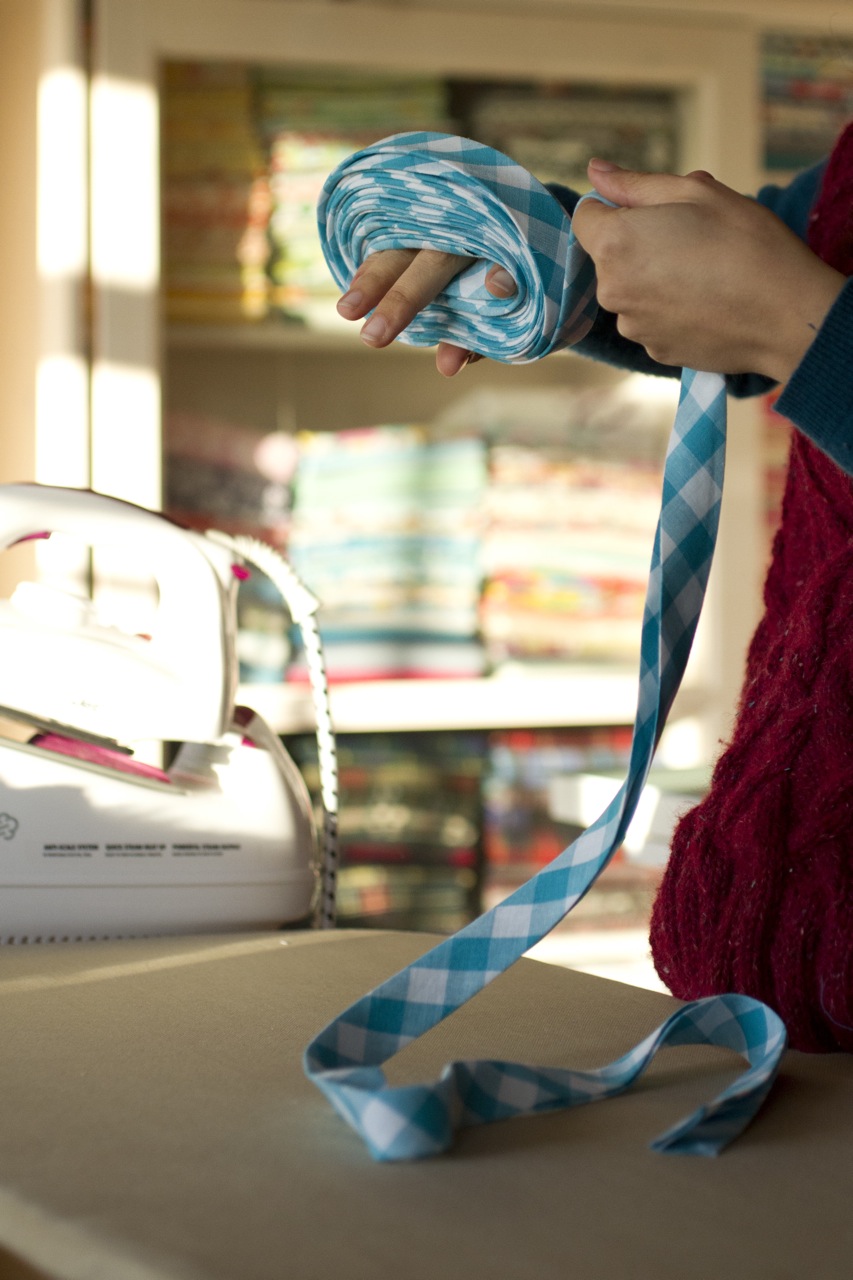
11. Dobre a tira a meio a todo o comprimento e engome.
11. Fold the bias tape in half and press.
(photos: Tiago Cabral)