1. The design
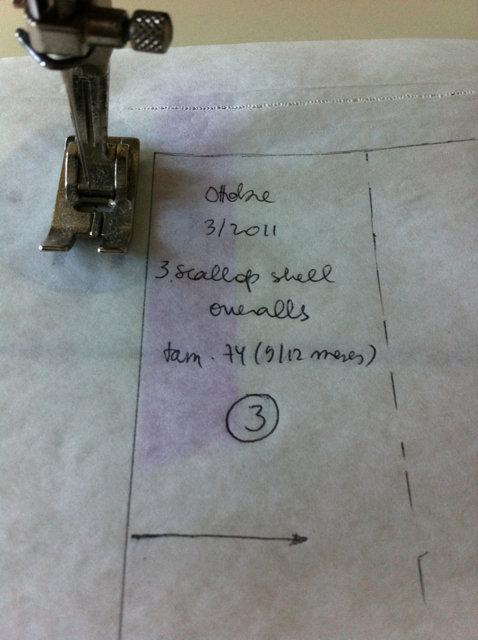
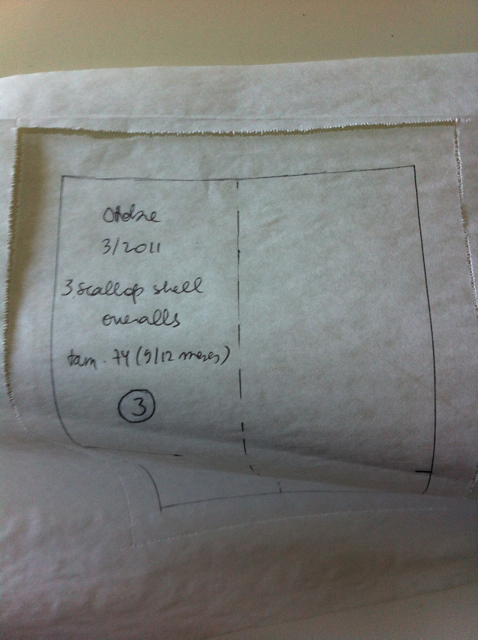
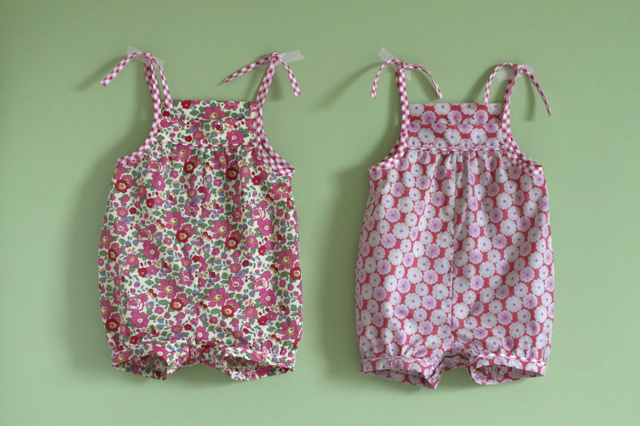
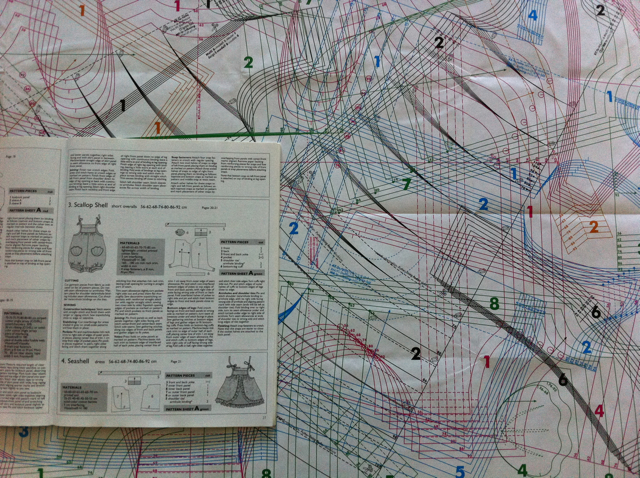
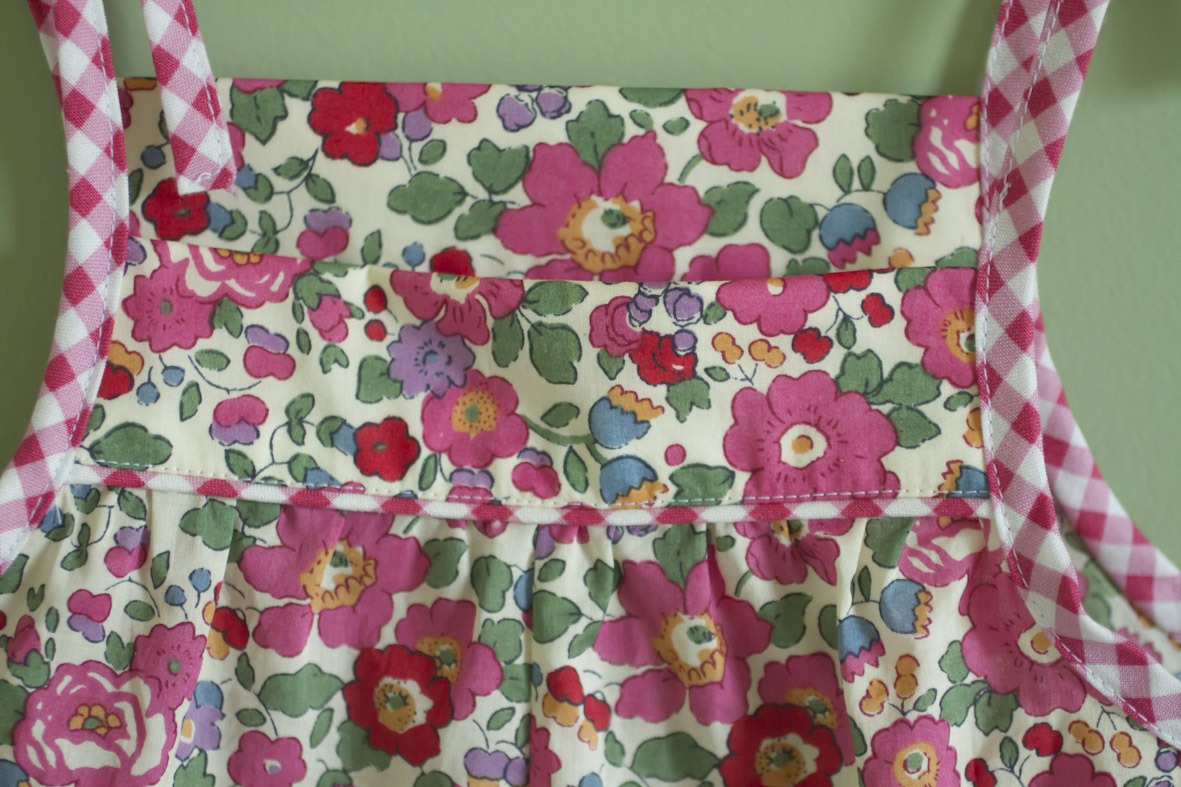
Playsuit/romper suit… I’m not sure what to call it. It’s one of my favourite styles for babies as it’s so cute, classic and comfortable. I found it in Ottobre 3/2011 and chose not to include the pockets.
2. The pattern
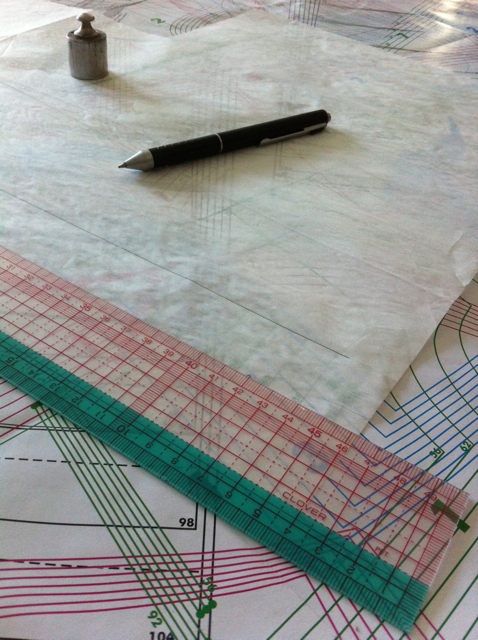
I admit I panicked when I opened the pattern sheet and was confronted with so many lines. And no seam allowances! As it turns out, the lines aren’t so confusing after all and I found a quick and easy way to add seam allowances (I’ll write a post about it soon).
3. The instructions
European (i.e. short and aimed at people who were raised under a sewing machine). If you want to know what I mean, check out my views on European versus American instructions in the last paragraph of this post.
4. Os tecidos
Liberty. Os tecidos Liberty são objecto de um verdadeiro culto mundial e percebo porquê. Os padrões são apelativos e intemporais e, principalmente, a qualidade é absolutamente fantástica. São finos e suaves mas simultaneamente fortes, quase parecem seda. E são leves e frescos. O Verão em Portugal costuma ser abrasador e a roupa das crianças deve ser o mais fresca possível (o que nem sempre acontece… no ano passado comprei uma série de fatinhos muito giros para o Rodrigo, mas muitos deles eram confeccionados com tecidos demasiado grossos. O mesmo aconteceu com os pijamas. Por isso o meu pedido às muitas lojas e fábricas que fazem roupa para criança em Portugal: por favor, escolham tecidos muito, muito leves para o Verão!).
4. The fabrics
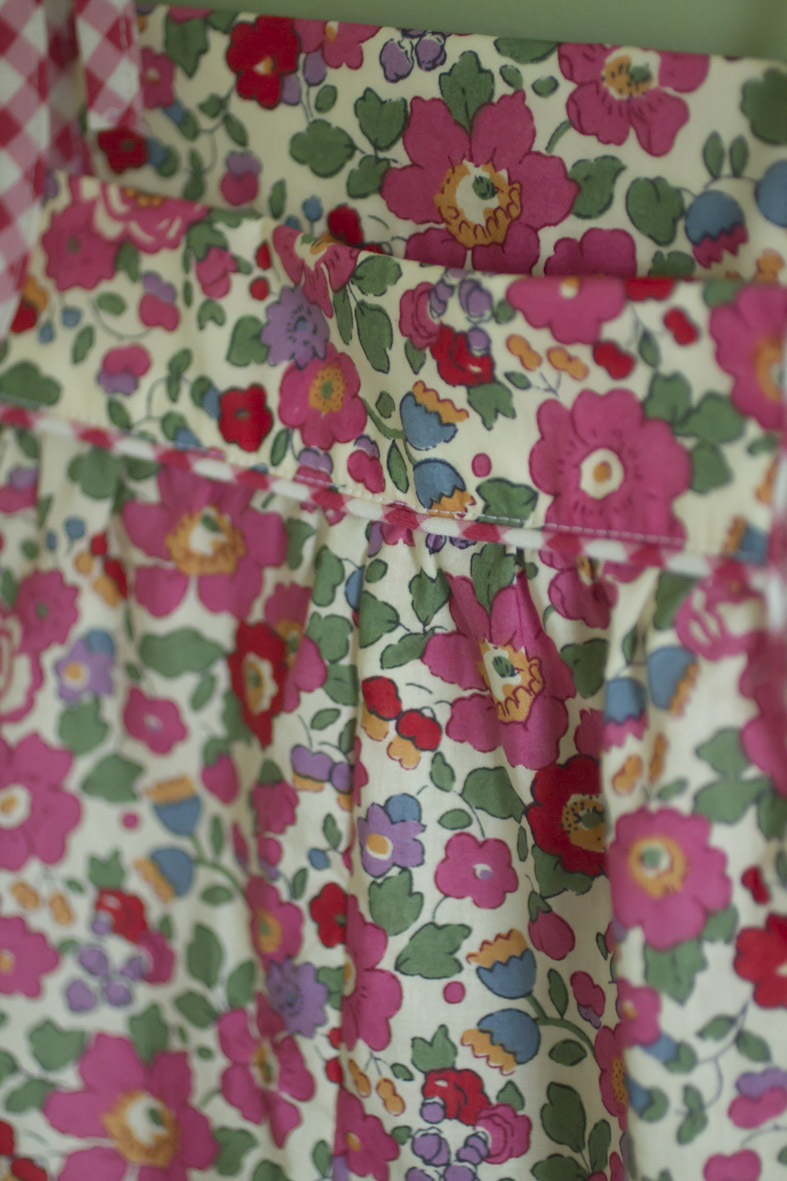
Liberty. Liberty fabrics are loved by people all around the world and I can understand why. The prints are appealing and timeless and the quality is absolutely fantastic. They’re fine and soft but strong at the same time, they almost feel like silk. And they’re light and cool. Summer in Portugal can be scorching and children’s clothes should be as lightweight as possible (unfortunately this isn’t always the case… last year I bought a number of adorable outfits for Rodrigo but even though they were very cute, the fabrics were usually too thick).
5. Notais finais
Em vez de grega, resolvi aplicar um cordão forrado num tecido contrastante. Tinha-me sobrado bastante tecido aos quadradinhos num tom morango muito giro (entre o encarnado e o cor-de-rosa) do debrum deste quilt, e que por sorte combinava lindamente com os dois tecidos Liberty. Forrar e aplicar o cordão foi uma estreia para mim e tive de consultar os livros de costura que tenho cá em casa. Acabei por ter de fazer as alças nesse mesmo tecido aos quadrados, porque não tinha quantidade suficiente dos tecidos Liberty para cortar em viés duas tiras tão compridas.
Não vou mentir: foi uma dor de cabeça fazer estes fatinhos (especialmente porque as instruções eram parcas e porque eram dois!) mas, para me motivar, fartei-me de pensar nas gémeas a quem se destinavam e estou bastante contente com o resultado. Espero sinceramente que os pais delas gostem!
5. Final notes
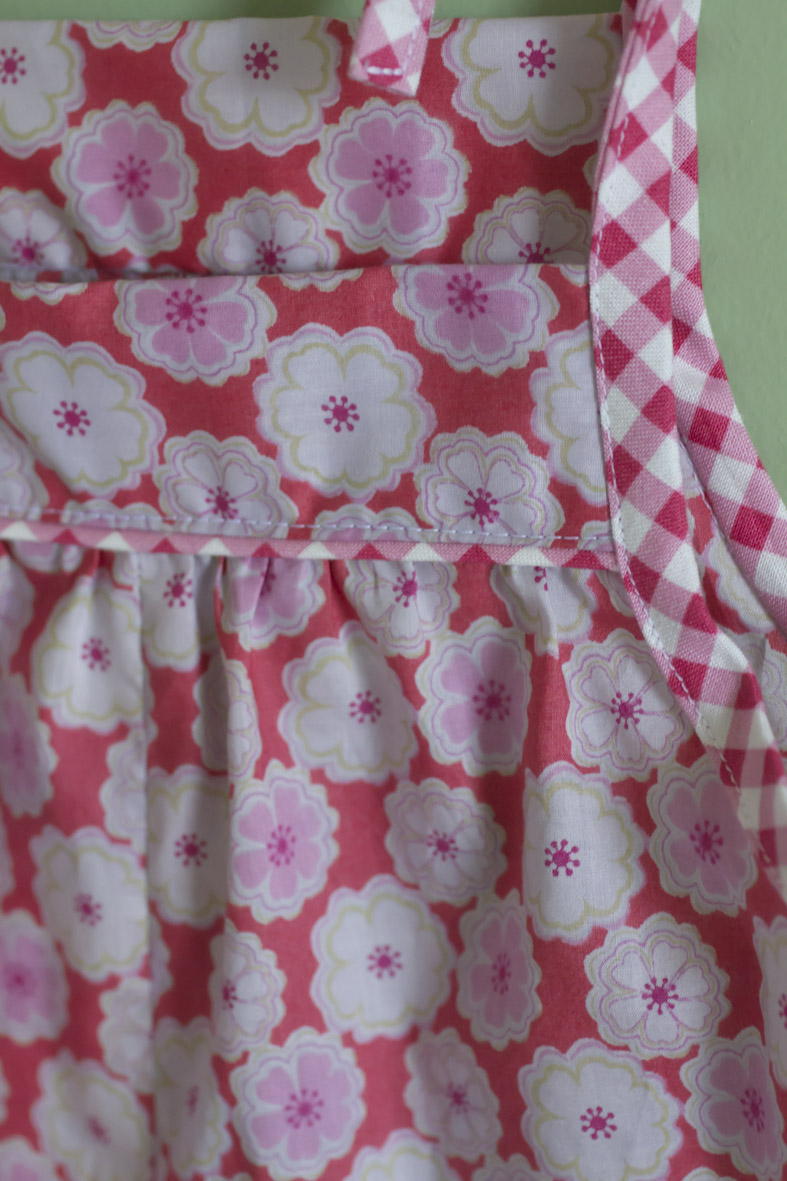
Instead of ric-rac I decided to use piping in a contrasting print. I still had quite a lot of gingham fabric in the loveliest strawberry colour left over from the binding of this quilt, which was fortunate because it goes really well with both Liberty fabrics. It was my first attempt at making and inserting piping and I had to look for help in the various sewing books I own. I ended up using the gingham for the ties as well because I didn’t have enough Liberty yardage to cut two long bias strips.
I’m not going to lie: making these playsuits was a pain (especially because the instructions weren’t detailed enough for me and everything had to be made twice!). In order to motivate myself, I fept thinking of the lovely little girls I was making them for and now that it’s finished, I’m quite pleased with the result. I really hope their parents will like the outfits!
(photos: © Constança Cabral)
My mother has been knitting for 40 years but she says she’s tired of sewing seams — recently she’s been knitting most of her pieces top down. When we talked about this my mother added that she usually knits the sleeves using the magic loop method instead of 5 needles (I’ve no idea what this means but if you google “magic loop” you’ll find lots of videos about this technique).
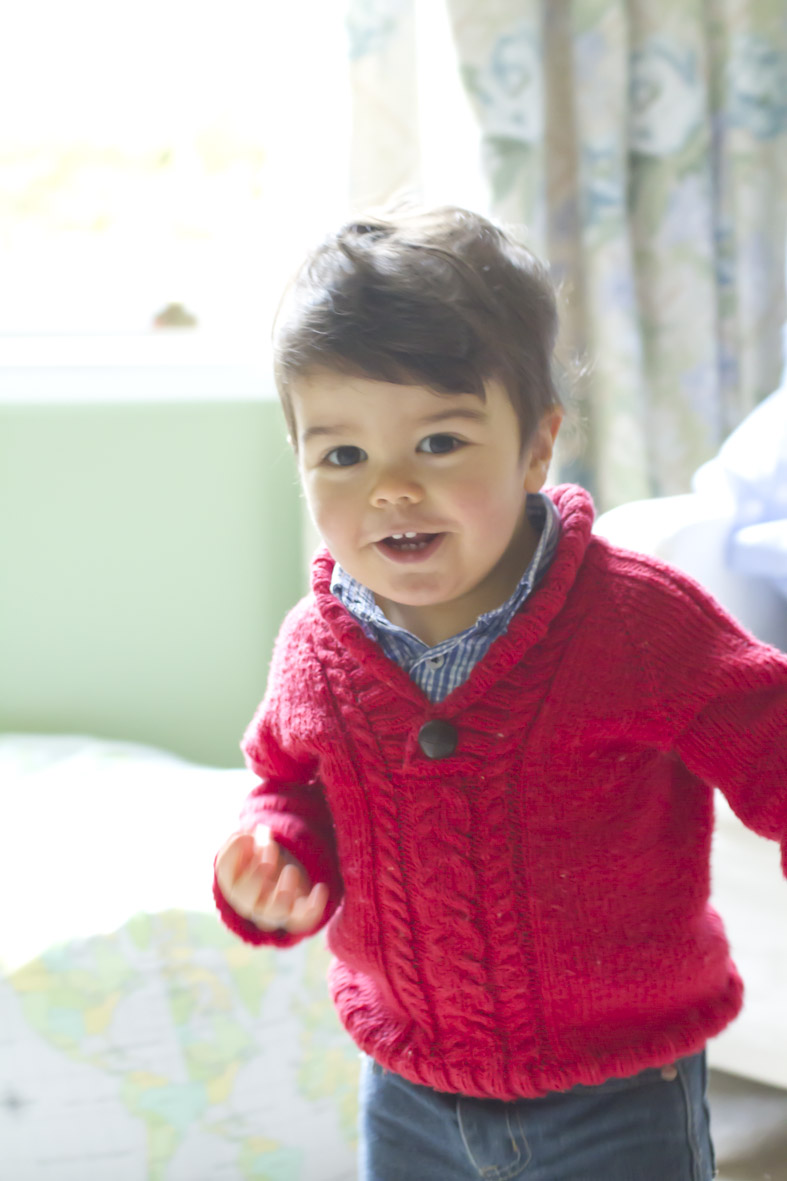
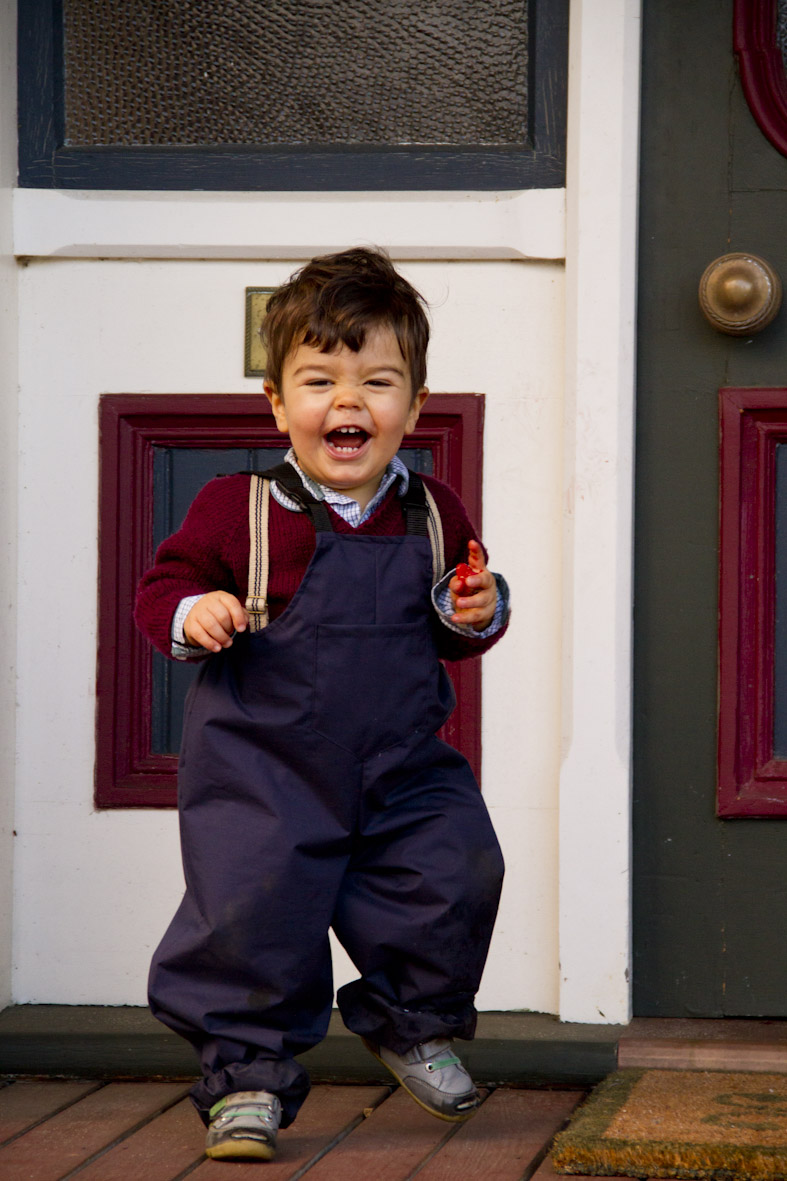
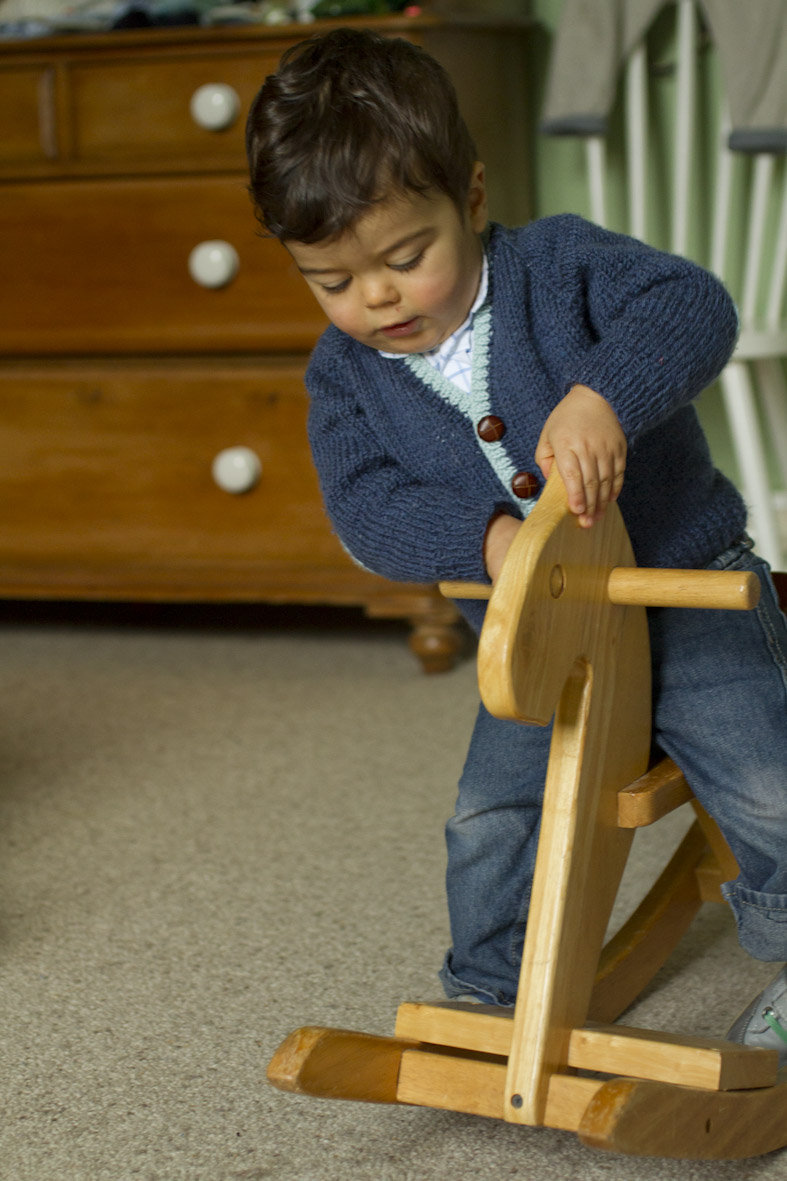
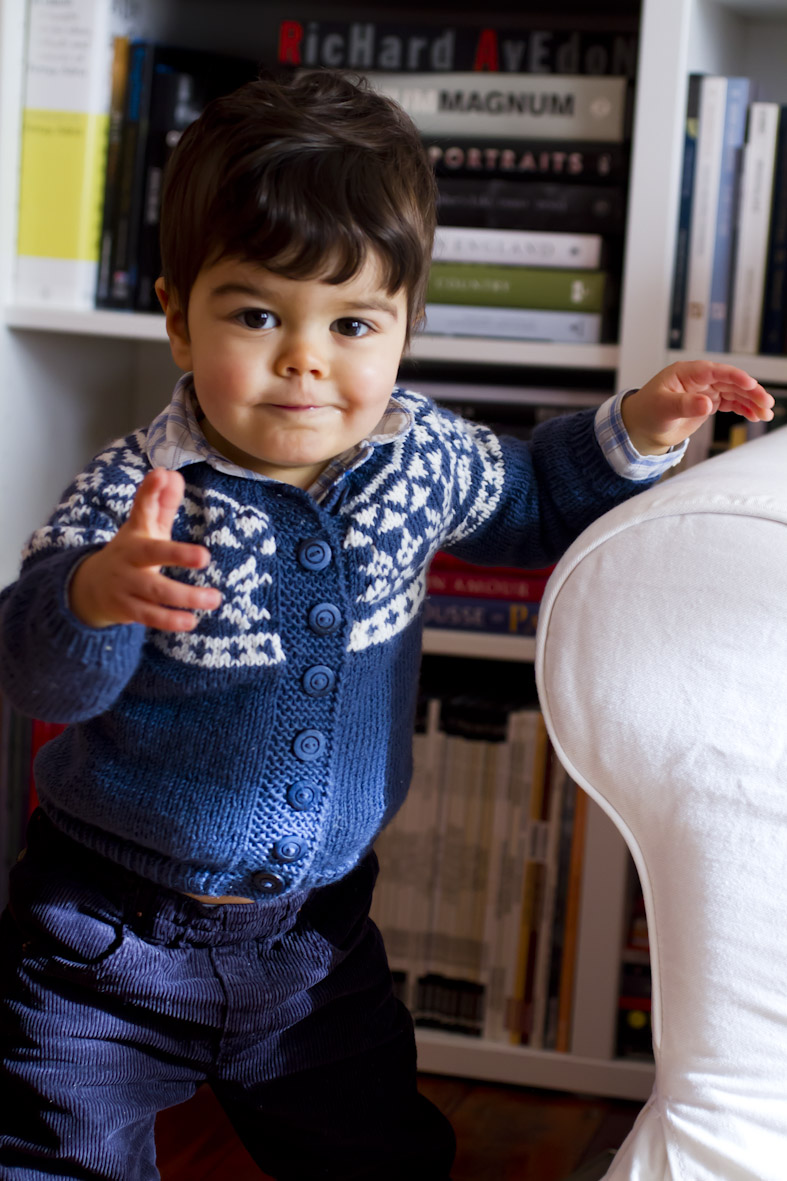
In addition to French and American magazines (some of the French ones were bought some 30 years ago) and the Marie Claire Idées knitting books (which have lovely patterns but all of them have seams), my mum has been using lots of Ravelry patterns. I’m going to show you some of the jerseys and cardigans she’s been knitting for Rodrigo (all top down):
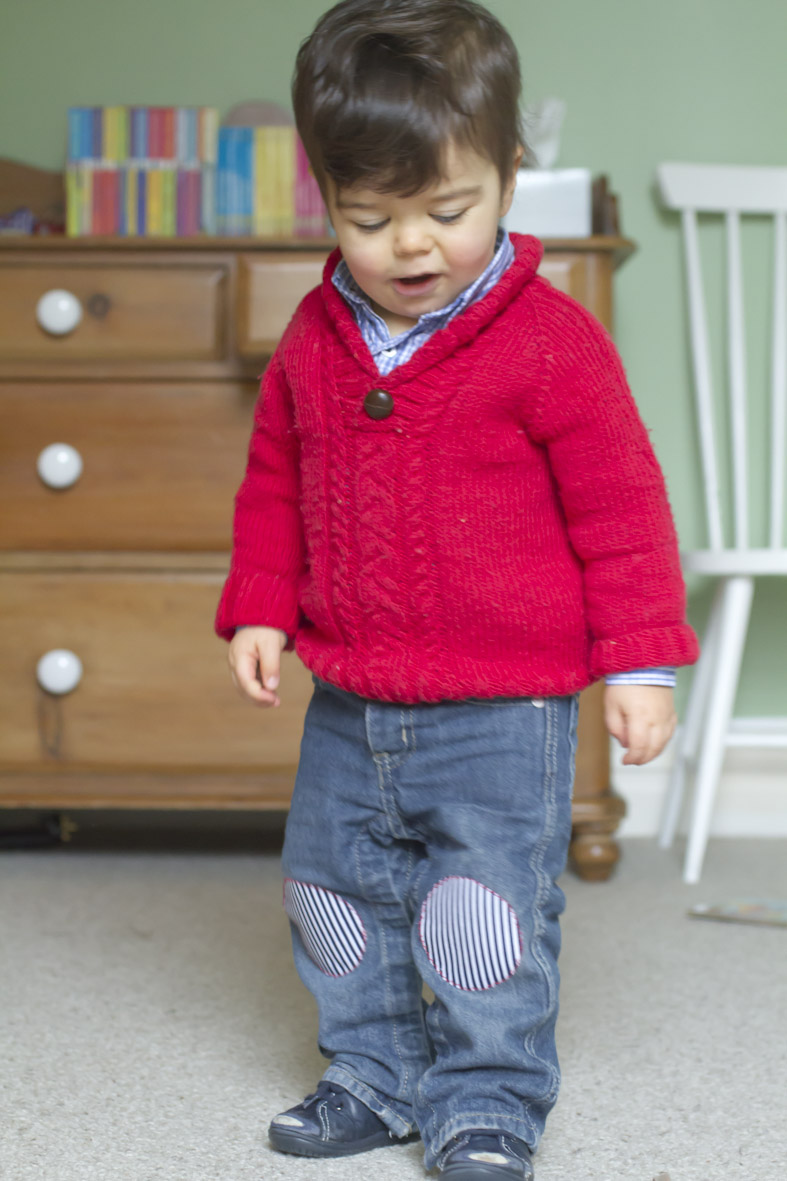
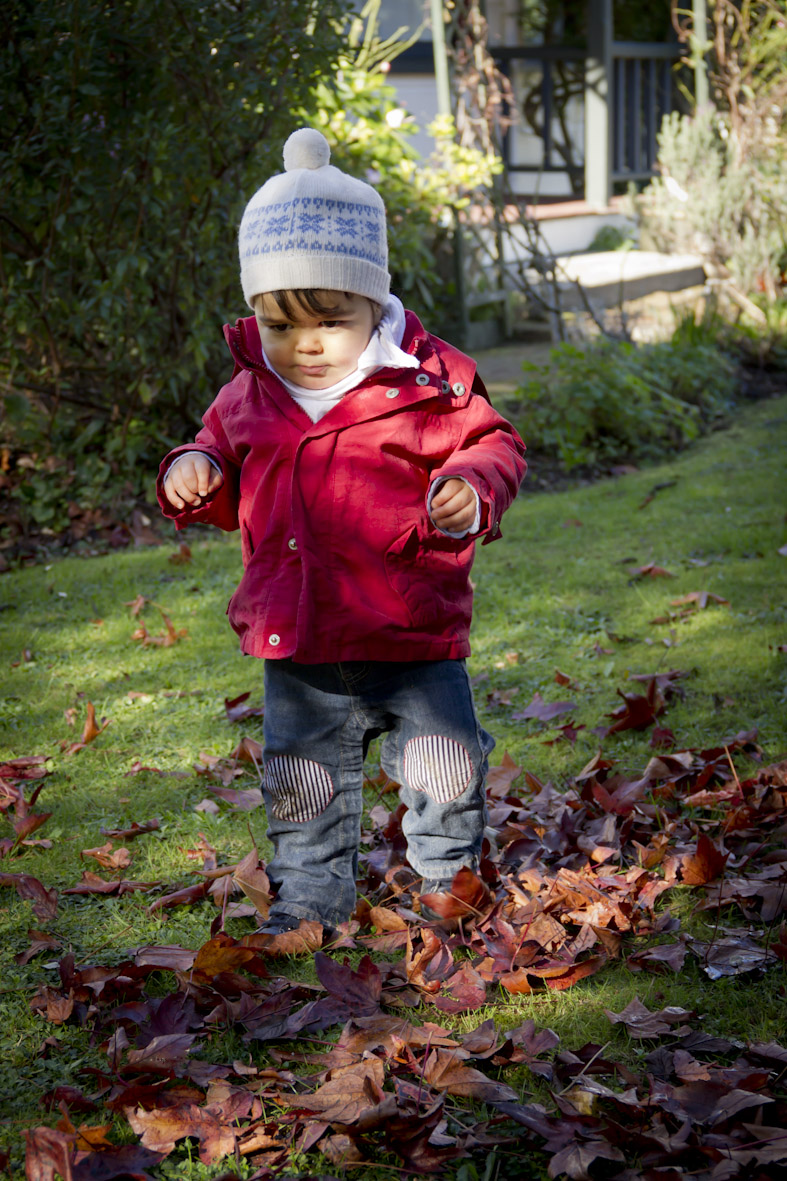
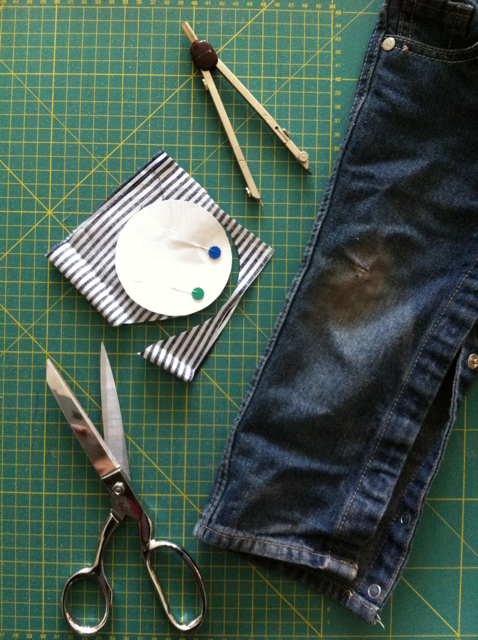
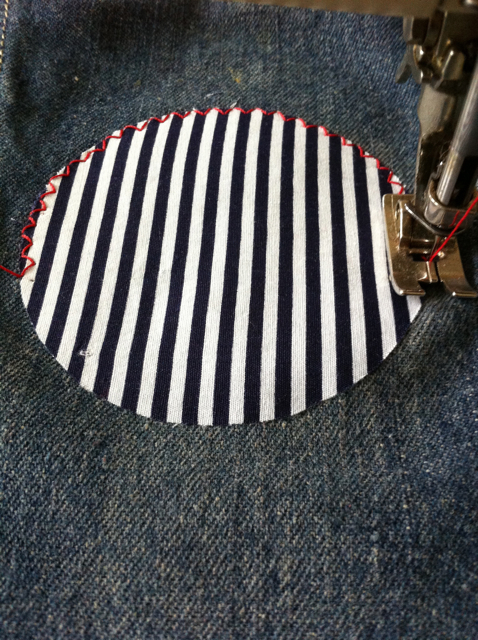
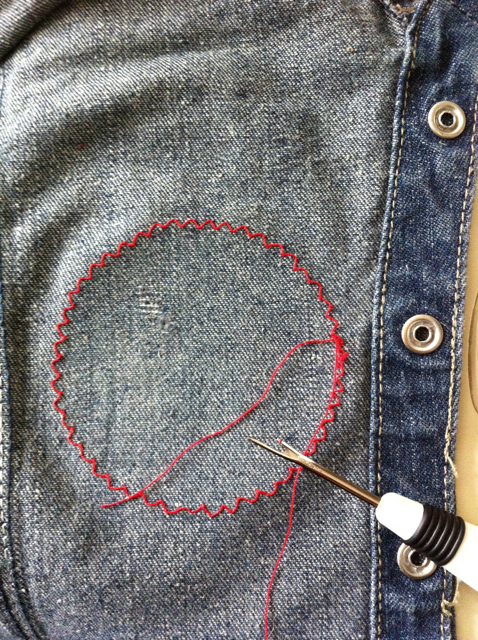
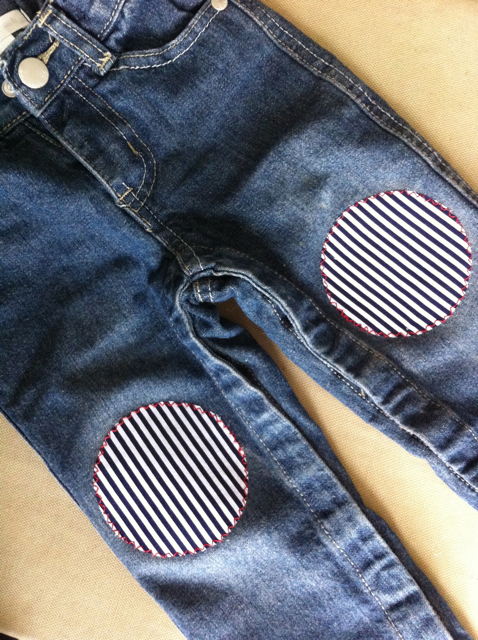
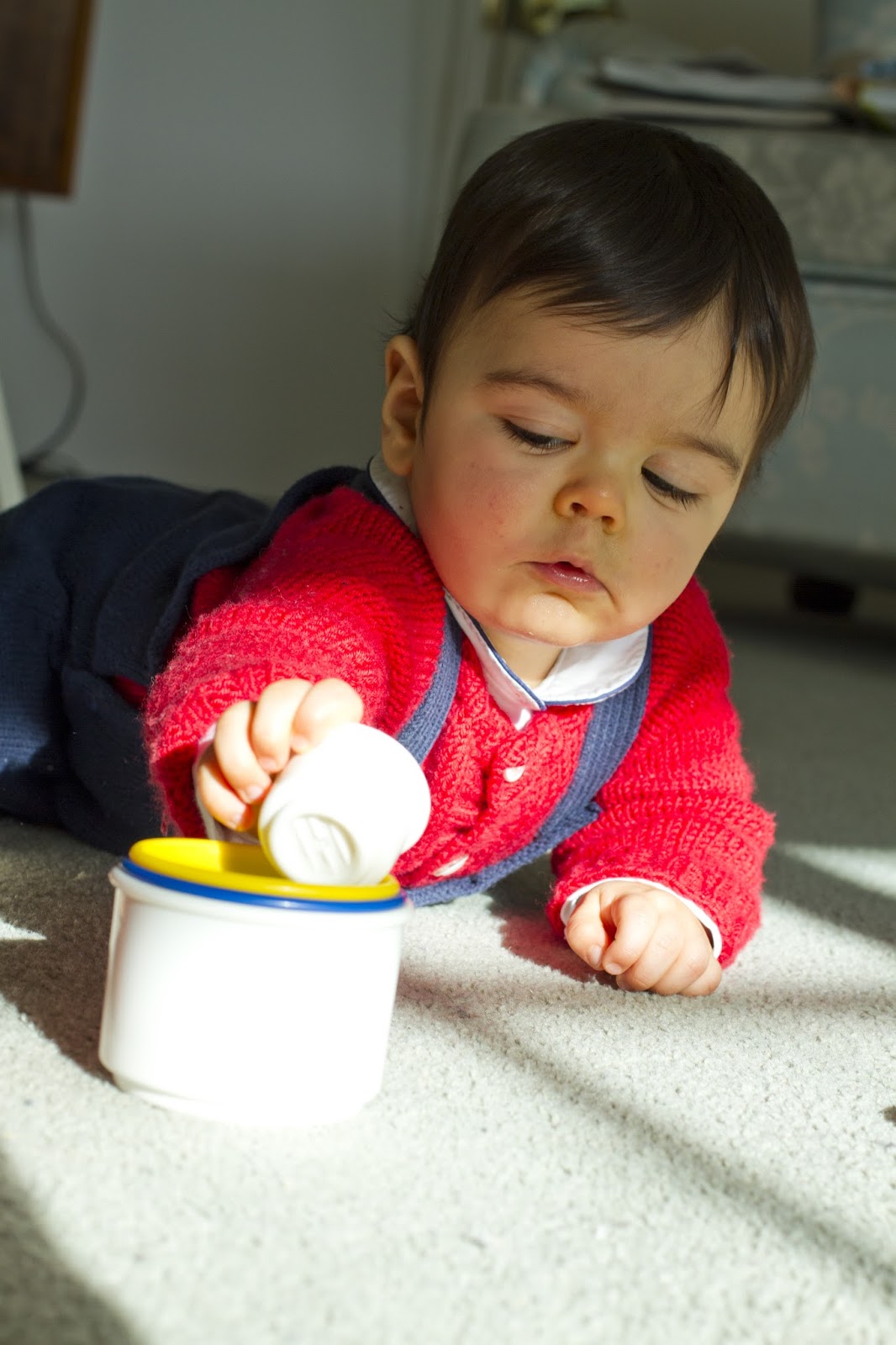
Rodrigo crawled until quite late and, consequently, his shoes and trousers show it. I can’t do much about the shoes but as far as trousers go, there’s a very simple solution: knee pads. I thought it would be fun to sew some round knee pads instead of the traditional oval ones. Again, the process is very simple and quick (the fact that the trousers have snaps on the legs helped a lot, I must say) — here’s how I’ve done it:
1. Using a compass (mine is still the same one from my school days), trace a circle that fits the width of the trousers’ legs onto a piece of paper. Cut it and use it as a template to cut your fabric knee pads.
2. Cortar dois círculos de entretela termocolante para appliqué.
2. Use the same template to cut two circles of appliqué fusible web.
6. Já está! Há obviamente outras maneiras de aplicar joelheiras, mas isto foi o que fiz e resultou. Espero que durem uns meses!
6. That’s it! There’s obviously other ways to construct and sew knee pads but this is what I’ve done and it has worked fine. I hope they’ll last for a few months!
(photos: © Constança Cabral)