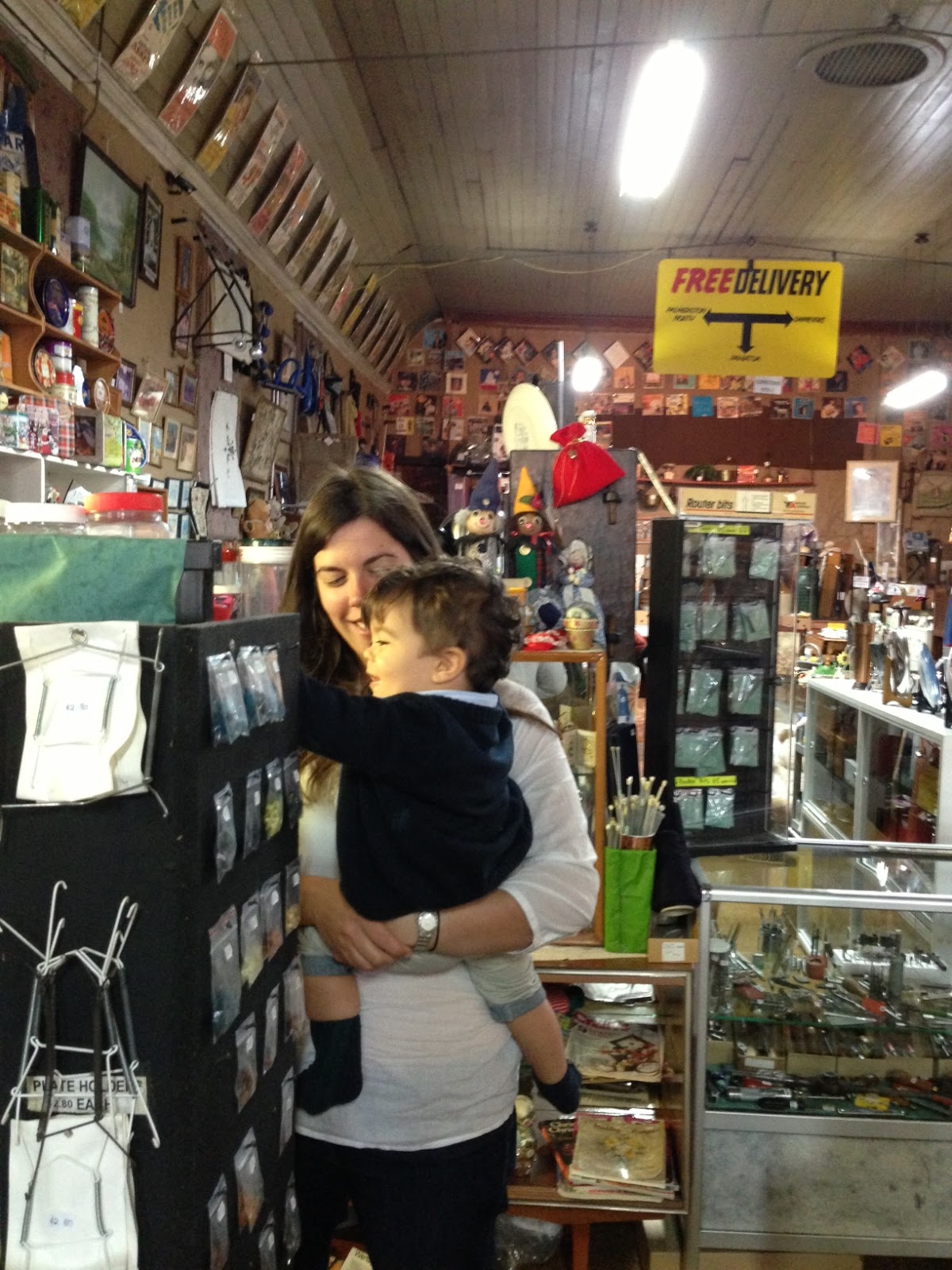
Coisas Velhas :: Old Stuff

Porquê este meu amor pelas coisas antigas de uso quotidiano?

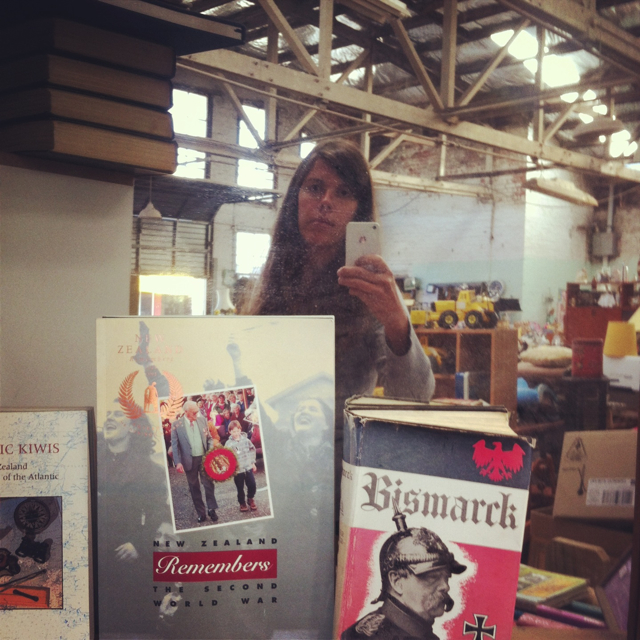
Porque têm história. A história da minha família ou a história de desconhecidos. E contam a história do momento em que as encontrei.
Porque carregam memórias. E sentimentos. 
Porque evocam outros tempos. Saudosismos primários à parte, houve coisas que se perderam com o passar dos anos e sabe bem reencontrarmo-nos com elas.
Porque (normalmente) têm qualidade. Foram feitas para durar. O uso amaciou-as. Tornou-as mais leves, com arestas menos aguçadas. 
Porque não são perfeitas. Têm rachas, riscos, nódoas, buracos, sujidade, ferrugem. Têm patine! E isso pode ser absolutamente encantador (abaixo o restauro demasiado meticuloso de objectos e edifícios!).
Porque são úteis. Mesmo que seja num contexto completamente diferente do original.
Porque puxam pela nossa criatividade. Lá está, o seu propósito original pode ser obsoleto nos dias que correm, mas há sempre maneira de pô-las a uso.
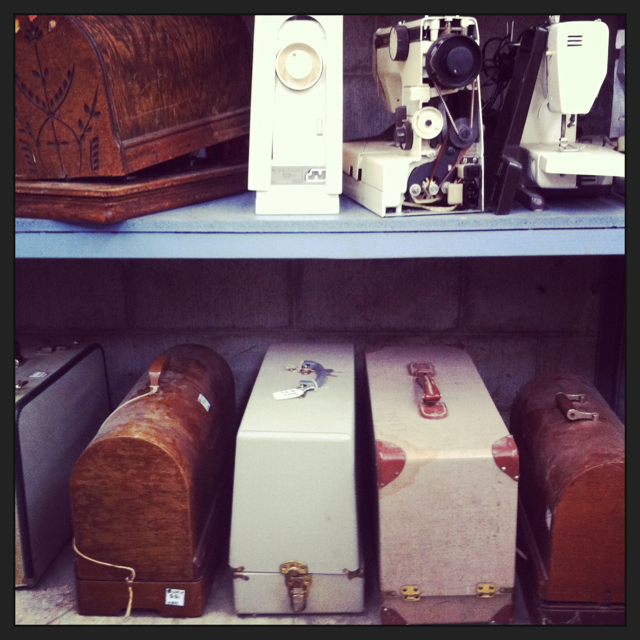
Porque encontrá-las é normalmente uma aventura. Numa feira, no lixo, numa loja de caridade, numa gaveta em casa da avó, numa caixa enviada pelo correio. 
Porque são únicas. Têm personalidade. Mesmo que tenham sido produzidas em massa na sua época, já passaram por muitas mãos, dispersaram-se pelo mundo, muitas perderam-se pelo caminho, outras sobreviveram. Aquelas que ainda existem são especiais.
Serão precisas mais razões para gostar de coisas antigas?
Why do I love old everyday things so much?

Because they tell a story. Either my family’s story or other people’s stories or even the story of how I came across that particular piece.

Because they carry memories. And feelings too.

Because they evoke the past. I’m not saying that everything was better in the olden days — far from it! — but some things got lost along the way and it feels good to recover them.

Because they (usually) have got quality. They’ve been made to last. And the fact that they’ve been well use has made them softer, rounder, lighter.

Because they’re not perfect. They’ve got cracks, holes, scratches, stains, dirt and rust. They’ve got patina! And that can be absolutely charming (I’m totally against over-restored objects, buildings and sites).

Because they can be useful. Even if it’s in an entirely different context from the original one.

Because they trigger your creativity. As I’ve just said, their original purpose may be obsolete by now but they normally can be put to use in other (creative) ways.

Because finding them is usually an adventure. You can spot them at fairs, charity shops, on the street, inside a drawer at your granny’s, you can even get it in a parcel!

Because they’re unique. Even if they were originally mass-produced, they’ve been through a lot — some got lost along the way, others have survived. Those that still exist are special.

Does one need any more reasons to love old stuff?

(photo: © Constança Cabral)

Bolachas com Pepitas de Chocolate :: Chocolate Chip Cookies

Há receitas que faço dúzias de vezes e que saem sempre bem. Já tinha falado aqui nestas bolachas com pepitas de chocolate mas volto a dar o link da receita. Experimentem-nas e nunca mais conseguirão comer as compradas no supermercado!
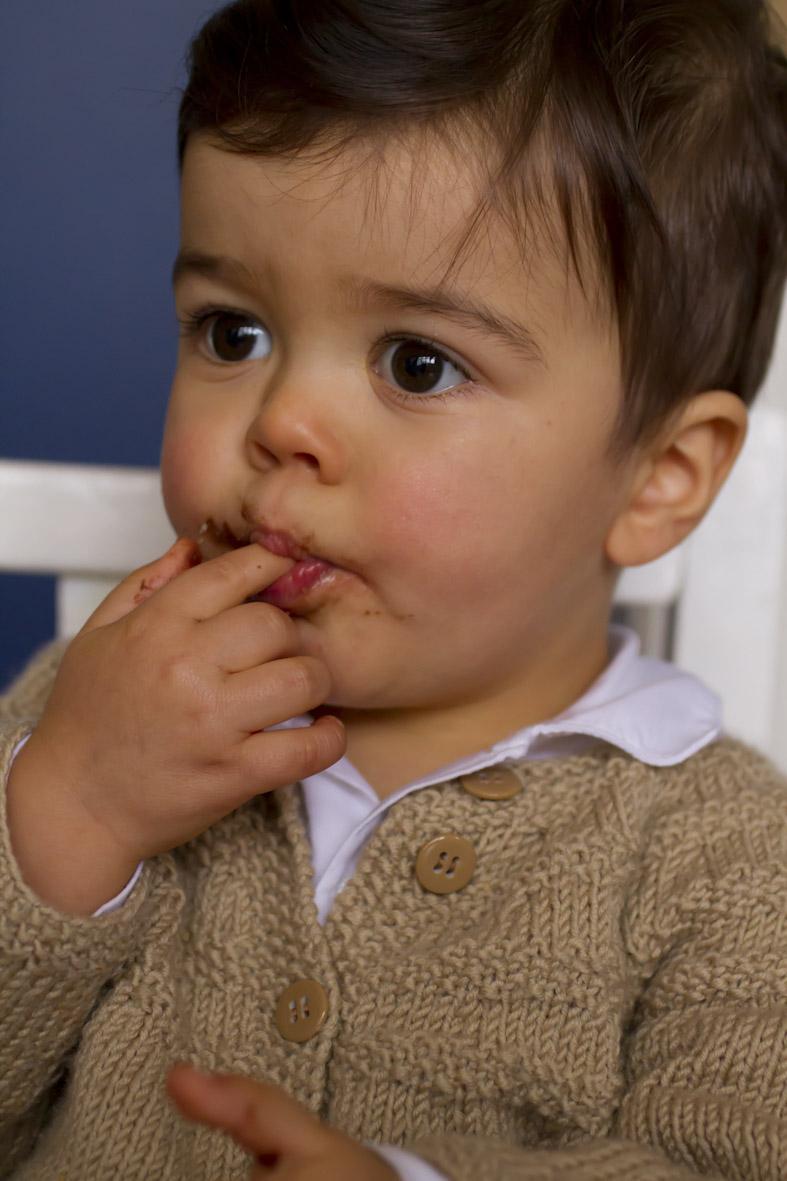
PS. O Rodrigo não está sempre a comer doces, apesar de parecer… aliás, mal viu a taça de porridge (o lanche habitual) começou aos gritos e não quis saber mais das bolachas! O casaco foi feito pela minha mãe segundo um modelo deste livro.

There are those recipes I keep using over and over again because they always work. I’ve already told you about these chocolate chip cookies but here’s the link again. Give them a try and never again will you be able to eat the ones from the supermarket!

PS. I realise it may look as though Rodrigo is constantly eating sweets but I assure you that’s not the case… in fact, as soon as he saw his porridge bowl he started screaming for it and didn’t care about the biscuits anymore! The cardigan was knitted by my mother using a pattern from this book.

(photos: © Constança Cabral)
De Volta à Costura :: Back to Sewing


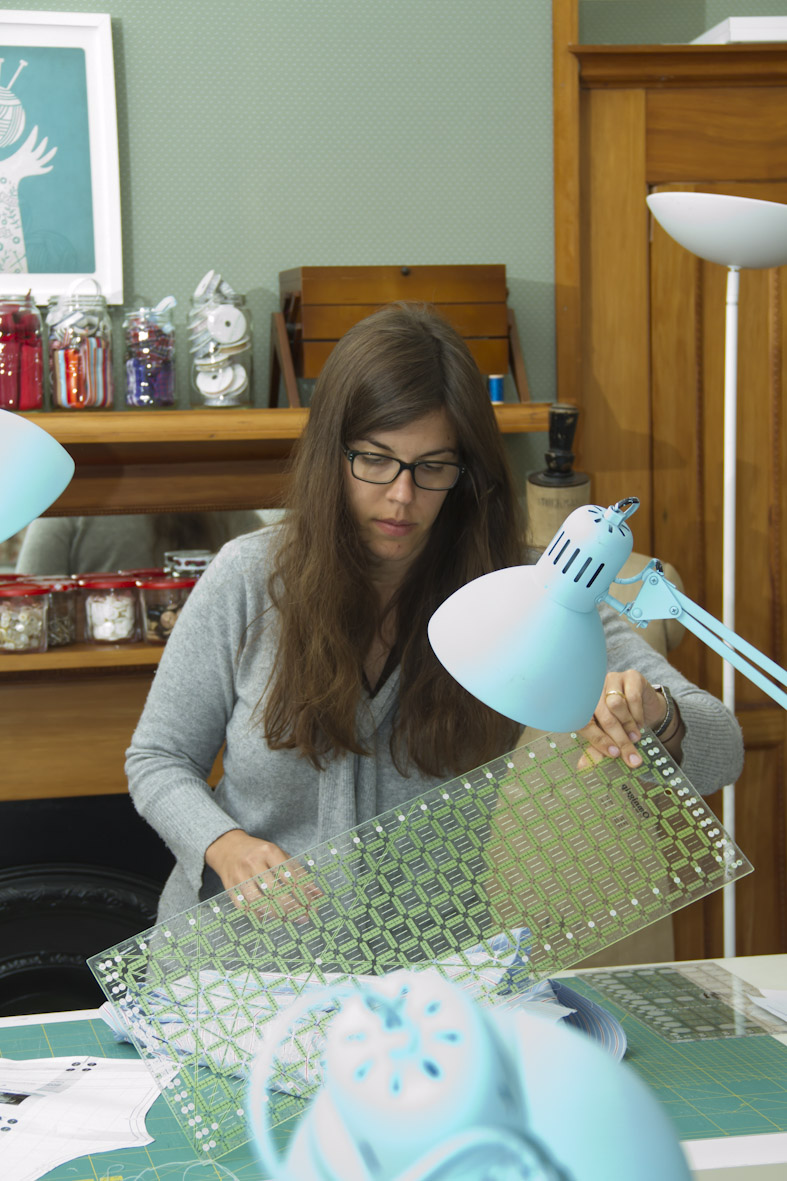
Com tanta coisa por fazer cá em casa (arrancar papel de parede, pintar, fazer cortinados, uma cozinha nova… e não há dia em que não mudemos os móveis de sítio), tenho estado muito pouco tempo no escritório. Mas hoje à tarde estava a chover (como se vê pela luz destas imagens) e, visto que o Rodrigo precisa de calças de pijama novas, dei finalmente uso à máquina de costura. Mais detalhes brevemente.
With so much to do around the house (rip off wallpaper, paint, sew curtains, a new kitchen… and we keep rearranging the furniture) I haven’t been in the study much. But today it was raining (as you can see by the light in these pictures) and since Rodrigo really needs a few pairs of pyjama bottoms, I finally put the sewing machine to use. More details soon.
(photos: © Constança Cabral)
Manawatu Gorge

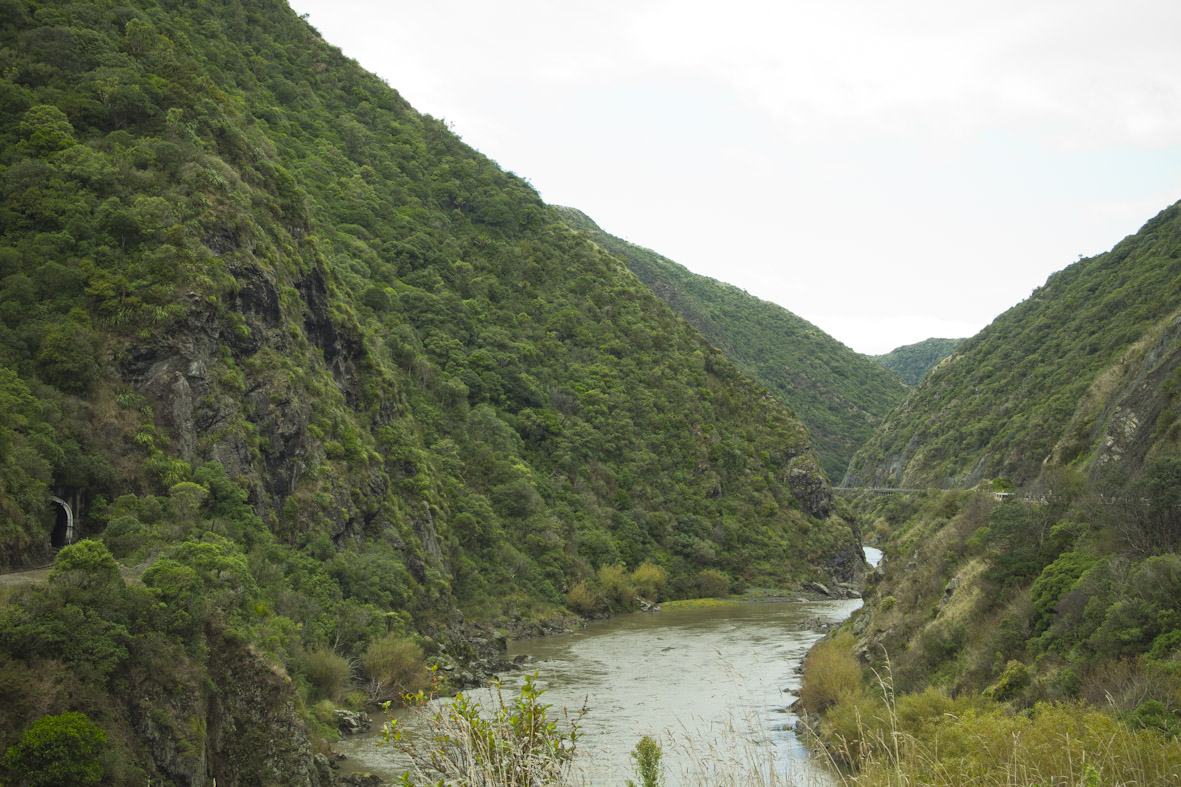
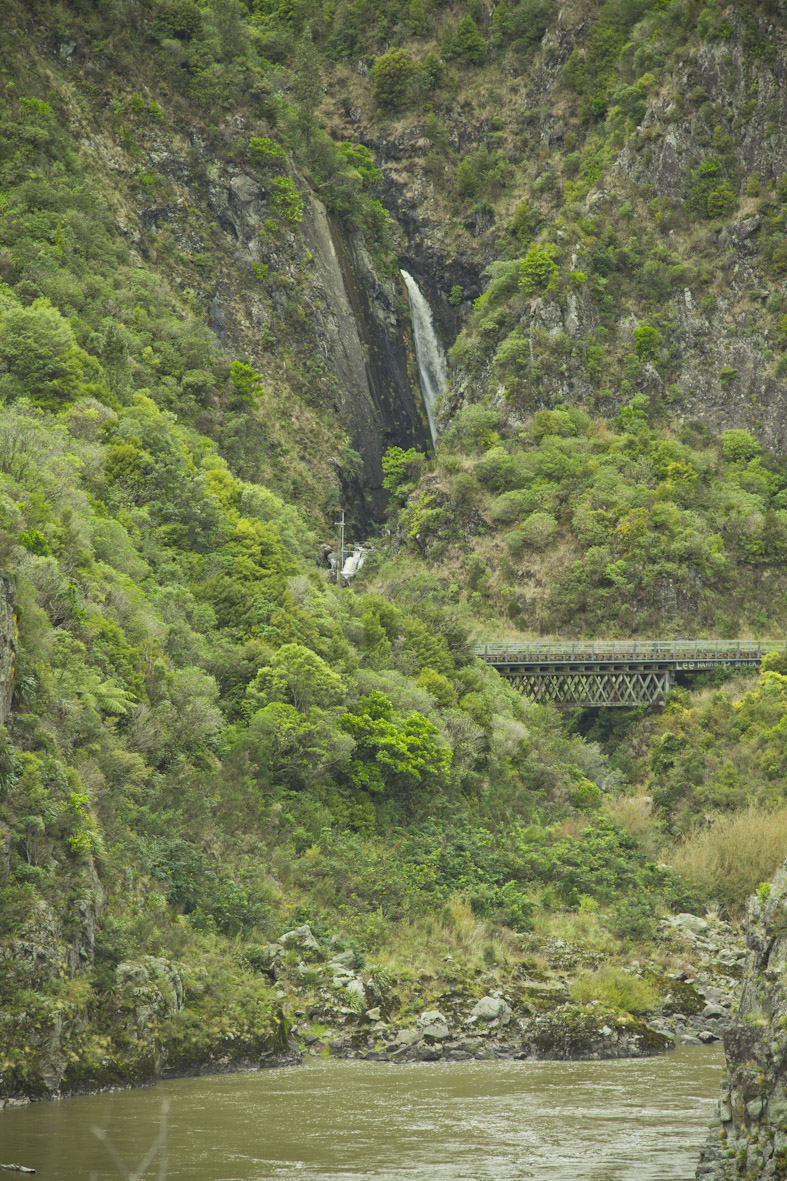
Toda a gente fala na extraordinária beleza natural da Nova Zelândia. Temos muita vontade de explorar o país e ver tudo isso com os nossos olhos, mas a verdade é que o nosso dia-a-dia é bastante normal. Vivemos numa vila agradável numa zona de quintas, em que o terreno é relativamente plano e as estradas são todas a direito. Mas de vez em quando há surpresas! Basta andar meia-hora de carro para nos depararmos com sítios muito bonitos, como este Manawatu Gorge, por exemplo.
Agora uma pergunta para quem conhece bem a Nova Zelândia: que sítios recomendam que visitemos?
Everyone talks about the extraordinary natural beauty of New Zealand. We are eager to explore the country and see everything with our own eyes, but truth is our daily life is pretty normal. We live in a nice town surrounded by farms, where the land is quite flat and the roads are long and straight. However, you only have to get in the car and travel for half an hour to find some gems, like the Manawatu Gorge pictured above.

And now a question for those amongst you that know New Zealand well: which places do you recommend we visit?
(photos: © Constança Cabral)
Bolo de Natas :: (Not Your Average) Cream Cake

[scroll down for English]

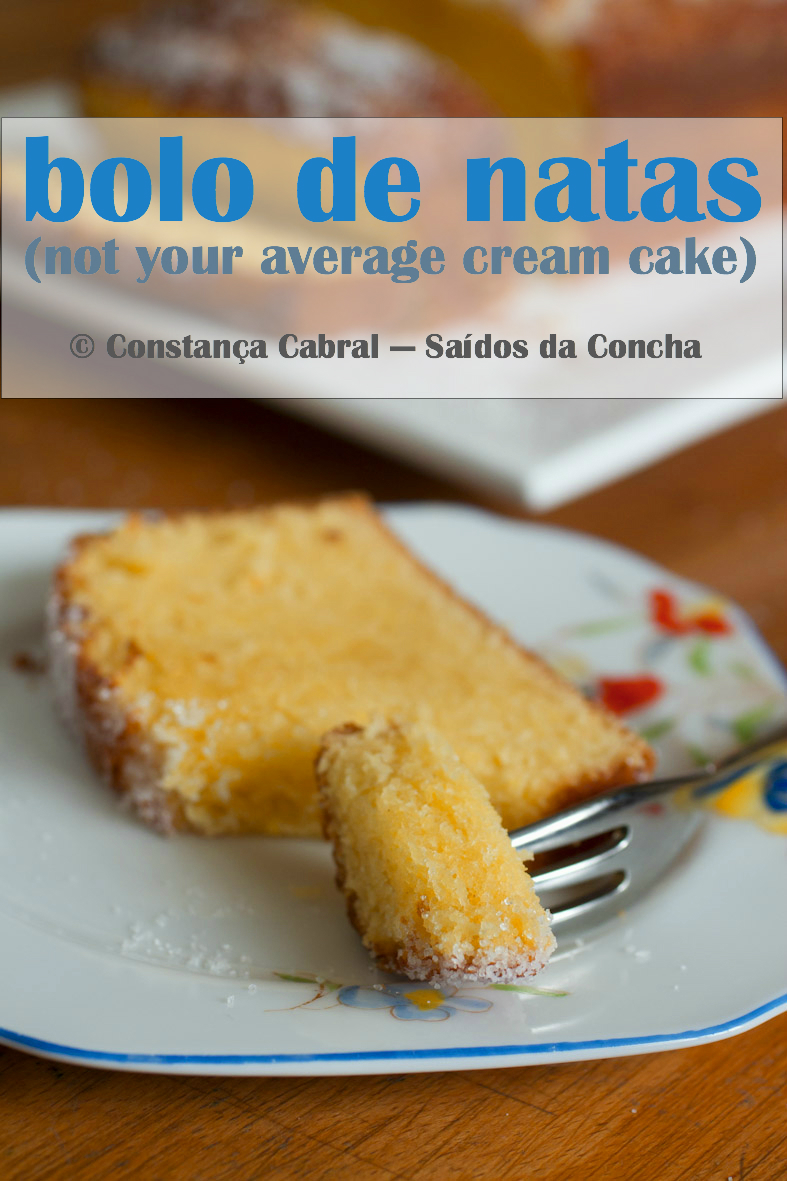
Este é o bolo da minha infância. O bolo que havia sempre em casa da minha avó, o bolo que a minha mãe fazia tantas vezes, o primeiro bolo que fiz sozinha (lembro-me bem dessa manhã de sábado… por minha alta recreação resolvi envolver a farinha com as mãos — em vez de usar uma colher de pau ou vara de arames — para que ficasse sem grumos… resultou, mas não voltei a fazê-lo!).

O nome “bolo de natas” não é especialmente apelativo, eu sei… uma pessoa imagina logo um bolo carregado de chantilly e não este bolo simples, perfeito para um lanche (é excelente acompanhado de leite com chocolate), tão despretensiosamente delicioso. É fácil e rápido de fazer — aqui fica a receita da minha avó:

Bolo de Natas

200 ml de natas
250g de açúcar
3 ovos inteiros
raspa de 1 limão
150 g de farinha peneirada
1 pitada de fermento para bolos

Aquecer o forno a 180ºC.
Untar e enfarinhar uma forma (nós gostamos daquelas rectangulares de bolo inglês).
Bater as natas com o açúcar e a raspa de limão.
Juntar os ovos inteiros, um a um, e ir batendo.
Juntar a farinha com o fermento aos poucos e envolver (não bater muito).
Deitar na forma.
Pôr no forno e deixar cozer cerca de meia-hora (como todos os fornos são diferentes, é importante ir vigiando a cozedura — não deixar cozer demasiado, sob pena de o bolo ficar sequíssimo).
Esperar 10 minutos e desenformar.
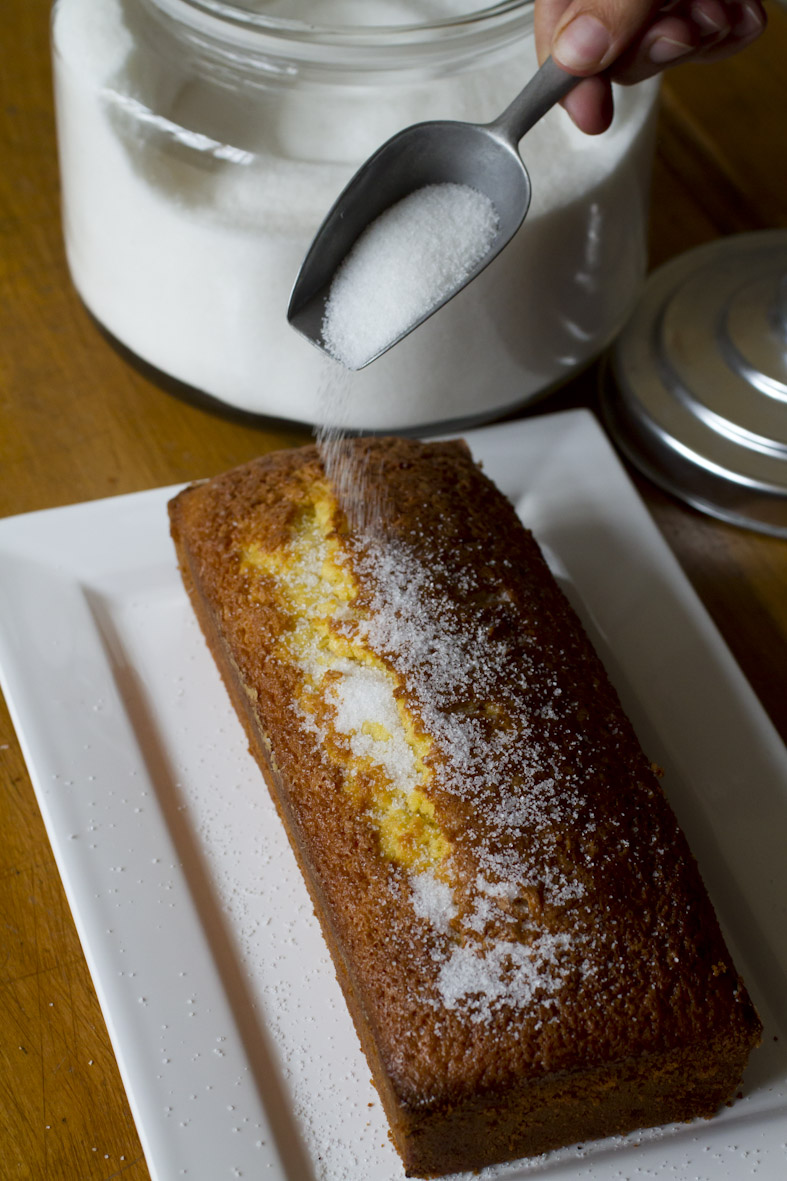
Polvilhar com açúcar (parece desnecessário mas a sério que fica melhor).

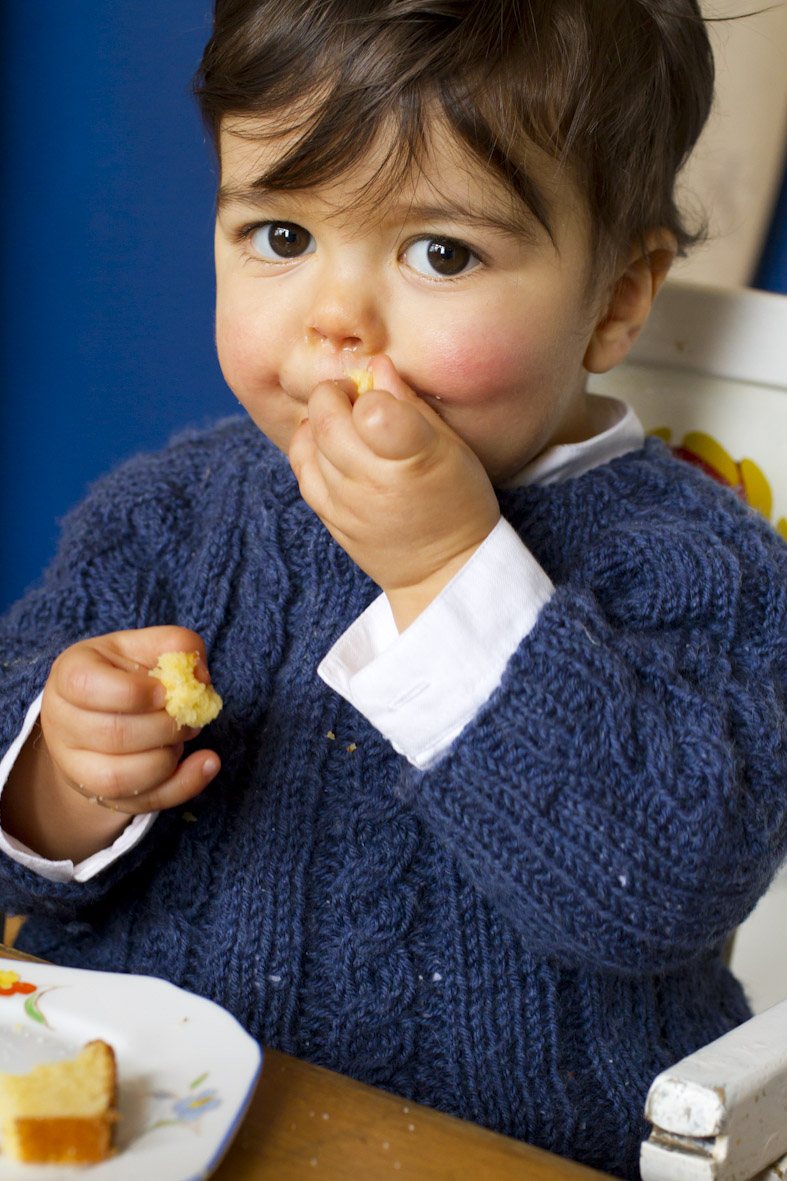
PS. O Rodrigo provou e gostou. A camisola foi tricotada pela minha mãe segundo este modelo.

This is the cake of my childhood. Seriously, I was brought up on this “cream cake”. There was always one at my granny’s, my mother baked it often and it was the first cake I ever made on my own (I remember that Saturday morning… I reckoned it would be better to fold in the flour using my hands instead of a wooden spoon or a wisk. It worked fine but I’ve never done it again).
 

I realise the name “cream cake” can be deceptive. This is not a cake covered in cream, it’s a cake where cream is used instead of butter or oil or buttermilk or… well, you get the picture. It’s such a simple, quick, unpretentious, delicious cake: it’s especially good for afternoon tea paired with a glass of cold chocolate milk (or a cup of hot chocolate in winter). Here’s my granny’s recipe:
 

(Not Your Average) Cream Cake
 
200 ml single cream
250g caster sugar
zest of 1 lemon
3 eggs
150g plain flour
1 teaspoon baking powder
 

Pre-heat the oven to 180ºC.
Grease and flour a rectangular cake tin.
Beat the cream with the sugar and the lemon zest.
Add in the eggs, one at the time, beating them until they’re fully incorporated into the batter.
Fold in the flour (with the baking powder mixed in) but be careful not to overmix.
Pour the batter into the tin and place it in the oven.
Bake for approx. half an hour (all ovens tend to be different so this is just an indication — start testing as soon as the kitchen smells like cake). Do not overbake or it will be too dry.
Take it out of the oven and wait 10 minutes before removing the cake from the tin.
Dust with caster sugar (this may seem unnecessary but it does improve the cake).
 

PS. Rodrigo fully approved it. His jersey was hand-knit by my mother using this pattern.
 
(photos: ©Constança Cabral)
Roupa de Criança :: Children’s Clothes

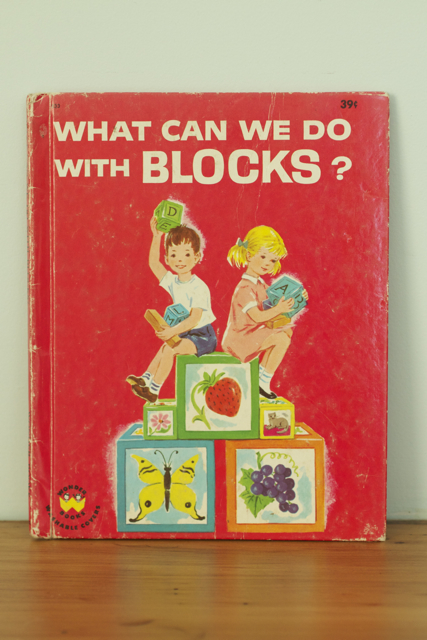
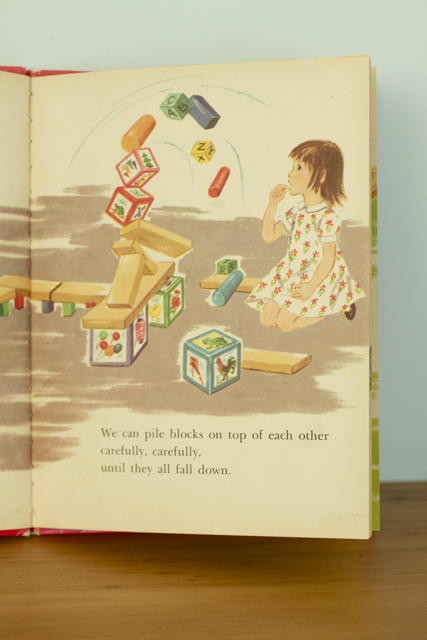
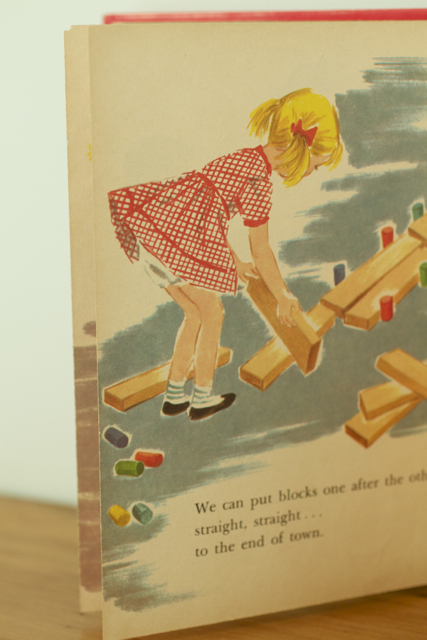
Roupa infantil é algo que me entusiasma. Há mães que não ligam nenhuma e que só querem é roupa prática, outras que são obcecadas e que gastam rios de dinheiro em toilettes todas as estações. Eu sou assim para o médio mais. Não me é indiferente aquilo que o Rodrigo veste por muitas razões: quero que ele tenha roupa confortável, com bons materiais e bem feita, e gosto que ele ande giro! Mas isto não significa que ele seja a montra do meu gosto, até porque 1- como não vivo em Portugal não tenho acesso fácil à roupa que por lá se vende (apesar de recebermos uns pacotes das avós de vez em quando); 2- sou incapaz de perder a cabeça com peças que só vão ser vestidas durante uns meses. Conclusão: as minhas decisões encontram-se bastante condicionadas. E como não tenho feito nem um décimo das coisas que tinha planeado para ele…

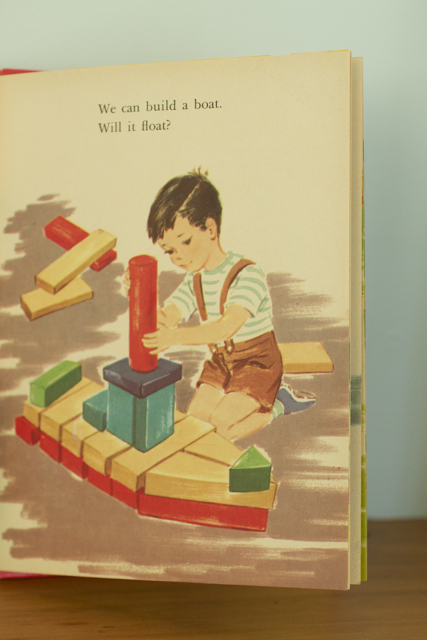
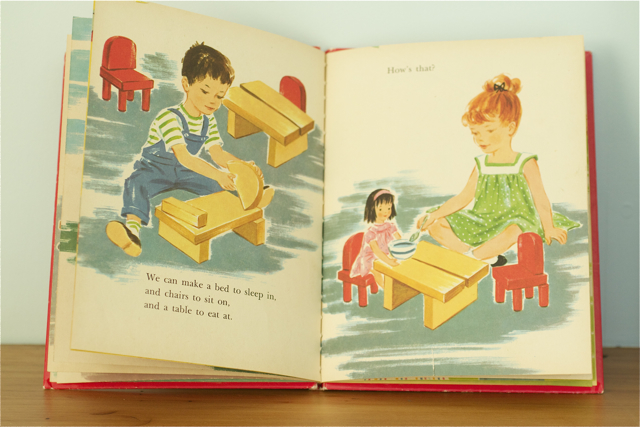
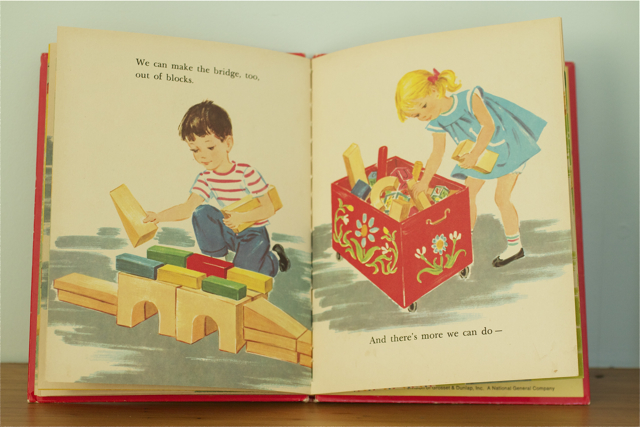
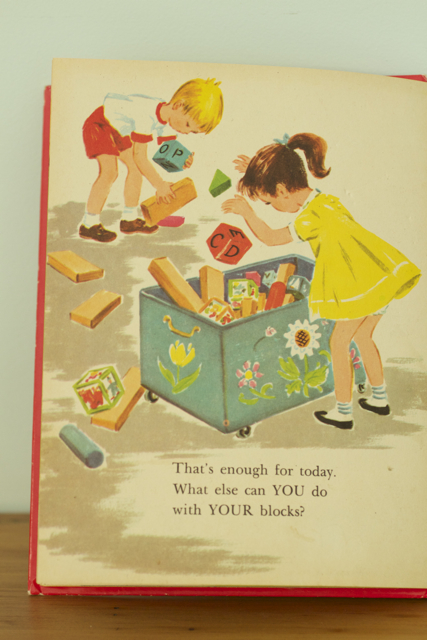
Mas a que propósito surge este post de hoje? É que, num livro infantil dos anos 60 (What Can We Do with Blocks?, 1964, Wonder Books, Inc), encontrei umas ilustrações que mostram precisamente o estilo de roupa que adoro. Arranjadinha q.b., com cores vivas, linhas simples e pormenores frescos. Clássica (o que para mim significa cortes  intemporais, e não propriamente príncipes quinhentistas). Rapazes de jardineiras e camisolas às riscas, calções e meias até ao joelho, camisolas de lã com torcidos e suspensórios. Raparigas com vestidos e sabrinas, calções e túnicas, e também de calças e jardineiras, pois claro. Nada de muitas rendinhas e franzidos. Uns dias mais clássicos, outros dias mais modernaços, mas sempre relativamente sóbrios. E descontraídos!
E vocês, conseguem encontram com facilidade peças de roupa infantil que sejam precisamente o vosso género? Eu confesso que estou a compilar uma lista mental de coisas que gostaria de encontrar à venda… Falem-me sobre as vossas preferências!

I love children’s clothing. Although I’m not obsessed, I’m also not indifferent to it — I admit it’s a subject that gets me really excited. Some mothers just want practical pieces that they don’t have to iron or be too precious about; others spend a fortune on elaborate outfits every season. I think I’m somewhere in between: I care about what Rodrigo wears because I want him to have nice quality clothes that are comfortable and that make him look cute! But he’s not a true reflection of my taste because: 1- I am very much inclined to the Portuguese and Spanish style but since I’m living so far away from the Iberian peninsula, I can’t really buy those clothes (although we do get sent the occasional box of clothes by both grannies); 2- I am on a budget; 3- I have lots of plans to sew clothes for him but I never seem to find the time or inclination to just do it. Must work on that!

But why this post today? Well, I found a children’s book from the sixties (What Can We Do with Blocks?, 1964, Wonder Books, Inc) that shows exactly the kind of kids’ clothes that I love. A little bit classic, a little bit preppy, with vivid colours, clean lines and fresh details. Boys in dungarees and striped t-shirts, shorts and knee high socks, cabled jerseys and braces. Girls in dresses and ballet flats, shorts and tunics, and of course trousers and dungarees as well. I’m not too keen on lots of gathers and frills and lace. I like classic with a modern twist — sober but relaxed at the same time.

What about you, can you easily find exactly the type of clothing you like? I must admit I’m compiling a mental list of things I’d love to find in shops… Do tell me about your tastes in children’s clothing!

(photos: ©Constança Cabral)
Caça ao Tesouro :: Treasure Hunt

Não quero fazer passar a ideia de que as lojas de caridade são o El Dorado. Ou que eu só frequento antiquários de bom gosto, ou feiras muito editadas. Muito pelo contrário: os meus sítios preferidos são desarrumados, duvidosos, a rebentar pelas costuras de maravilhas e horrores. Há dias em que saio desses locais quase deprimida… são os dias de chuva, os dias em que me sinto mais cansada ou desanimada. Mas nos dias de boa disposição… nessa altura sinto um formigueiro de excitação e parece que tudo é possível. 
Não adoram uma boa caça ao tesouro?
I don’t want to sound as though charity shops are the El Dorado. Neither do I want you to think that I only frequent tasteful antique shops or curated fairs. In fact, it’s quite the opposite: my favourite places tend to be chaotic, dubious, bursting at the seams with horrors and wonders. There are days when I leave those places feeling almost depressed… it usually happens when it’s raining or I’m feeling especially tired or gloomy. But on cheerful days… well, I tingle with excitement and it seems that anything is possible.

Don’t you love a good treasure hunt?
(photos: ©Constança Cabral)

Toucador :: Dressing Table


No meu quarto de solteira havia um toucador em forma de rim, com uma saia às riscas e um tecido florido da Laura Ashley no tampo. Quando me casei o quarto não era suficientemente grande para duas cómodas e um toucador, e passei a arranjar-me na casa-de-banho. Não sou de me embonecar muito, mas não há dúvida de que um toucador, apesar de não ser fundamental, é algo muito agradável (e ultra-feminino).

Há anos que me apetecia voltar a ter um móvel assim. Fartei-me de procurá-lo em Inglaterra e agora aqui na Nova Zelândia, mas nunca consegui encontrar o toucador perfeito (ou, quando o encontrei, estava bastante acima do meu orçamento). Ao ler o The Perfectly Imperfect Home (um livro absolutamente delicioso que recomendo vivamente), deparei-me com a solução ideal: uma simples mesa coberta de tecido e um espelho.

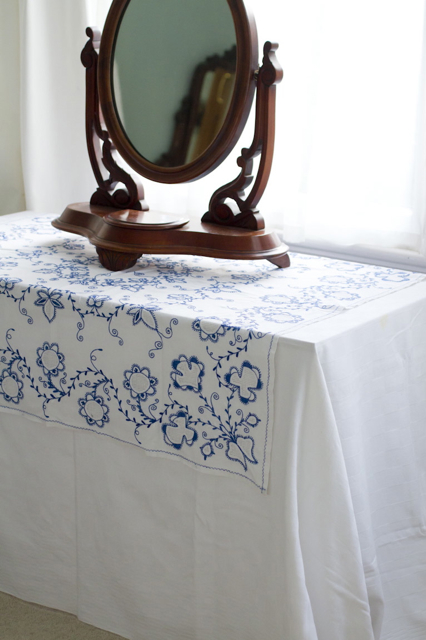
Para fazer a mesa, usámos um tampo de MDF e umas pernas do Ikea que tínhamos trazido na mudança. Depois de montada (o Rodrigo está a revelar-se um verdadeiro entusiasta do DIY… fartou-se de ajudar!), cobri-a com duas toalhas de mesa que já estão impróprias para consumo (cerzidas em demasiados sítios e com aquelas nódoas de humidade que são tão difíceis de tirar). O espelho foi comprado num antiquário em Woodville.

Estou toda contente porque não só tenho um toucador, como consegui pôr a uso duas toalhas que vieram das casas das nossas avós e que estavam praticamente destinadas à gaveta dos trapos.

In my room when I was a teenager there was a kidney shaped dressing table with a striped skirt and a Laura Ashley floral fabric on top. When we got married the room wasn’t large enough for two chests of drawers and a dressing table, so I used the mirror in the bathroom instead. However, a dressing table is a very nice thing indeed and I’ve been longing for one for years.

I searched high and low for a beautiful, affordable dressing table without any success (the pretty ones tend to be over my budget). And one day whilst reading The Perfectly Imperfect Home (a delightful book that I highly recommend), I found the answer: a simple table covered in fabric and a mirror.

To make the table we’ve used an inexpensive MDF board and some spare Ikea table legs we had in the garage. After putting the table together (Rodrigo was a great little helper… he shows signs of being very keen on DIY!) I covered it with two old tablecloths that were in a terrible state: darned in too many places and full of those yellow spots that are so hard to get rid of. The mirror was bought in a nice antique shop in Woodville.

I’m really happy, not only because I now have my own dressing table, but I also rescued two towels that used to belong to our grandmothers that were destined for the rag bag.


(photos: ©Constança Cabral)
Curd de Maracujá :: Passion Fruit Curd

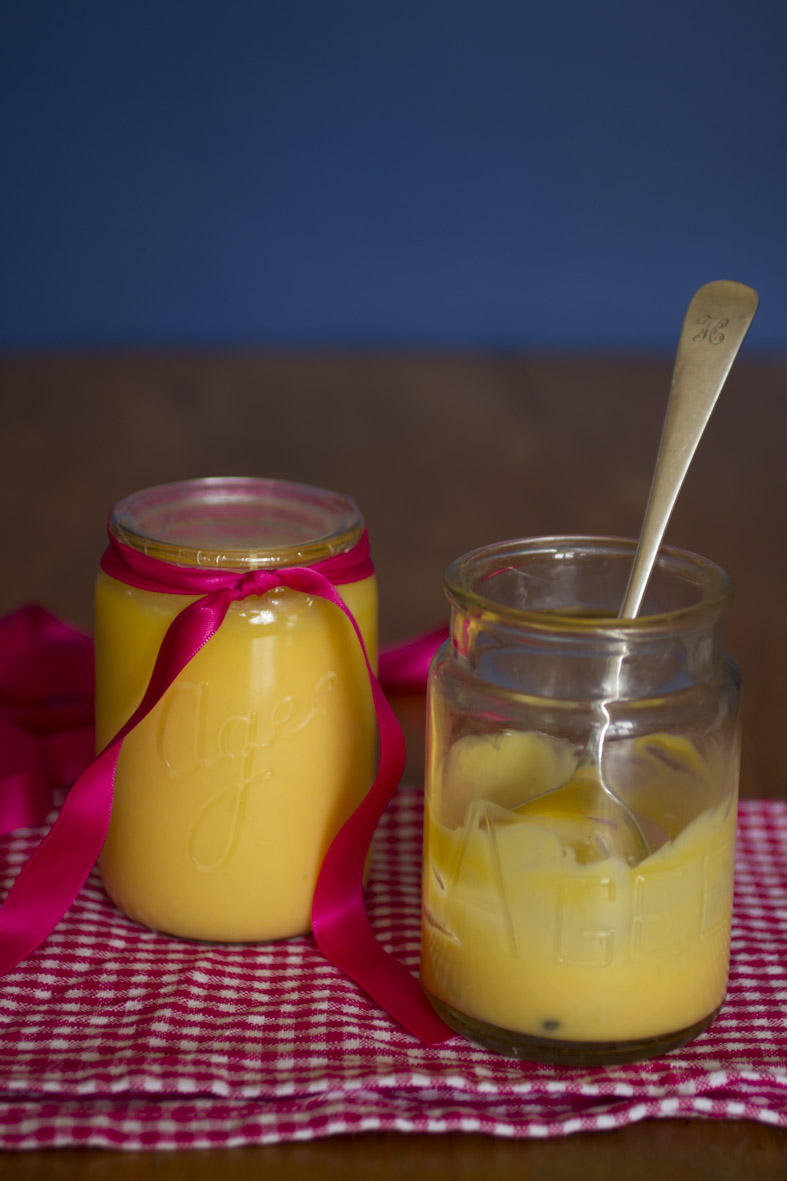
Obrigada por todas as sugestões de receitas com maracujás — quem me dera tê-las visto mais cedo! Mas para o ano já sei. Experimentei fazer curd de maracujá conforme esta receita — não ficou mau, mas poderia ter ficado melhor (acho que o problema foi eu não ter usado todas as sementes… segui o conselho do Tiago, que não foi tão sensato como habitualmente). Tenho de experimentar a receita da Nigella (que nunca nos deixa ficar mal, não é verdade?). 
Tenho comprado uma série de frascos antigos nas lojas de caridade aqui da zona. Visto que muitos deles não têm tampas, tapei-os com celofane como se fazia antigamente. E não é que resulta? 
(uma pequena chamada de atenção: como o curd leva ovos, tem de ser guardado no frigorífico e não na despensa) 
Thank you for all your suggestions regarding the use of passion fruit  — I just wish I saw them sooner! Next year then. I made passion fruit curd using this recipe — but it didn’t turn out as good as I wished (I think the problem was that I left out most of the seeds. Why? Because Tiago told me so). Next time I’ll use Nigella’s recipe (she never lets us down, does she?).

I’ve been buying a lot of old jars from local charity shops, I just can’t resist them. Since many of them haven’t got any lids, I used the time-honoured method of closing them with cellophane — and it works!

(quick note: because the curd has got eggs in it, it should be stored in the fridge, not the pantry)

(photo: Tiago Cabral)

Maracujás :: Passion Fruit

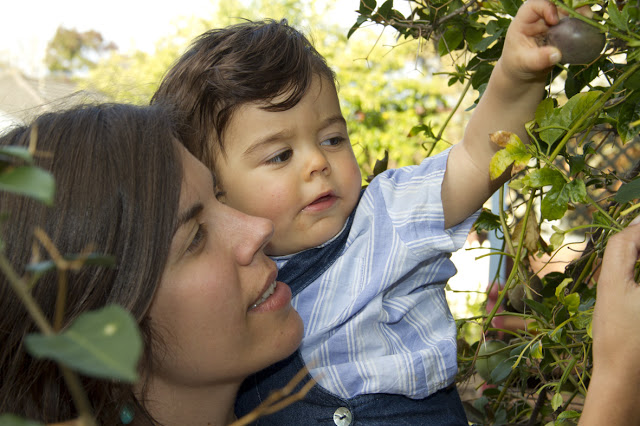
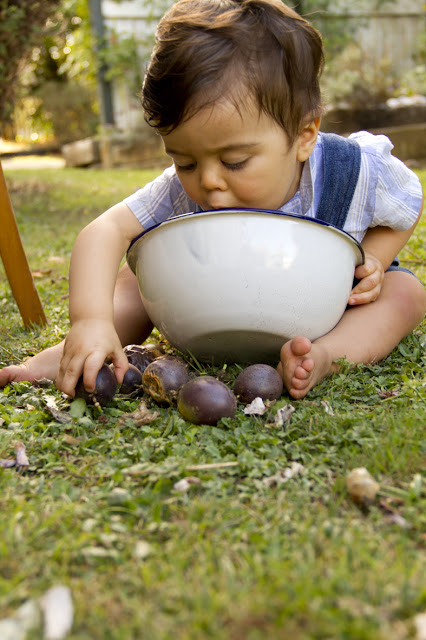
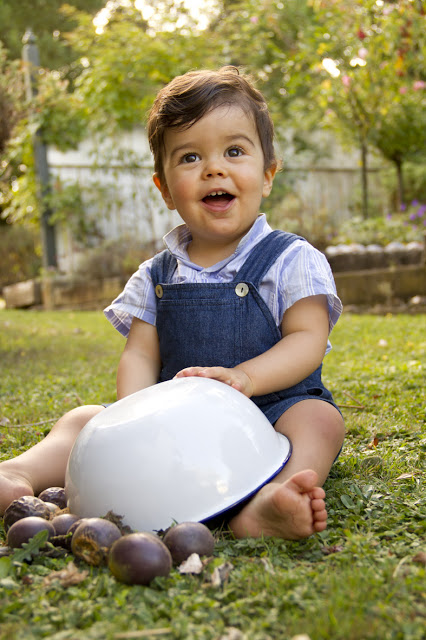
Temos a sorte de ter um jardim que, para além de muitas flores, dá também alguns frutos. Os preferidos do Rodrigo são os maracujás!
We’re lucky enough to have an established garden with lots of flowers and some fruits. Rodrigo loves picking and eating passion fruit!

(photos: Tiago Cabral)