Guest Post @ IKEA Live

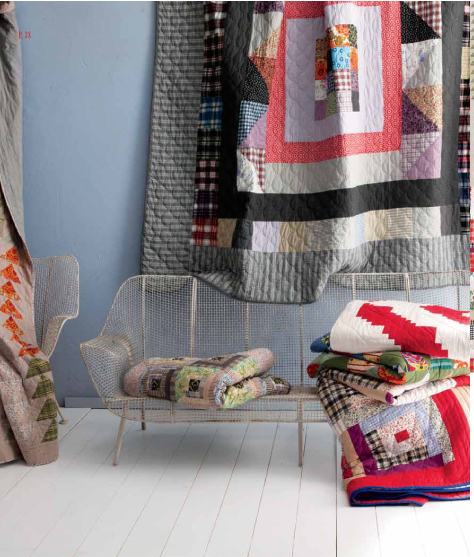
Há um novo post meu no Live, o blog da revista IKEA Family Live. É sobre tempo frio e quilts — se vos apetecer, podem espreitá-lo aqui.
There’s a new post written by me on Live, the IKEA Family Live blog. It’s all about cold weather and handmade quilts — if you feel like reading it, check it out here.

Quilts & Quilting :: How to Make a Quilter’s Knot

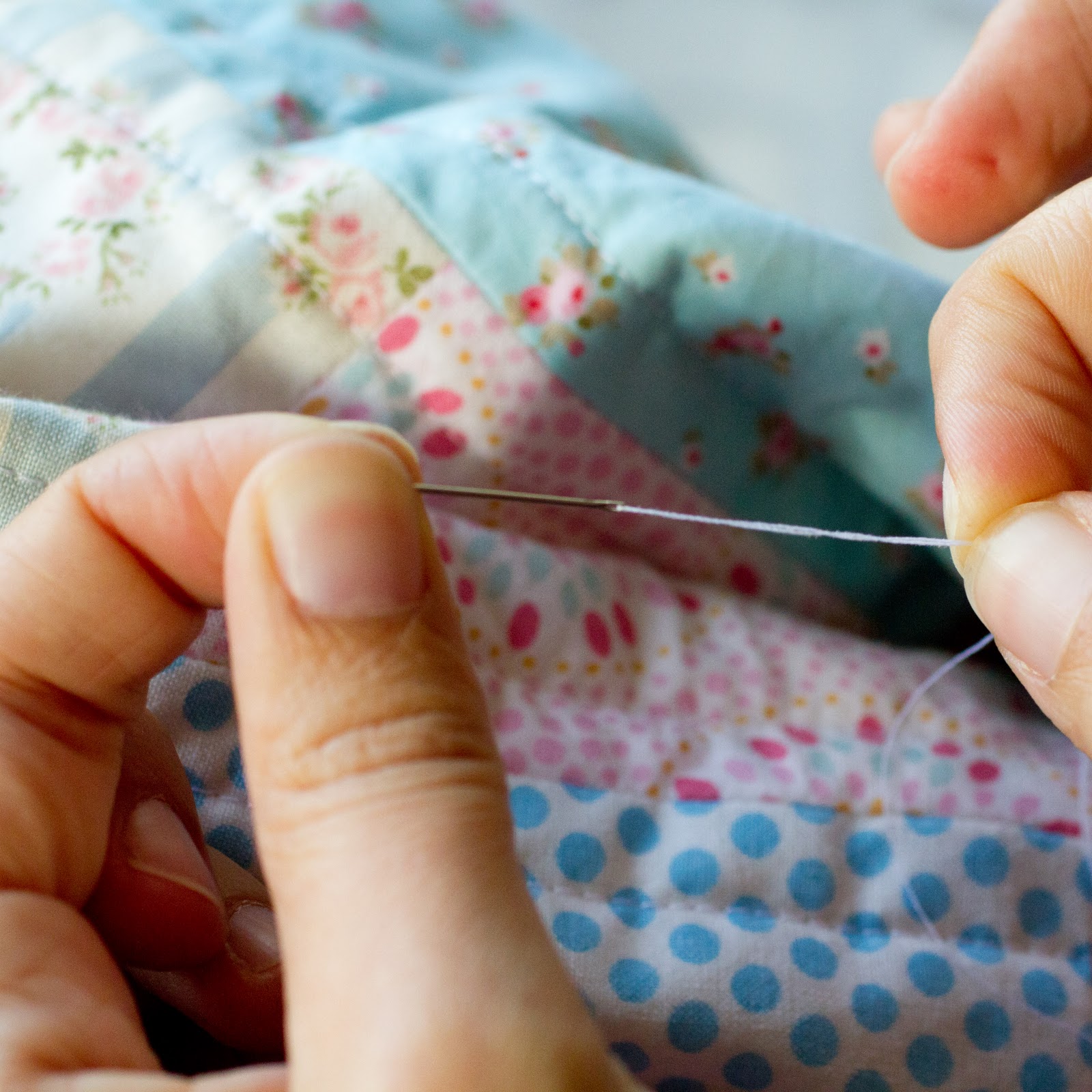
As instruções que escrevi para os quilt kits são praticamente um mini-curso de quilting. Hoje mostro-vos um pequeno extracto das mesmas — a parte em que explico como fazer um quilter’s knot. Este nó não só é ideal para acolchoar um quilt e coser um binding, como também é útil para coser à mão em geral.
The instructions I’ve written for the quilt kits are almost like a mini quilting course. Today I’m going to show you a little extract — the part where I explain how to make a quilter’s knot. This type of knot is perfect not only for hand-quilting and hand-sewing the binding, but also for hand-sewing in general.

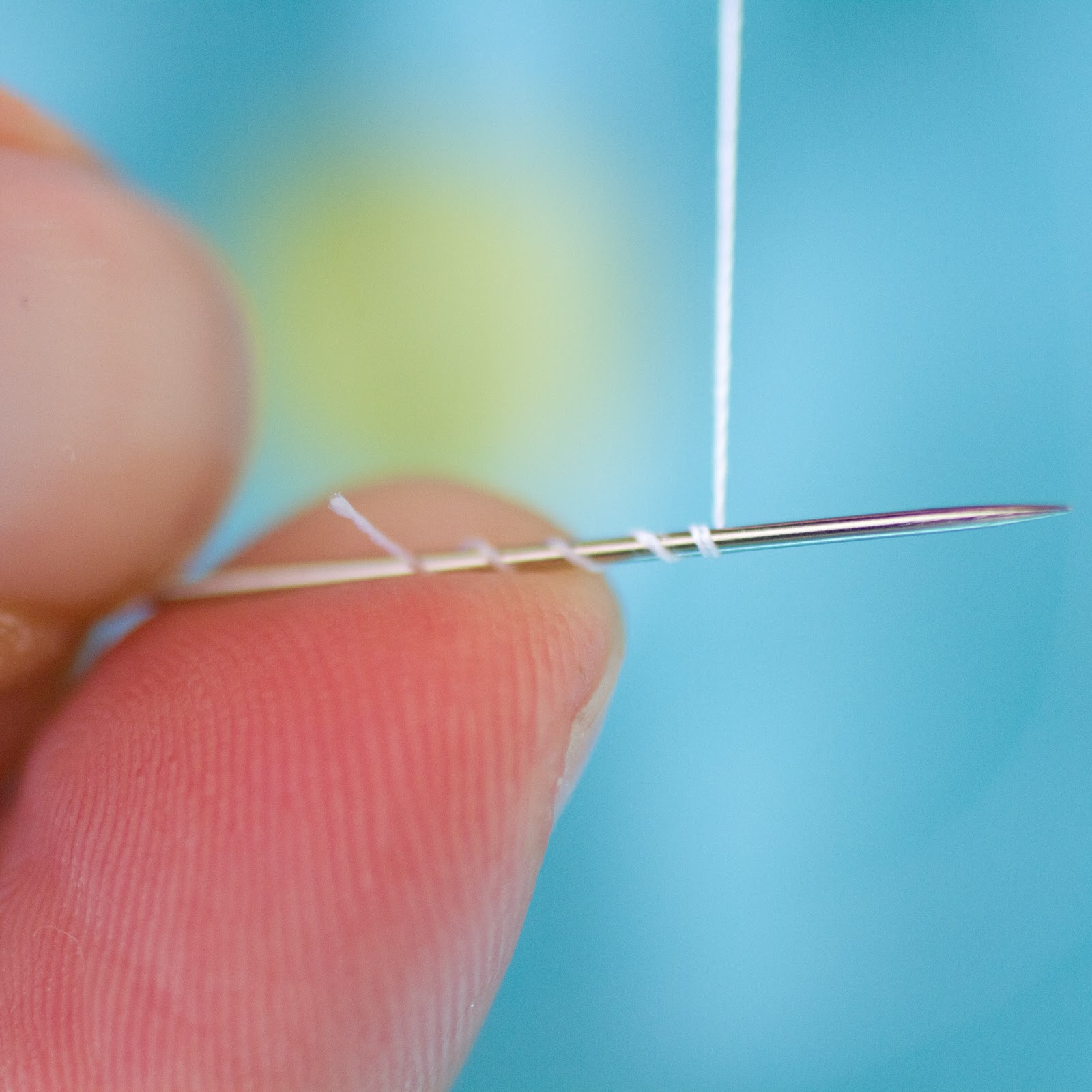
Comece por passar a linha três ou quatro vezes à volta da agulha.

Start by wrapping the thread around the needle three or four times.

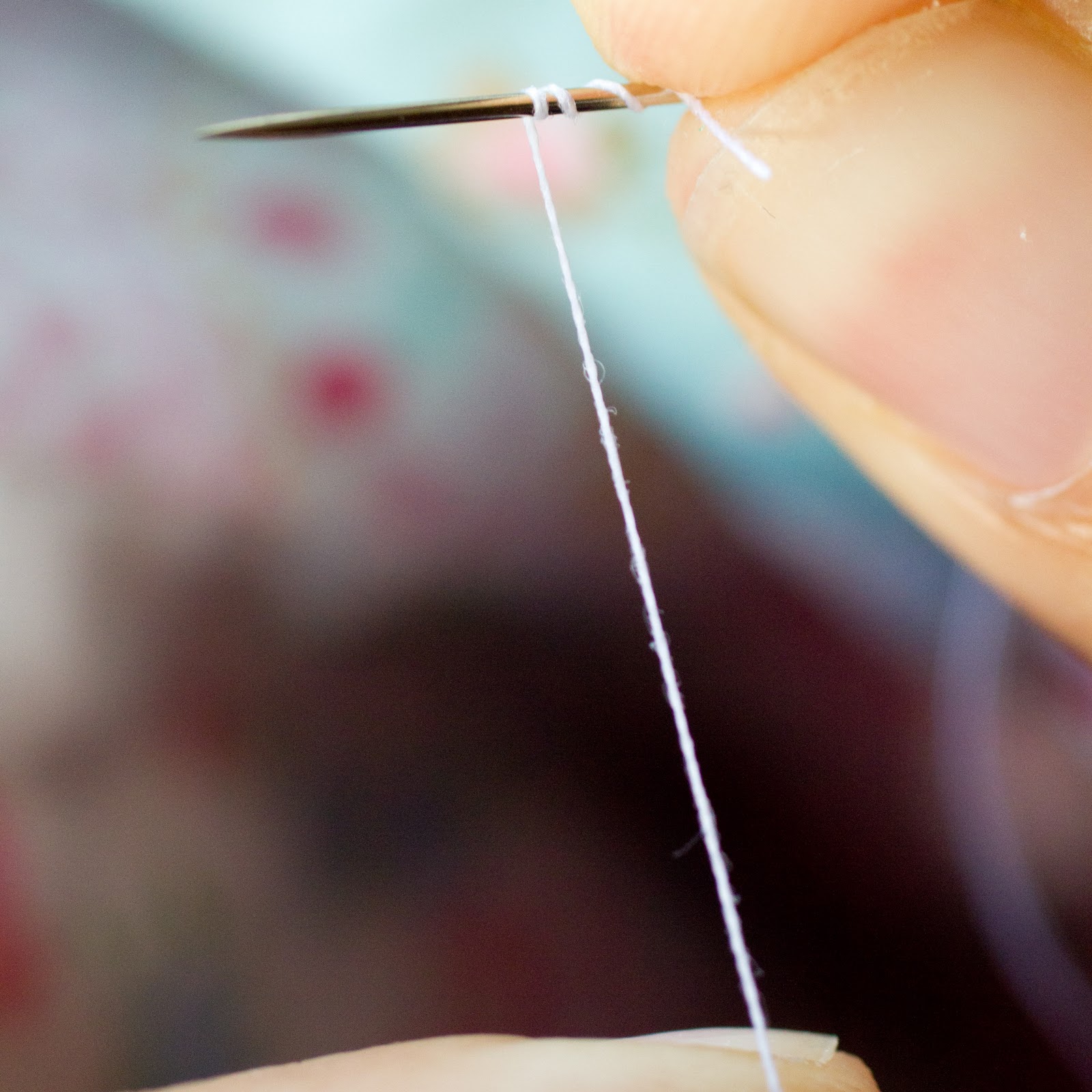
Com o indicador e o polegar, puxe a linha enrolada ao longo da agulha e a todo o comprimento da linha.

Using your index finger and thumb, pull the wrapped thread all the way down the needle and until you reach the end of your entire length of thread.

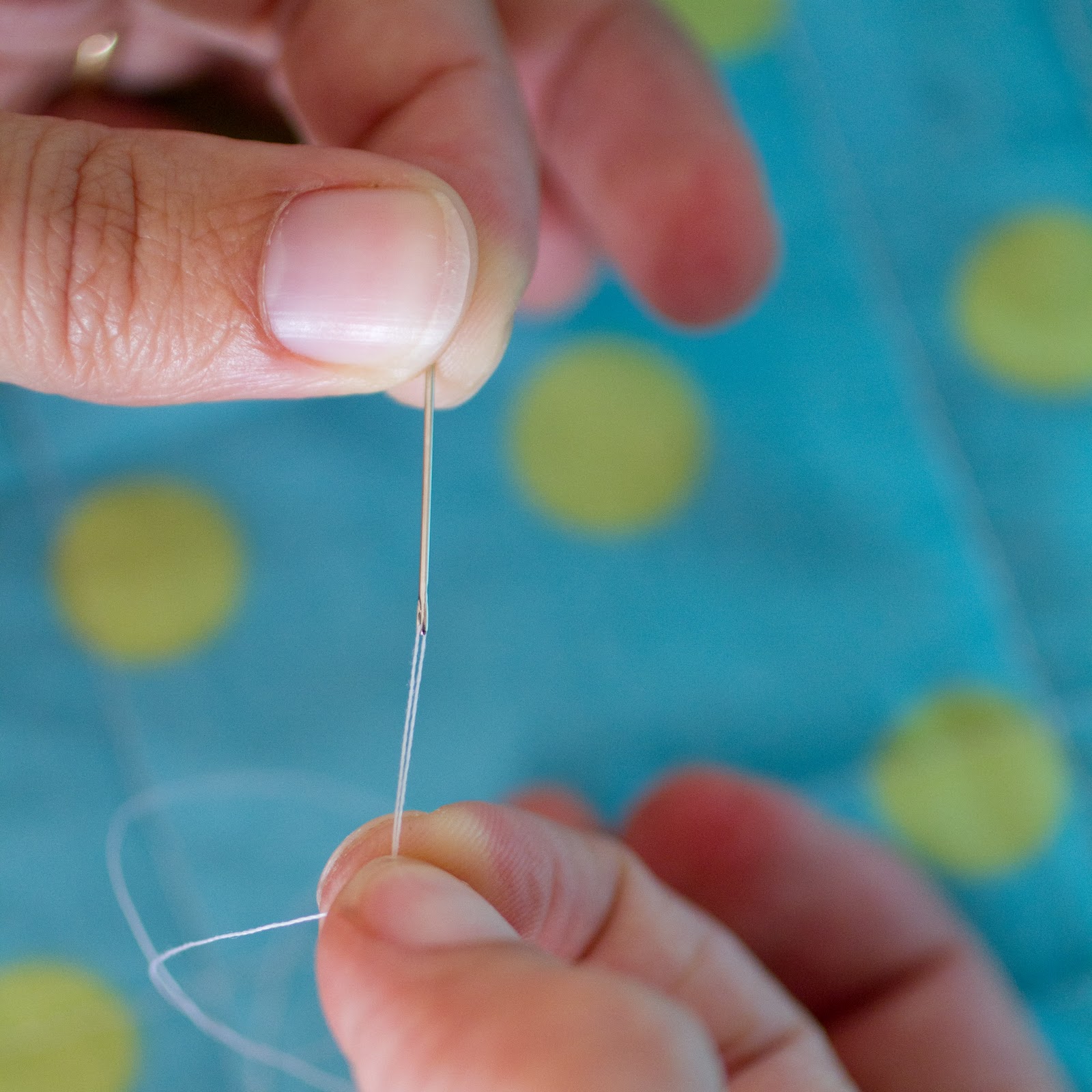
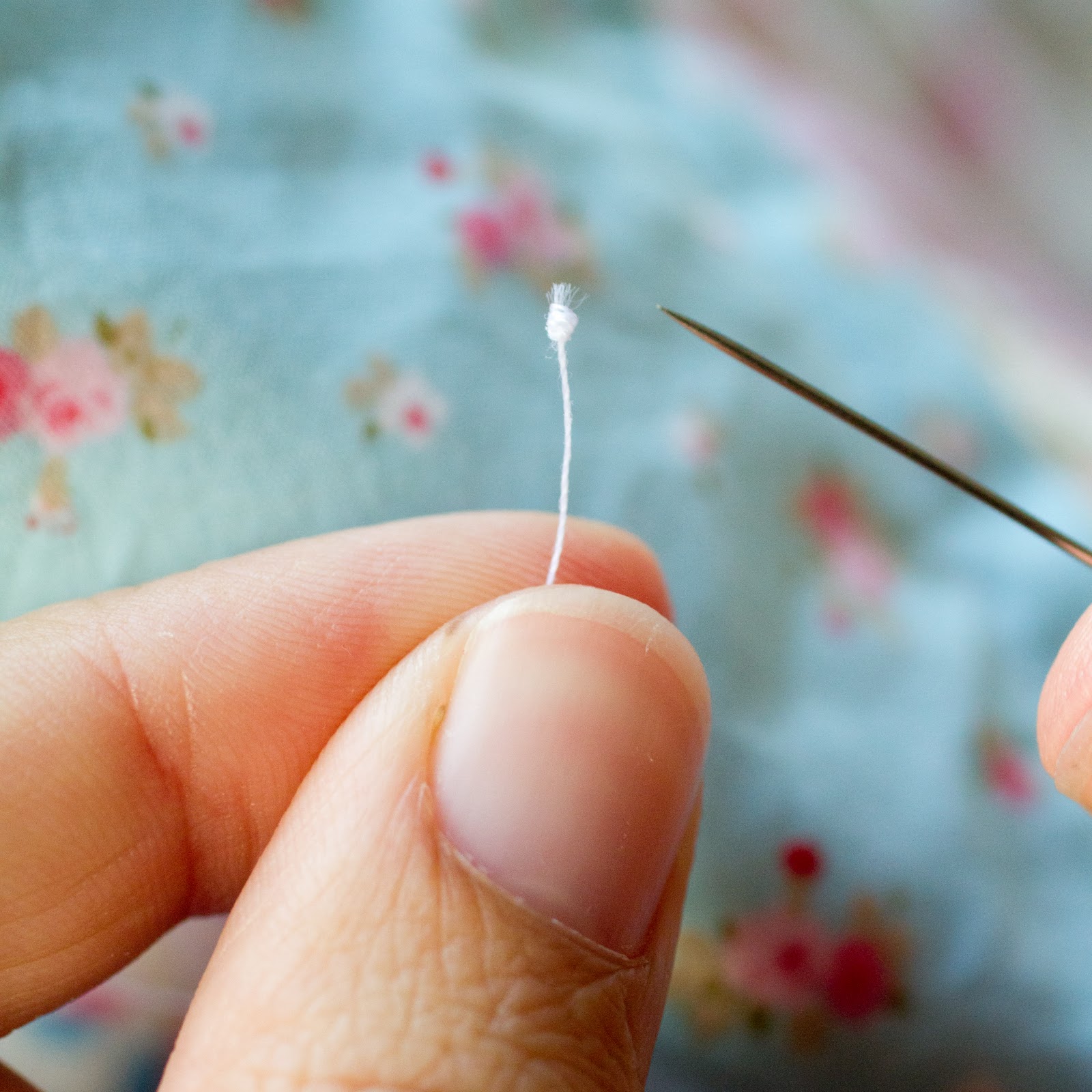
No fim da linha ter-se-á formado um nó perfeito. Se for necessário, corte a cauda excedente.
(é possível que tenha de treinar umas quantas vezes mas, assim que lhe apanhar o jeito, verá que é muito simples e rápido!)
You should now have a perfect knot at the end of your thread. If necessary, cut the remaining tail.

(you may have to try this a couple of times but once you get the hang of it you’ll see how simple and fast it is!)

(photos: Tiago Cabral)

Quilt Kits :: Details

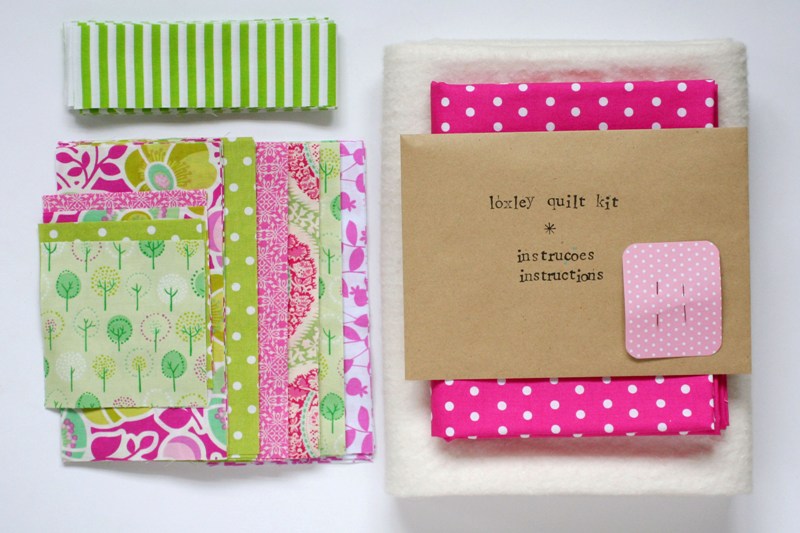
exemplo de kit para fazer o Loxley Baby Quilt (rectângulos)
Loxley Baby Quilt (rectangles) kit sample

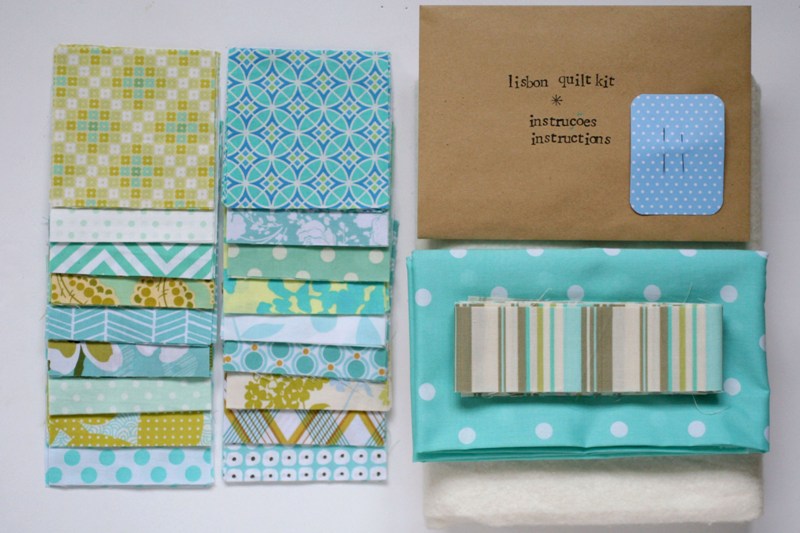
Exemplo de kit para fazer o Lisbon Baby Quilt (quadrados)
Lisbon Baby Quilt (squares) kit sample
Muito obrigada pelas reacções positivas aos quilt kits! Fico muito contente por terem ficado entusiasmadas e estou a fazer os possíveis por pô-los rapidamente na loja
Cada kit contém:
– tecidos para fazer o top
– tecido para o binding
batting (enchimento) 100% algodão com scrim (estabilizador que permite acolchoar à distância máxima de 20 cm entre linhas de quilting) da marca Hobbs
– tecido para o backing
– duas agulhas para quilting (curtas e finas em dois tamanhos diferentes), caso pretenda acolchoar à mão e para coser o binding
instruções em português, impressas, detalhadas e com fotografias a cores 
(todos os tecidos são 100% algodão e foram lavados e engomados antes de terem sido cortados à medida)
Ontem nos comentários surgiram algumas dúvidas, que vou tentar esclarecer agora:
Não tenho máquina de costura — é possível fazer tudo à mão?
Claro que sim, mas demora bastante mais tempo. Se quiser um projecto para ocupar os longos serões de Inverno, este é ideal. Se tiver pressa/for impaciente, uma máquina ajuda bastante.
Eu quero um kit! Posso reservar já?
Ainda estou em processo de fotografar todos os kits que vou ter disponíveis nesta primeira fase. Espero tê-los à venda na loja dentro de muito pouco tempo!
Preciso mesmo de um walking foot para acolchoar à máquina?
Um walking foot (se não me engano, em português chama-se pé de duplo arrasto) é muitíssimo útil quando se acolchoa à máquina (e mesmo para coser tecidos com alguma elasticidade). Graças a ele, as três camadas (top + batting + binding) movem-se ao mesmo tempo, evitando assim pregas e tecidos deslocados. A alternativa é acolchoar à mão — demora algum tempo mas o resultado é ainda mais giro.
É possível encomendar para o Brasil?
Tenho tido alguns problemas com os correios brasileiros, por isso só faço envios para o Brasil em correio registado. Isso encarece bastante os portes, eu sei, mas infelizmente não tenho outra alternativa.
Thank you so much for the positive response concerning the quilt kits! I’m very happy that you’re excited about this new venture of ours and I’m doing my best to have them available in the shop very soon.

Each kit includes:

– fabrics to make the quilt top
– fabric to make the binding
batting/wadding by Hobbs (100% cotton with scrim: may be quilted up to 20 cm/8” apart)
– fabric for the backing
– two hand-quilting needles (short and fine in two different sizes), should you wish to hand-quilt and to hand-sew the binding
– detailed, printed instructions with colour photographs
(all fabrics were washed and pressed prior to being cut)

Yesterday in the comment sections there were some questions which I’m going to try to answer today:

I don’t own a sewing machine — is it possible to do everything by hand?
Yes, it’s possible but it does take some time. If you’re looking for a project for long winter evenings, then this is it; however, if you are in a rush/are impatient by nature, a sewing machine can be a huge help.

Do I really need a walking foot to quilt by machine?
A walking foot is extremely useful when you wish to quilt using your sewing machine (and even when you are sewing fabrics that have a little elasticity to them). It makes the three layers (top + batting + backing) move along at the same pace, which avoids puckers and other odd situations. The alternative is to quilt by hand — it does take some time but the result is even lovelier.

I want a kit! Can I pre-order one?
I’m still in the process of photographing all the quilts that will be available in this first phase. I hope to have them for sale in the shop in the next few days.

Will you ship abroad?
Of course I will!

(photos: Constança Cabral)

Quilt Kits :: Coming Soon!

Querem aprender a fazer um quilt?
Não sabem bem por onde começar, que tecidos seleccionar, onde arranjar enchimento de qualidade, como comprar apenas a quantidade de materiais de que precisam de maneira a evitar desperdícios? 
Não querem investir já em ferramentas como cortadores rotativos e bases de corte, nem perder tempo a lavar e engomar tecidos?
Não encontram um projecto simples mas útil, com instruções detalhadas e ilustradas, de preferência em português?
Eu posso ajudar.
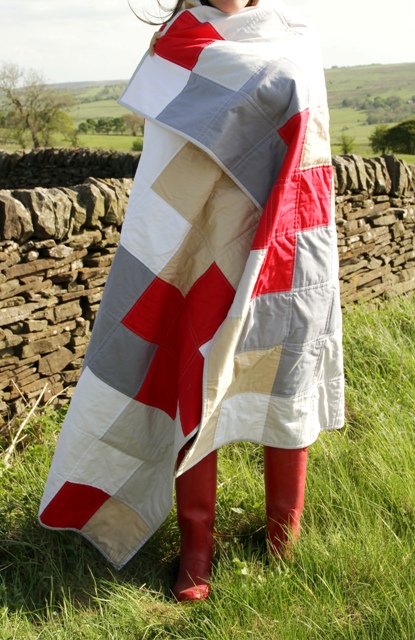
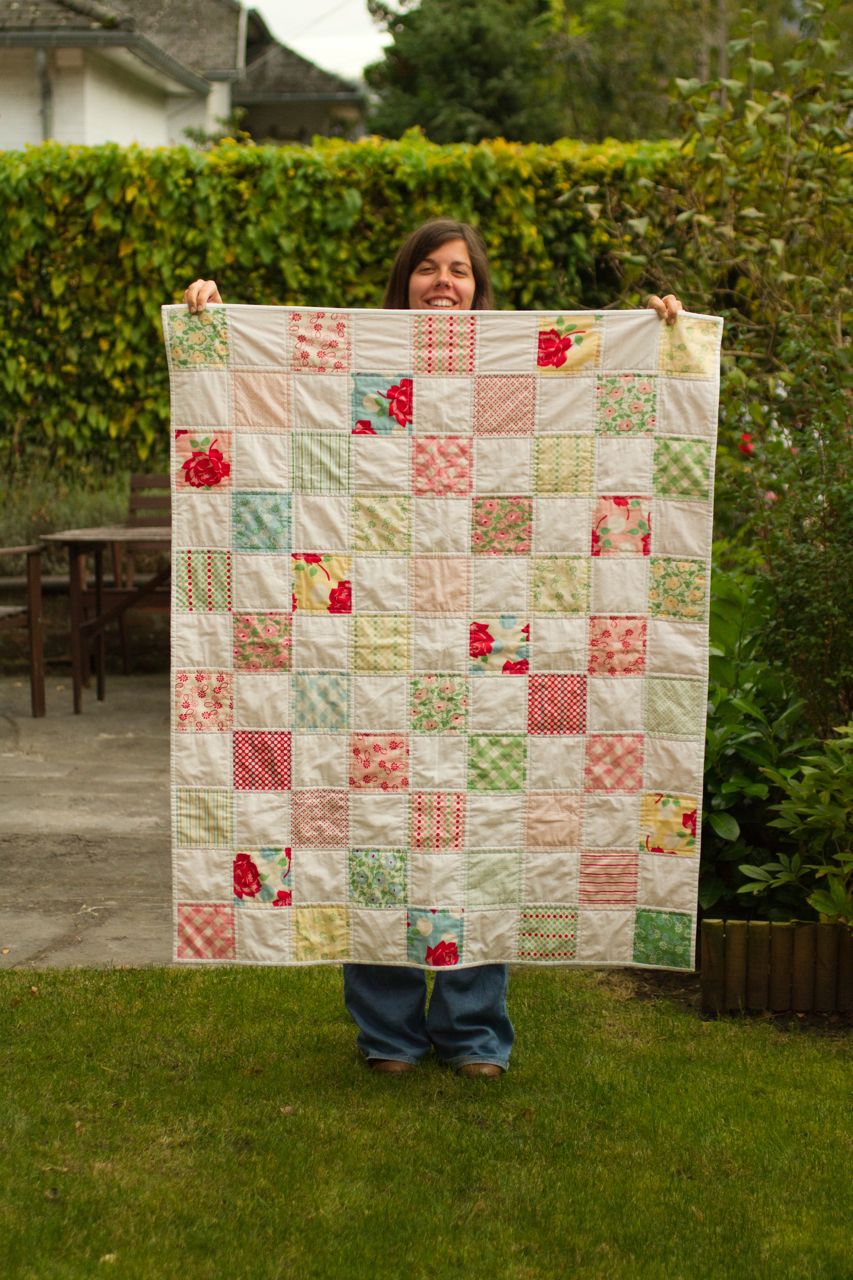
Brevemente terei disponíveis kits completos para fazer um quilt de bebé. Nesta primeira fase haverá dois modelos (aqueles que aparecem nestas imagens): um de rectângulos desencontrados, a fazer lembrar os tijolos das casas inglesas, e um com quadrados regulares, a remeter para os azulejos portugueses. 
Este tamanho de quilt é ideal como colcha para uma cama de grades, manta para o carro, tapete de actividades ou até mesmo para pendurar na parede (quando tirámos estas fotografias ficámos cheios de vontade de ter uns quilts pendurados aqui e ali). Por ser relativamente pequeno, não exige um enorme investimento em termos de materiais nem de tempo. E as instruções passo-a-passo tiram todas as dúvidas que possam surgir ao longo do processo. Por outro lado, já vem tudo lavado, engomado e cortado à medida — é só abrir a caixa e começar a coser.
Amanhã falarei mais sobre aquilo que cada kit inclui. Haverá combinações de tecidos para todas as preferências (eu gosto de todos os conjuntos!). Estou muito entusiasmada com este novo projecto — fazer um quilt é mesmo especial.
Do you want to learn how to make a quilt?

Maybe you’re not quite sure where to begin, which fabrics to pick, where to find a high quality wadding/batting, how to buy just the amount of materials you actually need in order to avoid waste?

You might want to wait a bit before you start investing in tools like rotary cutters and cutting mats and you have no wish to use up your precious time washing and pressing fabrics?

You can’t find a simple yet useful project with detailed instructions and lots of pictures?

I can help you.

Very soon I’ll have available complete kits to make baby quilts. In this early stage there will be two designs (the ones pictured above): one featuring non-aligned rectangles (just like the bricks you see in English houses) and the other one featuring regular squares (which make me think of Portuguese tiles).

The size of these quilts makes them ideal as cot/crib bedspreads, car blankets, play mats or even to hang on a wall (when we were taking these photos we though how great it would be to have a few quilts hanging on our walls). Because is relatively small, you don’t have to make a huge investment either in terms of materials and time. And the step-by-step instructions are sure to help you solve any doubts you may have along the way. On the other hand, everything is already washed, pressed and neatly cut — you just have to open up the box and start sewing.

Tomorrow I’ll tell you what exactly each kit includes. There will be fabric combinations for every preference (I love all the sets!). I’m really excited about this new project — making a quilt is indeed something very special.

(photos: Tiago Cabral)

Quilts & Quilting :: Pre-washing Fabrics

A primeira coisa que faço quando compro tecidos é pô-los na máquina de lavar roupa. A questão de lavar ou não os tecidos antes de começar um quilt (ou qualquer outro projecto de costura) é discutida frequentemente em livros e blogs — pessoalmente, lavo sempre os meus tecidos antes de os utilizar.
Pré-lavar os tecidos apresenta muitas vantagens: os tecidos de algodão encolhem sempre um bocado, por isso é melhor que encolham antes de estarem cosidos a outros; quando vêm das fábricas, os tecidos ainda têm restos de tintas e outros químicos, e uma simples lavagem elimina tudo isso; alguns tecidos, sobretudo os mais antigos, têm tendência para desbotar, por isso o melhor é fazer um teste antes de os pôr na máquina ou usar uma daquelas folhas que atraem a tinta.
Como já disse, os meus tecidos vão directos para a máquina. Depois estendo-os (mesmo que seja dentro de casa, situação que, neste país, acontece 90% das vezes) e passo-os a ferro enquanto ainda estão ligeiramente húmidos. Há quem os lave à mão, em água fria, mas eu prefiro lavá-los logo a 50ºC num ciclo curto (no caso de tecidos de algodão, claro). Se não quiserem que os tecidos desfiem, podem sempre chuleá-los ou cortá-los com uma tesoura de zigzag. Eu não faço nada disso.
The first thing I do after buying fabrics is to toss them into the washing machine. The question of whether or not to wash fabrics before starting a quilt (or any other sewing project) is frequently discussed in books and blogs — I personally always wash my fabrics before I use them.

Pre-washing fabrics has many advantages: cotton fabrics always shrink a little so it’s best that they do so before they’re all stitched up; when they come from the mills they still have some leftover dyes and chemicals and a simple washing will eliminate that; some fabrics, especially vintage ones, have a tendency to bleed so you might want to test them beforehand or include one of those colour catcher sheets in the wash.

As I said, my fabrics go directly into the washing machine. Then I hang them to dry (even if it needs to be indoors, which happens 90% of the time in this country) and iron them while they’re still a bit damp. Some people wash their fabrics by hand in cold water but I prefer to wash them in a short cycle at 50ºC (I’m obviously talking about cotton fabrics). If you don’t want them to ravel you might zigzag or overlock the edges or cut them with some zigzag scissors. I do none of that.

(photo: Constança Cabral)

Quilts & Quilting :: Equipment

Para além de uma máquina de costura e de um ferro de engomar decente, há outro material necessário para fazer um quilt. Só um aparte: sou da opinião de que se deve comprar material de primeira qualidade: mais vale ir comprando as coisas espaçadamente, pesquisar bem e esperar por oportunidades, e saber que vão portar-se bem e durar. Por outro lado, o processo é sempre mais fácil e os resultados muito mais perfeitos e duradouros (assim como bolos feitos com boa manteiga e bom chocolate são sempre melhores). Acredito sinceramente que, em tudo, mais vale ter menos e melhor, do que o contrário.
In addition to a sewing machine and a decent iron, there are some other things you need when you wish to make a quilt. Just a side note: I believe that you should buy first quality material: it’s best to buy things  sparingly, to do some research and to wait for deals, and know that they will perform well and last longer. When you do this, the process is always easier and the results always better (just like cakes made with good butter and good chocolate are always superior). I honestly believe that in life it’s best to have less things but better quality things, than the opposite.

1. régua: no mundo do quilting trabalha-se normalmente em polegadas e uma régua de acrílico comprida (a minha tem 8 1/2” x 24”) é muito útil para cortar os tecidos com precisão. Por outro lado, estas réguas incluem transferidores, bons para quando se quer cortar fitas de viés ou triângulos de todos os feitios.
2. base de corte: de um lado em polegadas, do outro em centímetros, estas bases de corte são usadas em conjunto com as réguas de acrílico e os cortadores rotativos. Deve comprar-se o tamanho maior que for possível.
3. tesoura pequena: boa para cortar linhas.
4. tesoura de alfaiate: um dos mais importantes investimentos para quem cose é uma boa tesoura de alfaiate, grande e pesada. Desde que seja bem tratada e reservada exclusivamente para tecidos, durará uma vida.
5. cortador rotativo: excelente para cortar os tecidos com rapidez e precisão. 
1. acrylic ruler: a long ruler (mine is 8 1/2” x 24”) is invaluable for cutting fabric with accuracy. It also includes lines in different angles so that you can cut bias tapes and all sorts of triangles.

2. cutting mat: inches on one side, cm on the other, to be used with a ruler and a rotary cutter. You should buy the largest mat you can afford.

3. small pair of scissors: for cutting thread.

4. dressmaker’s shears: one of the most important investments a person who sews can make is a large, heavy pair of scissors. As long as you treat them well and keep them purely for cutting fabric, they should last you a lifetime.

5. rotary cutter: excellent for cutting fabric quickly and accurately.

6. alfinetes: eu gosto de alfinetes grandes e com cabeças de plástico, mas é uma questão pessoal.
7. abre-casas: para quando é precido descoser…
8. linha para a máquina de costura.
9. pé calcador de 1/4″: não é uma necessidade vital, até porque é possível usar um pé calcador normal para fazer costuras com 0,5 cm (1/4” = 0,6 cm). No entanto, quando se está a seguir um esquema é importante usar as margens de costura indicadas ou, pelo menos, manter sempre margens constantes.
10. walking foot: para acolchoar à máquina. Este pé calcador faz com que as três camadas (top + batting + backing) se desloquem ao mesmo tempo, evitando rugas e outras situações indesejáveis.
6. pins: I like long pins with plastic heads but it’s a matter of personal taste.

7. seam ripper: sometimes you really have to use it…

8. all-purpose thread.

9. 1/4” foot: this isn’t strictly necessary — you can get away with using the edge of your regular presser foot to sew 0.5 cm seams (1/4” = 0.6 cm). However, if you’re following a pattern it’s important to use the seam allowances it tells you to or, at least, always keep them consistent.

10. walking foot: for machine quilting. This special foot makes the three layers (top + wadding/batting + backing) move at the same time, which avoids puckers and other undesirable situations.

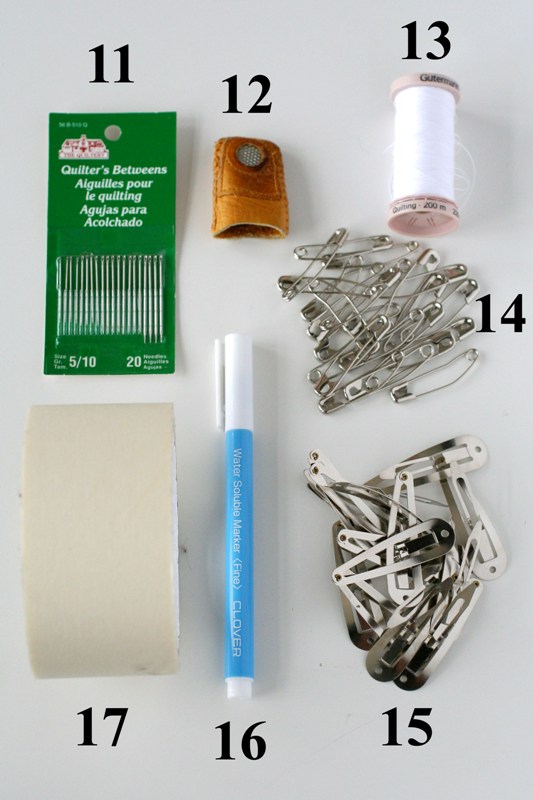
11. agulhas para acolchoar à mão: muito curtas e finas, também são úteis para coser o binding à mão.
12. dedal: eu gosto deste dedal de couro, mas um dedal normal de metal também resulta. 
13. linha de quilting: própria para acolchoar à mão, esta linha tem um revestimento (uma espécie de cera) que a torna mais resistente.
14. alfinetes-de-ama curvos: óptimos para “alinhavar” as três camadas e mantê-las no sítio enquanto se acolchoa o quilt (ver utilização aqui).
15. ganchos para binding: úteis para quando se cose o debrum à mão (ver utilização aqui).
16. caneta de tinta solúvel em água: boa para marcar as linhas para acolchoar.
17. fita adesiva: de pintor ou de caixotes, o importante é que seja larga e resistente. Usa-se para fixar o backing ao chão quando se faz a sanduíche.
11. hand-quilting needles: short and fine, they’re also great when you sew the binding by hand.

12. thimble: I like this leather thimble but you can use a regular metal one.

13. quilting thread: for hand-quilting only, this thread has a special coating (a sort of wax) that makes it very hard-wearing.

14. curved safety pins: great for “basting” the three layers together and keep them in place whilst quilting (see them in use here).

15. binding clips: useful when hand-sewing the binding (see them in use here).

16. water soluble pen: good for marking those quilting lines.

17. sticky tape: painter’s tape or packing tape, it must be large and quite heavy duty. You’d use it to tape the backing to the floor when making the quilt sandwich.

(photos: Constança Cabral)

Quilts & Quilting :: Choosing Fabrics

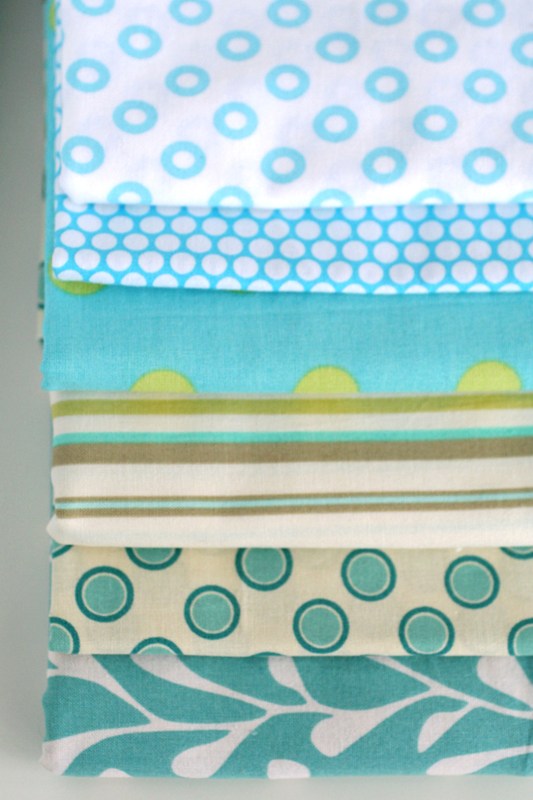
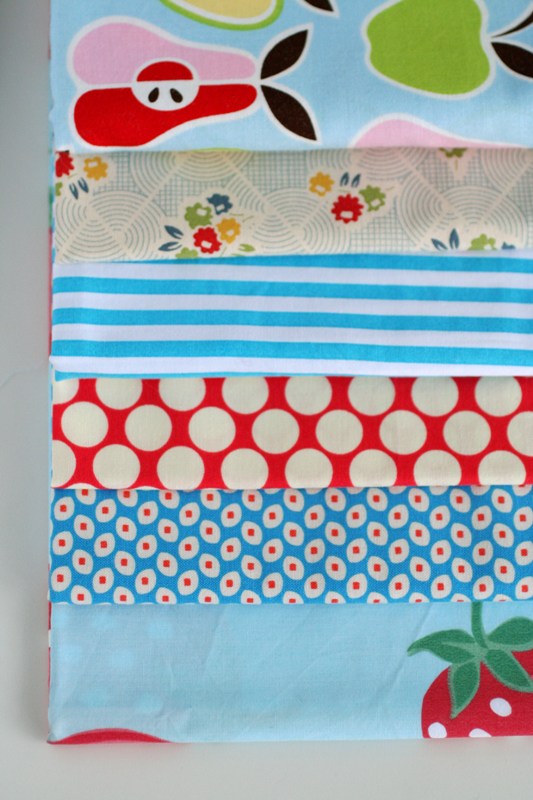
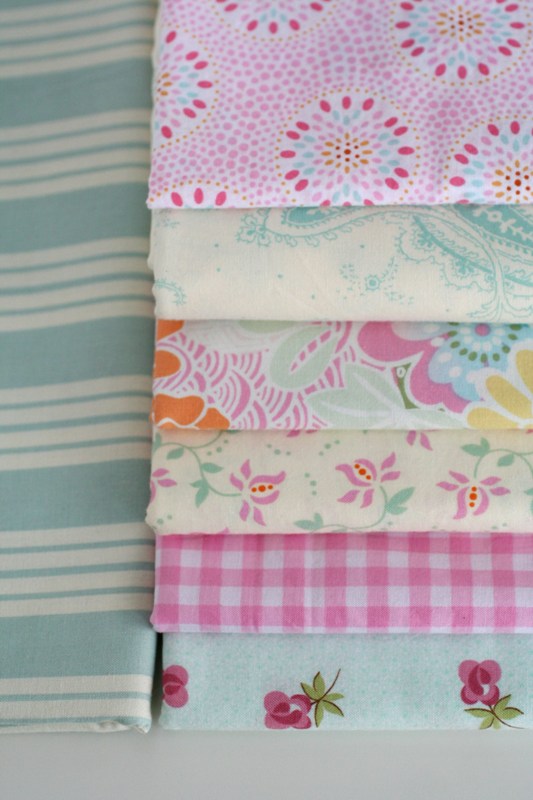
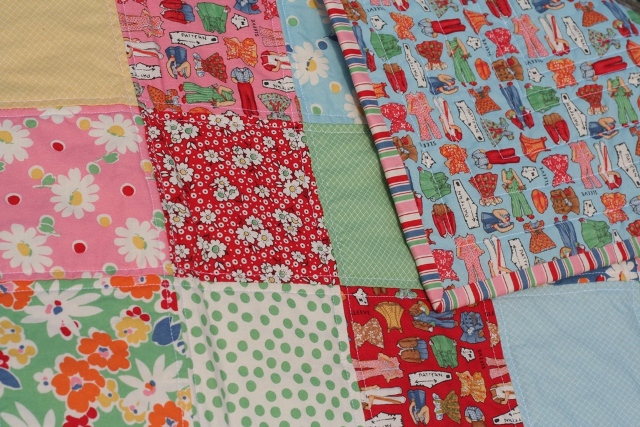
A parte mais fundamental na execução de um quilt está na escolha dos tecidos. Em primeiro lugar, convém seleccionar tecidos da mesma categoria, ou seja, só tecidos de algodão, só sedas, só fazendas ou só flanelas. Isto não só dá coesão ao quilt, como facilita em termos de lavagens e de resistência das fibras e das costuras. Depois, há que pensar no fim a que o quilt se destina. É para um bebé? Como vai ser o seu quarto? Os pais gostam de interiores tradicionais ou modernos? É para um homem de 60 anos? Para uma rapariga cheia de vivacidade? Ou para um casal que adora viajar?
Seguem-se as cores e os padrões. Se tiverem interesse em ler um pouco sobre a roda das cores, este artigo e este artigo podem ajudar. Ou então podem fazer como eu e confiar nos vossos instintos. Em relação aos padrões, o ideal é atingir um equilíbrio entre padrões grandes, médios e pequenos. Eu gosto de misturar estampados figurativos (flores, bonecos) com motivos gráficos, de preferência monocromáticos (riscas, pintas, quadrados). Mais uma vez, faço aquilo que sinto que resulta. Isto não pretende ser uma lição — estou apenas a contar-vos como o meu processo de escolha funciona.
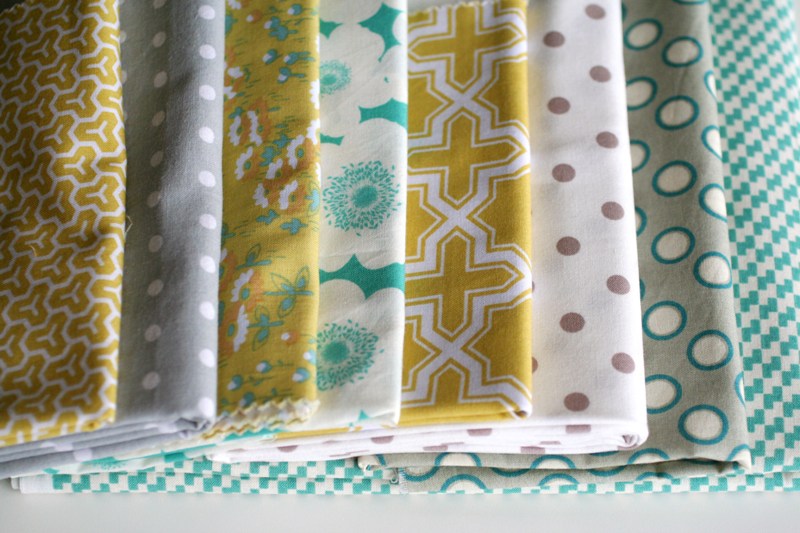
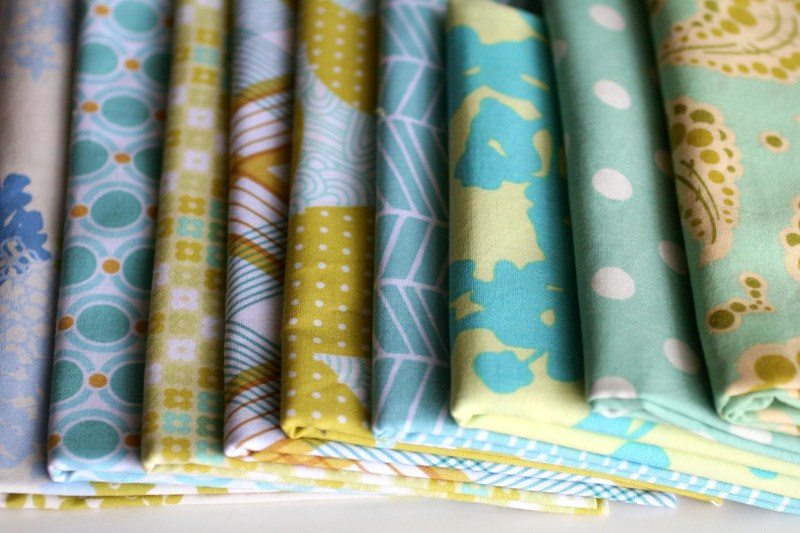
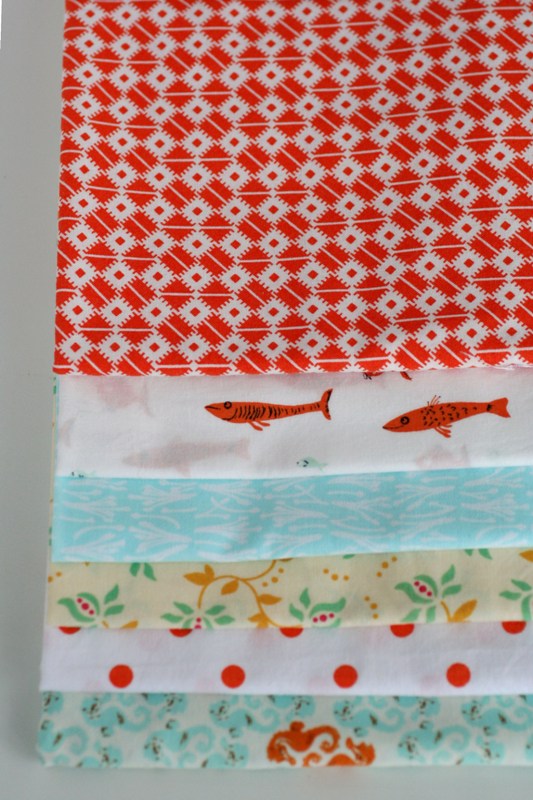
As fotografias que mostro hoje são um exercício: imaginei que iria fazer um quilt para uma cama de grades e escolhi combinações de tecidos em função de situações imaginárias: para raparigas, há os incontornáveis cor-de-rosa e azul-claro, mas também verde e violeta; para rapazes, tentei evitar flores e escolhi motivos gráficos em azul e verde; para pais convencionais, as clássicas cores pastel; para pais que não têm medo da cor, encarnado, amarelo e cor-de-laranja; para pais alternativos, tons de cinzento, mostarda, verde-água e verde-azeitona.

Feita a selecção dos tecidos, há que começar a cortar e a construir o quilt!

The most important part when you’re making a quilt is choosing the fabrics. For starters, you must remember to stick to fabrics that have the same weight, i.e., quilting cottons, silks, wools, flannels. Avoiding mixing different weights gives the quilt coherence and helps with future washings and the way  fibers and seams will wear out. Then you have to think about who/what/where the quilt is for. Is it for a baby? What will the nursery look like? Do the parents prefer traditional or modern interiors? Is it for a 60-year-old man? For a very lively girl? Or maybe for a couple who loves traveling?


Then colours and patterns come into play. If you’re interested in reading about the colour wheel, this post and this post are helpful. Or you can do as me and just trust your instincts. As for patterns, the best is to achieve a good balance of figurative prints (flowers, novelty) and graphic motifs, preferably monochromatic ones (stripes, spots and gingham). Again, I do whatever feels right. This isn’t suppose to be a lesson — I’m just telling you how my process works.


The pictures I’m showing today are a kind of exercise: assuming I was going to make a cot/crib quilt, I picked fabric combinations with imaginary people in mind: for girls there are the imperative pinks and light blues, but also greens and violets; for boys I tried to stay away from flowers and went for graphic prints in blues and greens; for traditional parents I picked the classic pastel colours; for parents who aren’t afraid of colour there are reds, yellows and oranges; for alternative parents I chose shades of grey, mustard, mint and olive green.


Once you’ve got your fabrics selected, it’s time to start cutting and putting the quilt together!

(photos: Constança Cabral)
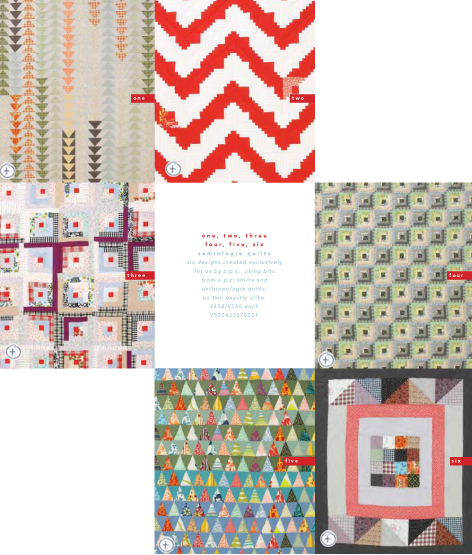
Quilts & Quilting :: A.P.C. Quilts for Anthropologie

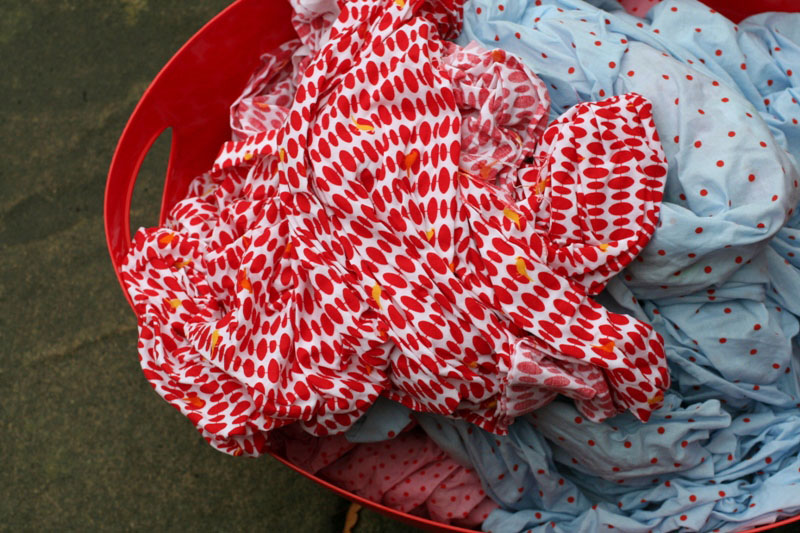
Como se ainda restassem algumas dúvidas de que os quilts estão na moda, eis que acabo de receber o catálogo da Anthropologie e o que vejo eu? Quilts feitos em parceria com a marca parisiense A.P.C., a partir de restos de tecidos de colecções passadas. Se quiserem espreitar o processo de manufactura dos quilts, vejam este vídeo.
As if there were still any doubts that quilts are the hottest thing right now, I’ve just received the latest Anthropologie catalogue and what do I see? Quilts made in partnership with Parisian brand A.P.C. using fabric remains from past collections. If you want a peek into the process of making these quilts, check out this video.

(photos: Anthropologie)

Quilts & Quilting :: Made By Me

Apesar do meu grande entusiasmo, sou relativamente nova no mundo dos quilts. Frequentei umas aulas dadas pela Luísa (dona da loja dotQuilts) em 2008, fui fazendo umas coisas em patchwork (almofadas, sacos, cestos), mas quilts do princípio ao fim ainda só fiz seis. Hoje vou falar-vos um pouco de cada um.

Despite my enormous enthusiasm, I’m quite new to the quilting world. I was taught some classes by Luísa (the owner of the dotQuilts shop) back in 2008, have used patchwork techniques to make a few things (cushions, bags, baskets) but so far I’ve only made six quilts from beginning to end. Today I’m going to tell you a bit about each of them.

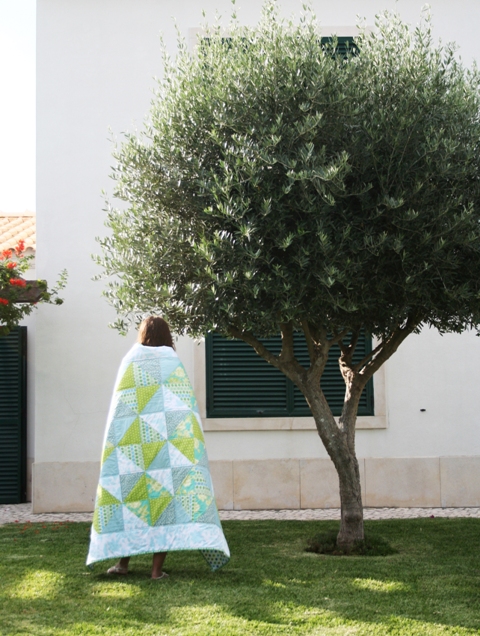
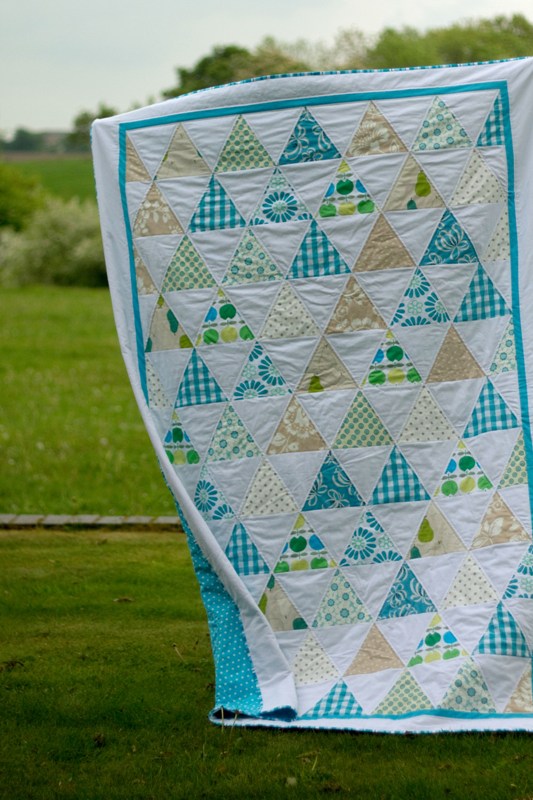
O primeiro quilt que fiz foi para uma amiga que ia começar um doutoramento em Florença. Escolhi azuis e verdes, cores que associo a ela, e optei por um esquema de grandes triângulos rectângulos, enquadrados por um border largo de um só tecido. O tamanho é de sala, ideal para ler, fazer sestas e estudar.

The first quilt I completed was for a friend who was going to Florence for her PhD. I chose blues and greens, colours that make me think of her, and went for a scheme of half square triangles framed by a simple border. I made it as a lap quilt, perfect for reading, napping and studying.

Quando a primeira das minhas amigas anunciou que iria ter um bebé (uma rapariga, ainda por cima), soube imediatamente que lhe queria fazer um quilt. Usei tecidos e um charm pack da colecção Snippets da Moda para fazer uma colcha para a cama de grades.

When my first friend told me she was expecting a baby (a girl, no less), I immediately thought that I wanted to make a quilt for her cot. I used fabrics and a charm pack from the Snippets collection for Moda.

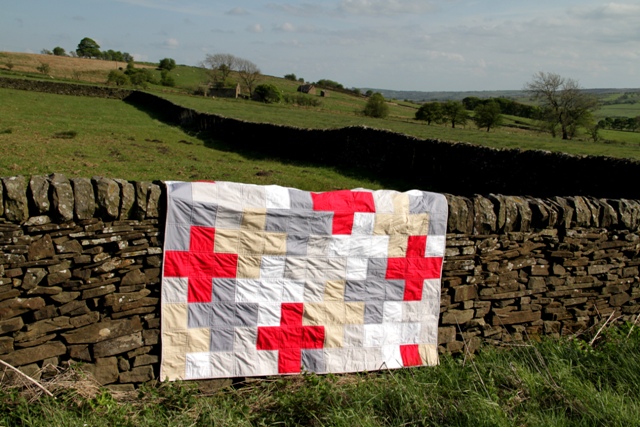
O meu presente de casamento para os meus amigos holandeses foi um quilt para a sala. Na altura eles tinham um sofá encarnado e papel de parede com motivos em cinzento, por isso achei melhor cingir-me a tecidos lisos e a um modelo de patchwork bastante simples. Usei cinco Kona Cotons, que cortei em quadrados e dispus de maneira a que formassem grandes cruzes.

My wedding present for my Dutch friends was a quilt for their sitting room. At the time that had a red sofa and a wall papered in grey motifs, so I thought I should stick to plain fabrics and a simple pattern. I used five Kona Cottons, which I cut in squares and laid out into large crosses.

Um quilt é um óptimo presente de casamento, por isso quando a minha amiga seguinte se casou, fiz-lhe um com triângulos em tons de azuis, verdes e beges. A ideia original tinha sido fazer um quilt de sala, mas  baralhei-me nas contas e acabei por ter de fazer uns acrescentos a branco. Eles usam-no aos pés da cama mas dá perfeitamente para uma cama de solteiro.

A quilt is a great wedding gift so when my next friend got married I made her one in shades of blue, green and beige. The original idea had been to make a lap quilt but I got my calculations wrong and ended up having to add some white borders to it. They use it at the end of their bed but it should fit a single bed perfectly.

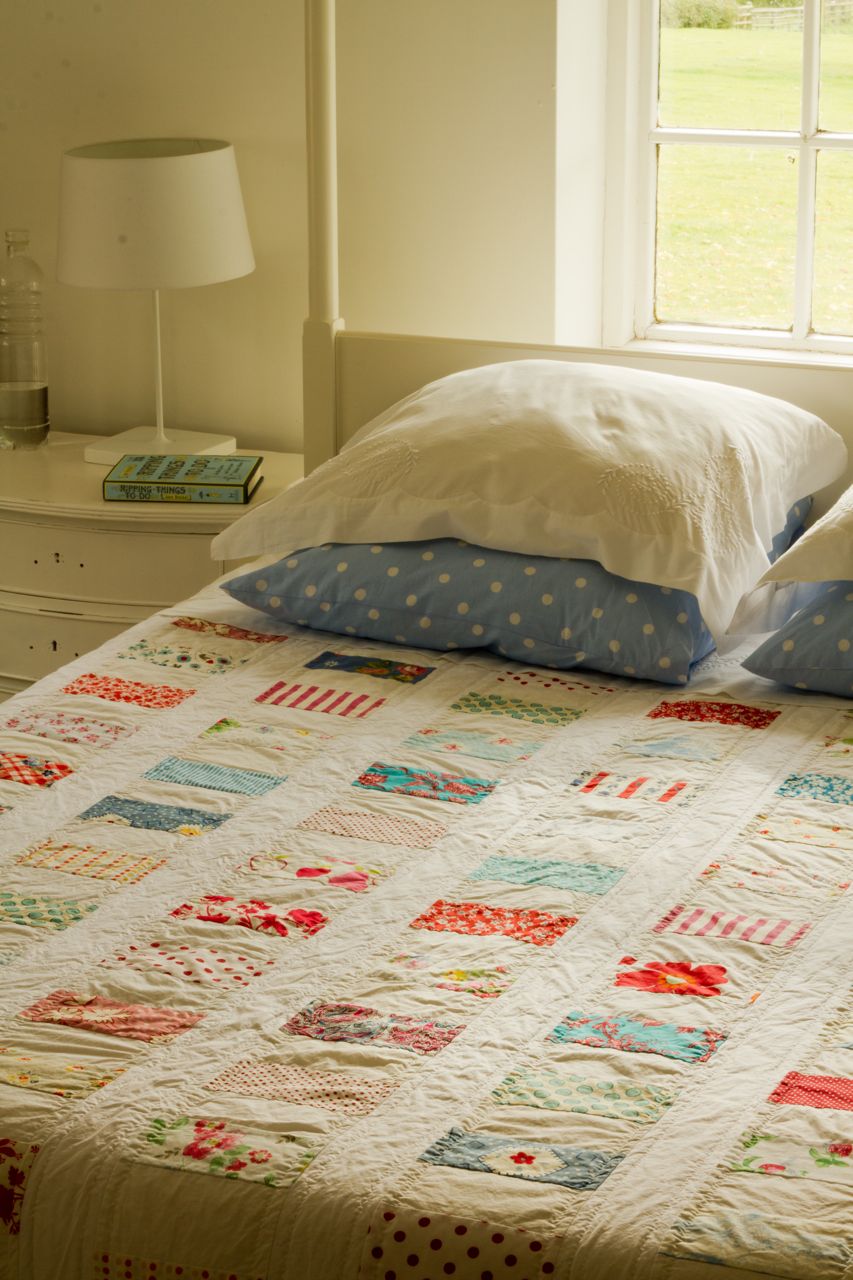
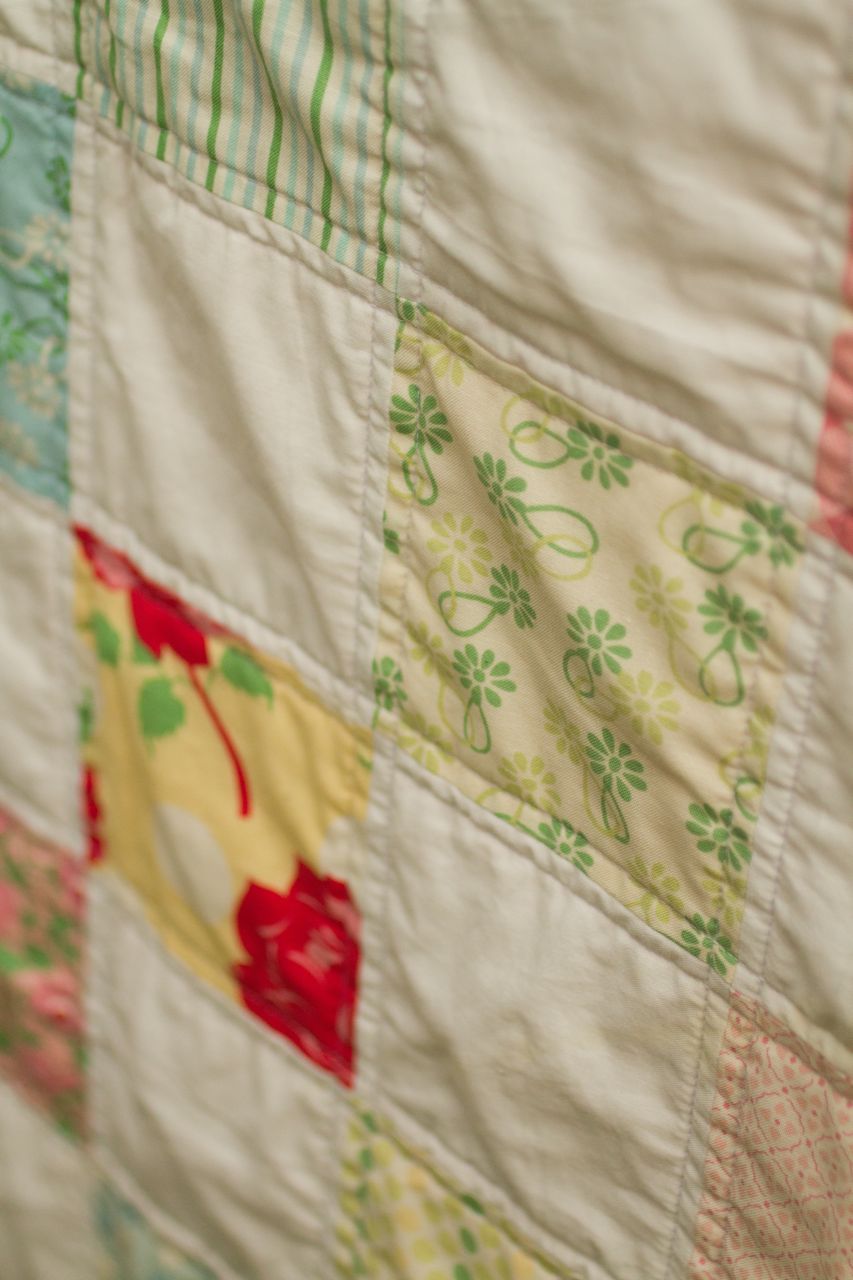
Segue-se o coin quilt de que tanto tenho falado nos últimos tempos. Coin quilt é o nome que se dá a este modelo de quilt, também conhecido por stacked coins ou Chinese coins (o esquema pode ter algumas variações). Comecei a fazê-lo motivada por um sew-along (muitas pessoas decidem fazer o mesmo projecto e vão partilhando as suas experiências online) e a colcha está agora no nosso quarto em Lisboa (em casa do meu pai).

Next comes the coin quilt I’ve shown you recently. Coin quilt is the name of this pattern, also known as stacked coins or Chinese coins (the pattern itself can have several variations). I started it motivated by a sew-along (lots of people decide to make the same projects and share their experiences online) and it now covers our bed in Lisbon (in my father’s flat).

Por último, um quilt que fiz em Março para a minha sobrinha bebé mas que ainda não tinha mostrado aqui. O tamanho é de cama de grades (90 x 120 cm) e os tecidos são todos da colecção Swell da Moda (excepto os quadrados usados no backing). Tinha dois charm packs postos de parte para um projecto especial e esta foi a ocasião ideal para os utilizar. Raramente gosto de todos os tecidos de uma colecção, por isso não sou grande cliente de charm packs, jelly rollslayer cakes, etc. (estou a referir-me a conjuntos de tecidos pré-cortados). Mas, quando se encontra um conjunto de que se gosta, não há dúvida de que todo o processo de seleccionar, comprar e combinar os tecidos para um quilt fica extremamente facilitado e rápido.

Estou neste momento a trabalhar em novos quilts, que espero poder mostrar-vos em breve. Tenho uma amiga que se acabou de casar, outra que está noiva, um bebé quase a nascer… e novos projectos em desenvolvimento.

And finally a quilt I made for my baby niece last March but hadn’t shared it here yet. It’s a cot quilt (90 x 120 cm) and all the fabrics are from the Swell collection for Moda (except for the pink gingham I used as backing). I had two Swell charm packs put aside for a special project and this was the ideal occasion to use them. I rarely like every single fabric of whole collection so I’m not a great buyer of charm packs, jelly rolls, layer cakes, etc. (I’m talking about sets of pre-cut fabrics). But when you find a set you love, there’s no doubt that the whole process of selecting, buying and conjugating fabrics for a quilt turns out much easier and faster.


I’m now working on new quilts which I’m hoping to share with you soon. I’ve got a friend who’s just got married, another one who’s engaged, a baby on the way… and new projects under development.

(photos: Tiago Cabral)
Autumn :: Apple & Cinnamon Cake

[scroll dow for English]

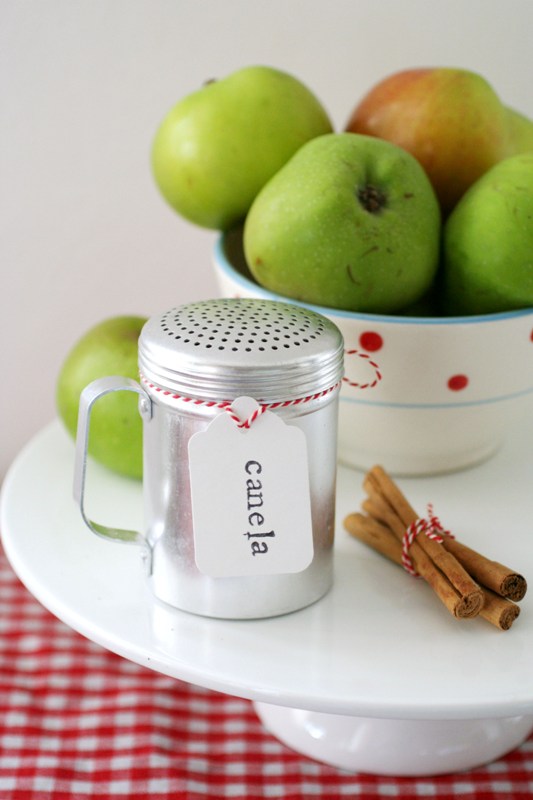
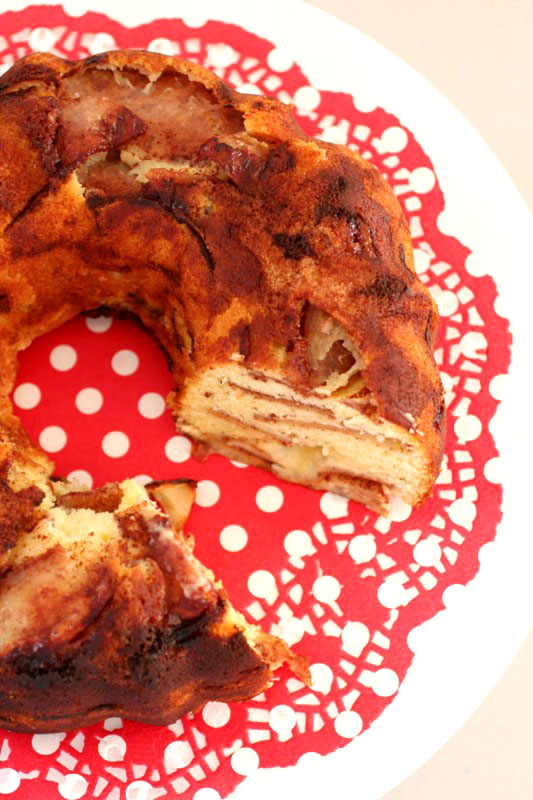
Num fim-de-semana de Outono, nada sabe melhor do que um bolo de maçã e canela ao lanche. Há uns tempos uma vizinha minha deu-me uma série de maçãs Bramley da sua árvore e, em vez de doces e geleias, lembrei-me de fazer um bolo. Se também o quiserem experimentar, aqui fica a receita:

Bolo de Maçã e Canela

4 maçãs (ou 2 maçãs grandes Bramley ou reinenta)
250 g açúcar
150 g manteiga
4 ovos, separados
200 g farinha de trigo
1 c. chá de fermento
canela em pó

1. Untar a forma com manteiga, povilhá-la com canela e cobrir a base com açúcar. Ligar o forno a 180ºC.

2. Descascar as maçãs, cortá-las em fatias finas e polvilhá-las com bastante canela.

3. Bater bem a manteiga com o açúcar até a mistura ficar cremosa e esbranquiçada.

4. Juntar as gemas de ovo e bater.

5. Noutra taça, bater as claras em castelo.

6. Ir incorporando no primeiro preparado, alternadamente, as claras em castelo e a farinha (cuidado para não bater demasiado a massa).

7. Colocar uma camada de fatias de maçã na forma, depois um pouco de massa, em seguida outra camada de maçãs, depois o resto da massa e terminar com as restantes maçãs (nesta altura poderá achar que a massa é curta mas a sério que chega: o truque é alternar camadas grossas de fatias de maçã com camadas finas de massa).

8. O bolo coze durante cerca de meia-hora mas, como todos os fornos são diferentes, é importante ir vigiando a cozedura. Não deixar cozer demasiado, sob pena de o bolo ficar muito seco.

***

On an autumn weekend nothing tastes batter than an apple and cinnamon cake for afternoon tea. Some weeks ago, a lovely neighbour gave me a few Bramley apples from her tree and instead of making yet another preserve, I decided to bake a cake. In case you’re interested in making one yourself, here’s  the recipe:

 
Apple and Cinnamon Cake

4 cooking apples (or 2 large ones)
4 eggs, separated
250 g caster sugar
150 g butter
200 g all-purpose wheat flour
1 teaspoon baking powder
ground cinnamon

1. Grease the tin, coat it with ground cinnamon and cover the bottom in sugar. Preheat the oven to 180ºC.
 
2. Peel and core the apples and cut them into fine slices. Sprinkle them with a fair amount of cinnamon.
 
3. Cream the butter and the sugar until the mixture is white and fluffy.
 
4. Add the egg yolks and beat them in well.
 
5. In another bowl, beat the egg whites until they reach soft peaks.
 
6. Incorporate a spoonful of eggs whites into the cake batter, then some flour, then some more egg whites and so on. Be careful not to overwork it.
 
7. Place a layer of apple slices in the tin, then a layer of cake batter, then a layer of apples, then the remaining batter and finish with the apples (at this point you may think that you’re a little short on batter but it really is enough: the trick is to alternate rather thick layers of apple slices with thin layers of cake batter).
 
8. Bake for approximately half an hour but since every oven is unique, do pay attention. Do not overbake it or else the cake will be too dry.